


Celebrating Balboa Park – Part IV: Farms and Gardens
— Nan Sterman
While Balboa Park’s planners and designers were jockeying for position, the park’s horticulturists were scurrying to propagate plants for the exposition gardens. They had only five years to landscape 37 acres from scratch.
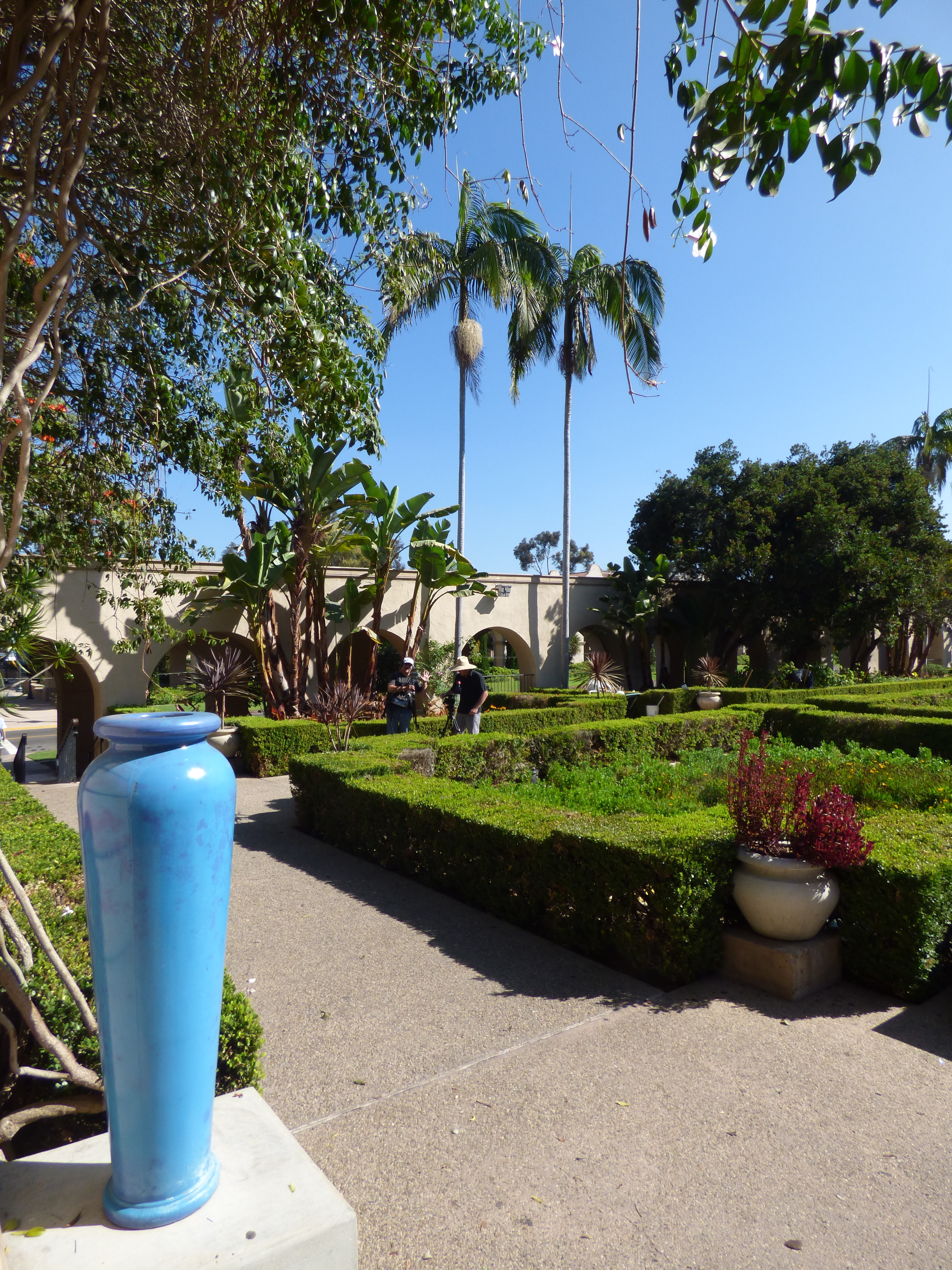
Panama California Exposition designers intended for buildings and gardens to have equal value in the overall design.
Today, we walk through Balboa Park and tend look at the buildings, but the
designers’ intent was to create buildings in gardens. The two had equal value. Visitors would be in a either a building or a garden. As they exited buildings, Visitors would walk through lush gardens – there was very little lawn – and stroll from one garden to the next, enjoying the plants along the way.
In fact, the exposition put a huge emphasis on agriculture and horticulture. Lipton Tea Company, for example, planted a plantation of Camellia sinensis, the tea camellia. There was a palm jungle, an area dedicated to “The Great Southwest’s Agriculture,” and much more.
Where the zoo stands today was a series of model intensive farms. It seems that at
the time, there was a burgeoning back-to-the-land movement. This movement promoted mechanization. Using farm machinery, a five-acre plot could produce four or five times as many peaches and walnuts, citrus and vegetables as “old fashioned” farming methods. In the center of each Model Farm was a Model Bungalow where the farmer’s wife would discover how modern machinery like the vacuum cleaner and the automatic pump could cut down the “drudgery, which her grandmother had to bear.” You can read about it all by downloading the official guidebook on-line.
Near the Model Farms, stood the lath Botanical Building with its two lily ponds. Inside the Botanical Building, visitors discovered the amazing diversity of plants

Balboa Park Botanical Building was built for the 1915 Panama California Exposition to showcase some of the rare and exotic plants that can be grown in San Diego’s mild climate
that could be grown in San Diego “from the tropical palm to the hardy pine, from the bright-blooming flowers of the equator to the sturdy plants that thrive in the country of snow and ice.” In fact, an enormous glass house – what we call a greenhouse – was attached to the back side of the lath house, directly across from the front entrances. Together, the glasshouse and lath
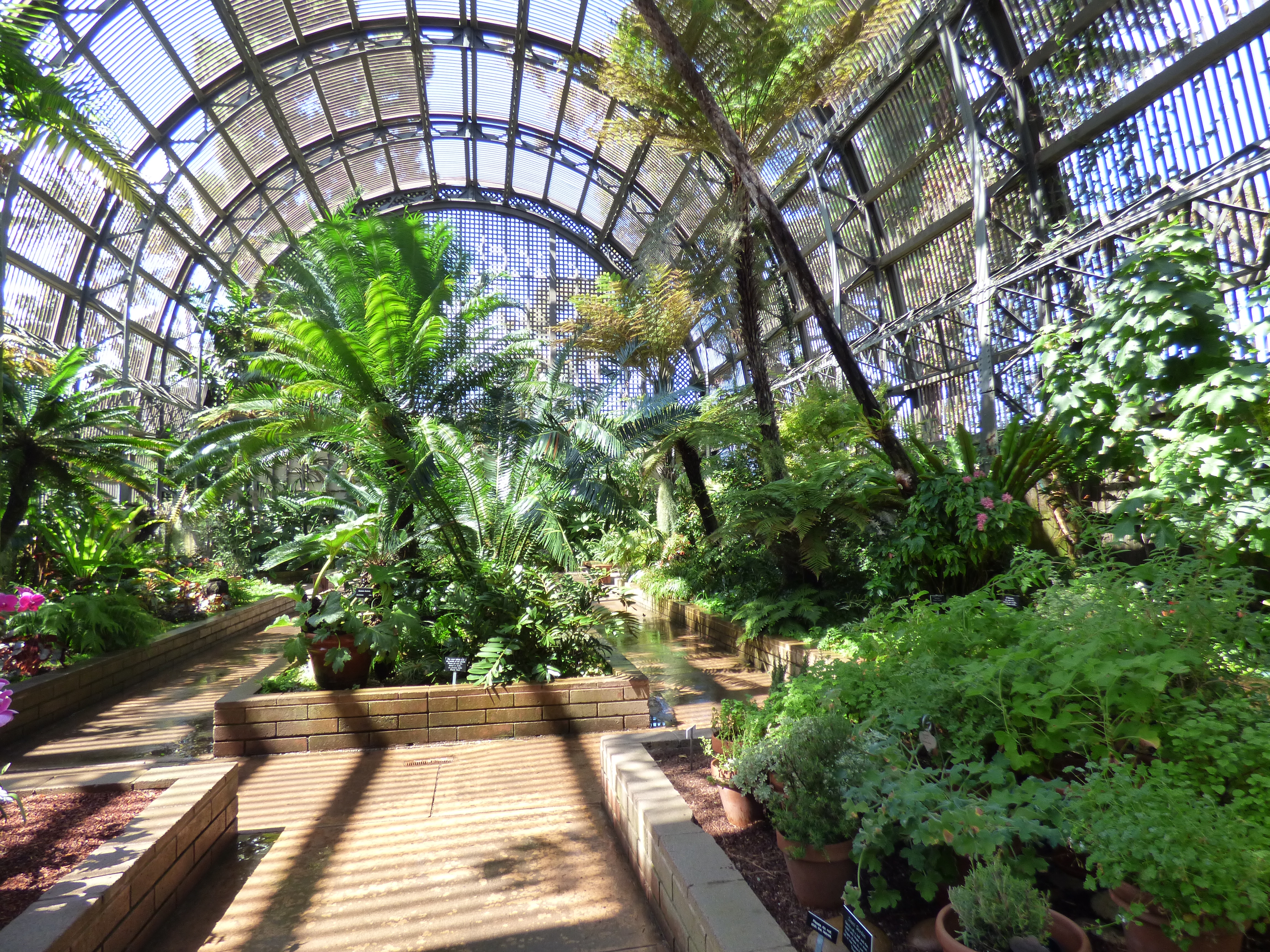
The dappled light inside Balboa Park Botanical Building is perfect for growing ferns, palms, orchids, Fuchsia, bromeliads and many other kinds of plants.
house formed a huge “T” shape.
In 1912 alone, 50,000 shrubs were planted in Balboa Park. All of those plants, presumably, came through Balboa Park Nursery. There were 35 acres of propagation beds and 100 acres of growing beds. At the time, it was the largest nursery in California.
The man in charge of the nursery’s receiving and wholesale sales kept careful track of every item that came in and went out– every wheelbarrow, screw, and cubic foot of manure. He recorded every chrysanthemum cutting donated by local church ladies, every tree purchased from Kate Sessions’ Mission Hills nursery, every begonia that went to landscape other parks in the city. Thanks to park ranger Kim Duclo, we have the man’s ledger book, though we don’t know who to credit for the careful record keeping. As I held that ledger in my hands, I was amazed to see the list of native and exotic plants, some so
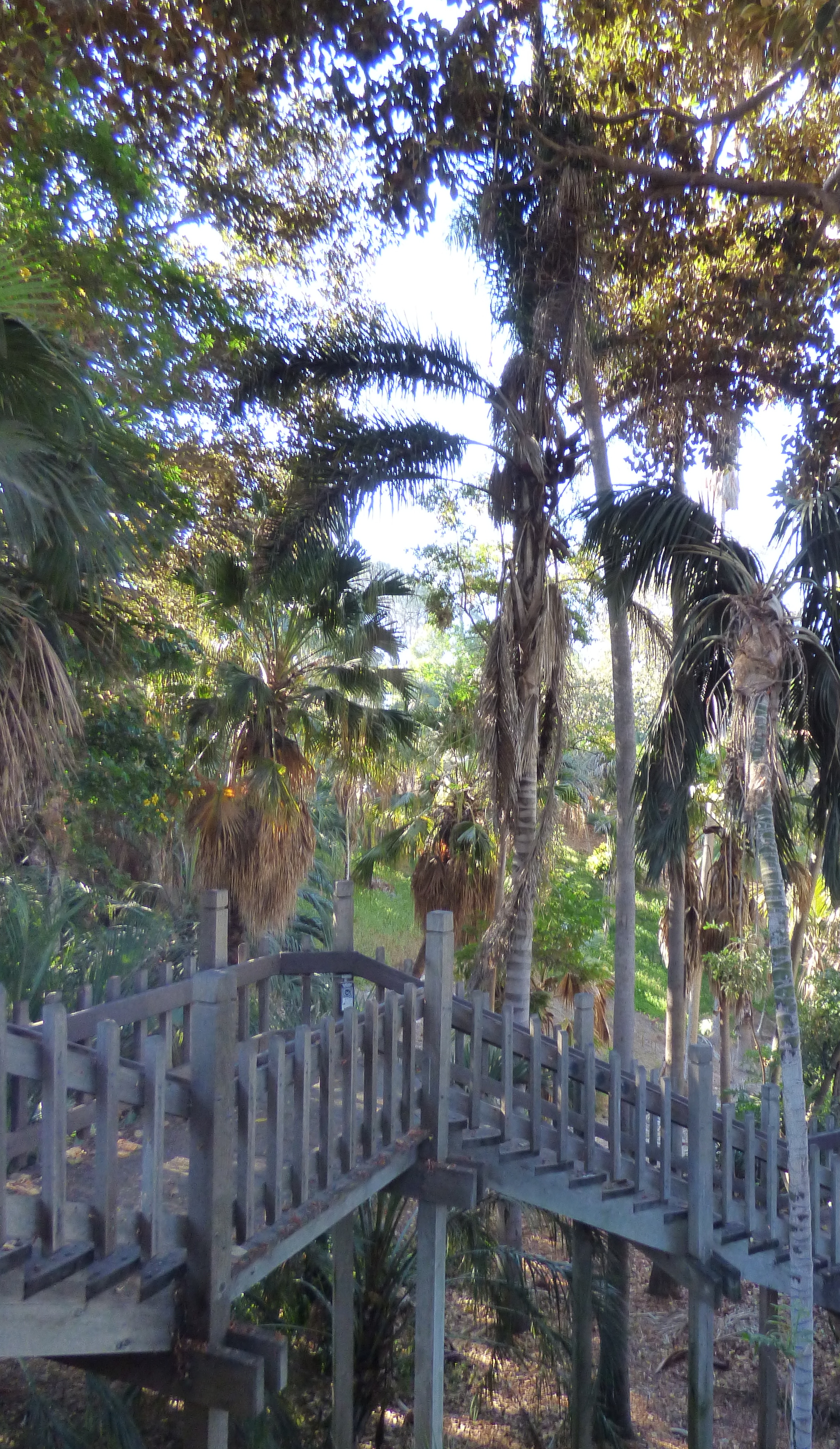
Palms planted in Balboa Park Palm Canyon were among the many plants propagated in Balboa Park Nursery in preparation for the 1915 Panama California Exposition
familiar and some incredibly rare today. By the way, this was another of Ranger Duclo’s dumpster finds.
As I dug deeper into the history of the exposition gardens, I came across a statement that floored me.
I was reading about Paul Thiene who was Balboa Park Nursery Superintendent. According to recent research by historian Nancy Carol Carter, German born and trained Thiene arrived in San Diego in 1910 and opened Ramona nursery in Old Town. Carter says “Thiene was quickly going broke, so he applied for a job at the Olmstead run Balboa Park Nursery, which was already humming along. Thiene was hired and soon promoted to Nursery Superintendent and then to head of exposition planting.”
As nursery superintendent, Thiene was certainly under pressure to produce as many plants, to grow as large as possible, in a very short timeframe. As a newcomer, it’s likely that he was learning what grew in San Diego’s hot, dry climate, too. Thiene soon realized that the native oaks growing in the nursery for shade trees wouldn’t be big enough by the Exposition’s opening. Instead, he pushed for faster growing trees and plants that would create the look of maturity when the doors opened just four short years later.
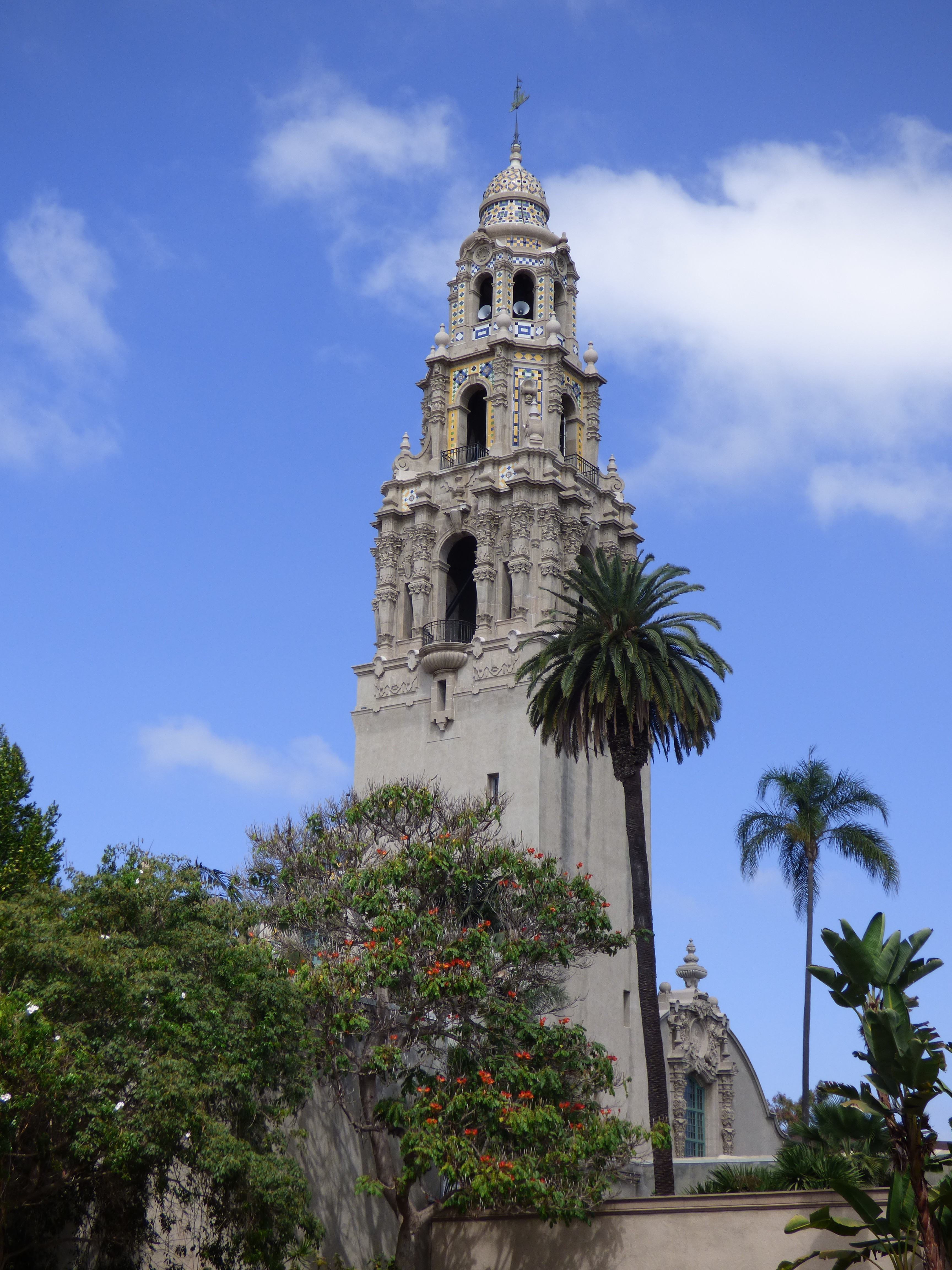
While millions of plants were grown in Balboa Park Nursery, this legacy Canary Island palm (Phoenix canariensis) in front of the California Tower is thought to have been moved from a private garden to the park for the 1915 Panama California Exposition.
What did they grow? Eucalyptus, palms, acacias, and other vigorous plants that still
dominate much of San Diego’s landscapes.
As a modern plant person and a garden designer, I find this legacy of fast growing plants to be a huge challenge. Nearly everyone wants plants that “fill in quickly.” Homeowners want plants that grow quickly and are planted close together. The problem is, fast growing plants are typically thirsty plants. And plants placed to close together don’t have room to reach their natural sizes so they soon grow into and over each other, making for a maintenance nightmare. In fact, one of my most popular talks is “Don’t Plant This!” about how to avoid this all-too-common dilemma.
Reading about Thiene’s decisions to switch plant palettes, I have to wonder; had there been more planning, more time to grow oaks and other, slower growing plants; how different would San Diego landscapes look today
Check back next week for Celebrating Balboa Park – Part V: The Exposition and Its Legacy