
facebook
rss
twitter
youtube
pinterest
  • Home
  • About
    • The Host, Nan Sterman
    • Awards and Reviews
    • Behind the Scenes
  • Videos
    • Clips/Segments
  • TV Schedule
    • Episode 701: The Beautiful Bromeliad
    • Episode 702: Beans, Beans – The Magical Legume
    • Episode 703: Grow Tiny
    • Episode 704: Food Is A Terrible Thing To Waste!
    • Episode 705: The Big Bloom
    • Episode 706: Gardening as a Community
    • Season 6
      • Episode 601: From Fruit to Nuts
      • Episode 602: Intoxicating Plumeria
      • Episode 603: The Art of a Garden
      • Episode 604: From Farm to Fork
      • Episode 605: Growing A Greener Golf Course
      • Episode 606: Plants: The Endangered Species
    • Season 5
      • Episode 501: Homegrown Hops – Local Flavor for Local Brews
      • Episode 502: Distant Roots And Tasty Shoots – Plants At The Zoo
      • Episode 503: The Story Of Seeds – From Breeding To Eating
      • Episode 504: Aquaponics – Fish Poop To Plant Roots
      • Episode 505: Urban Forests – Trees And Plants In The City
      • Episode 506: Wild And Wooly – Native Bee Pollinators
    • Season 4
      • Episode 401: Flowers and Floats – The Rose Parade
      • Episode 402: Citrus – California’s Second Gold Rush
      • Episode 403: Beneficial Insects
      • Episode 404: Bye, Bye Grass – How To Remove Your Lawn
      • Episode 405: After the Lawn is Gone – Waterwise Gardens
      • Episode 406: All About Algae
    • Season 3
      • Episode 301: Balboa Park: The Garden Faire
      • Episode 302: Big Trees: Giants Among Us
      • Episode 303: Garden Tours & Garden Shows: Finding Garden Inspiration
      • Episode 304: Preserve the Harvest
      • Episode 305: Coming to a Nursery Near You
      • Episode 306: How Water Flows
    • Season 2
      • Episode 201: From Vines and Wines
      • Episode 202: Chaparral, The Elfin Forest
      • Episode 203: Green Roofs
      • Episode 204: New Models of Farming
      • Episode 205: With Food and Justice for All
      • Episode 206: Growing Dreams and Memories
    • Season 1
      • Episode 101: The Business of Blooms
      • Episode 102: California Native Grown
      • Episode 103: Grow Your Own
      • Episode 104: Waterwise and Wonderful
      • Episode 105: Cycle and Recycle
      • Episode 106: Garden in a Pot
  • Explore More
  • Support The Show
  • Blog
  • Sponsors & Supporters
    • Founders
  • Shop
  • Contact

Ready for El Nino!

January 18, 2016
by Nan
bioswale, california, California native, compost, drain, drought, El Nino, erosion, irrigation, mosquito, mulch, natives, planting, rain barrel, rainboots
0 Comment
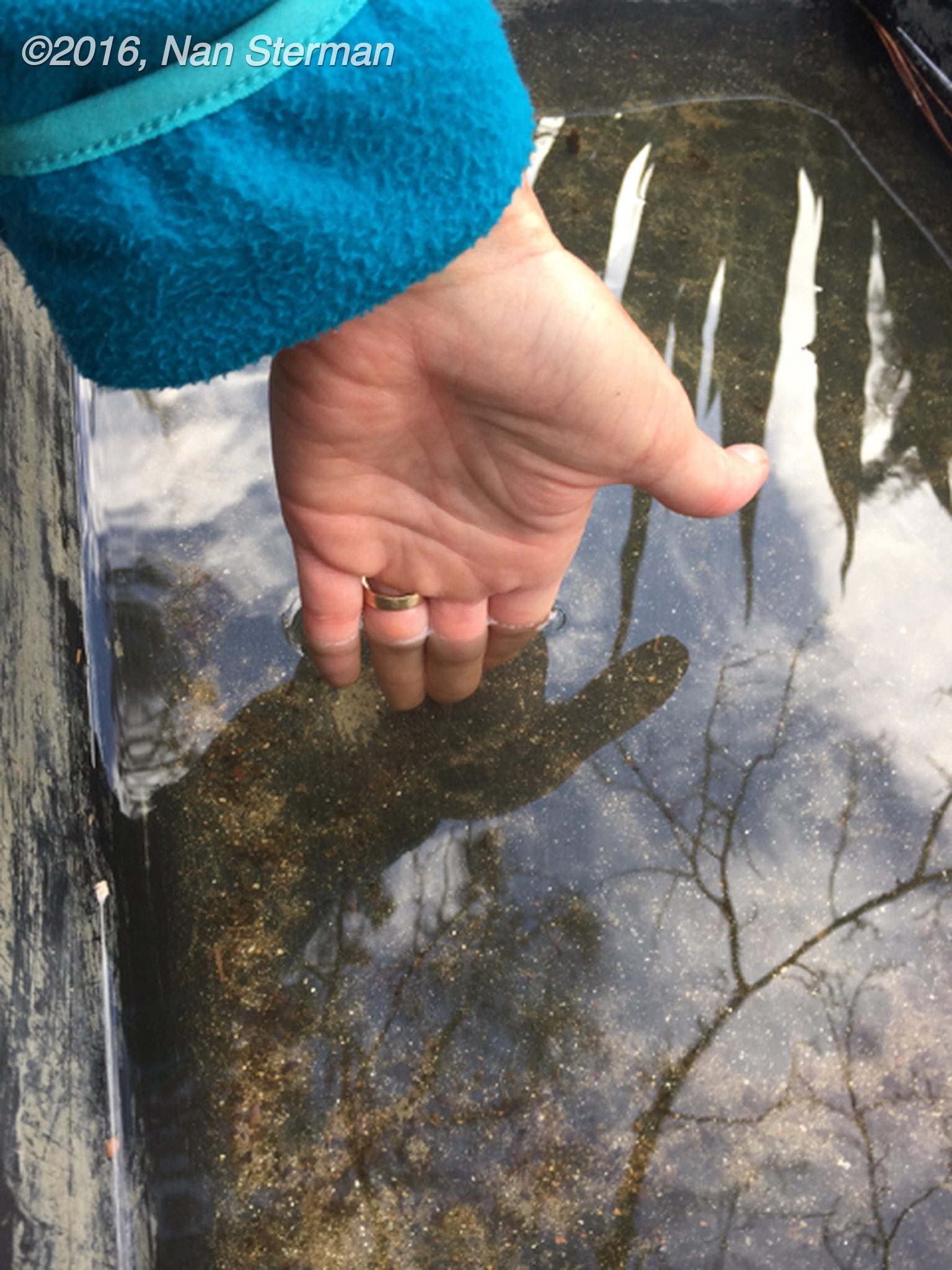
How much rain fell? This accumulated over three days!

How much rain fell? This accumulated over three days!

— by Nan Sterman

Week before last, Southern Californians had our first taste of El Niño rains; four inches in three days – nearly half the rainfall we normally see in a year.

Fortunately, we prepared ahead of time at our house. We had the plumber out to clear in-ground drains. The tree trimmer lightened the canopies on our largest trees. We cleaned rain gutters, too. All were time and money well spent.
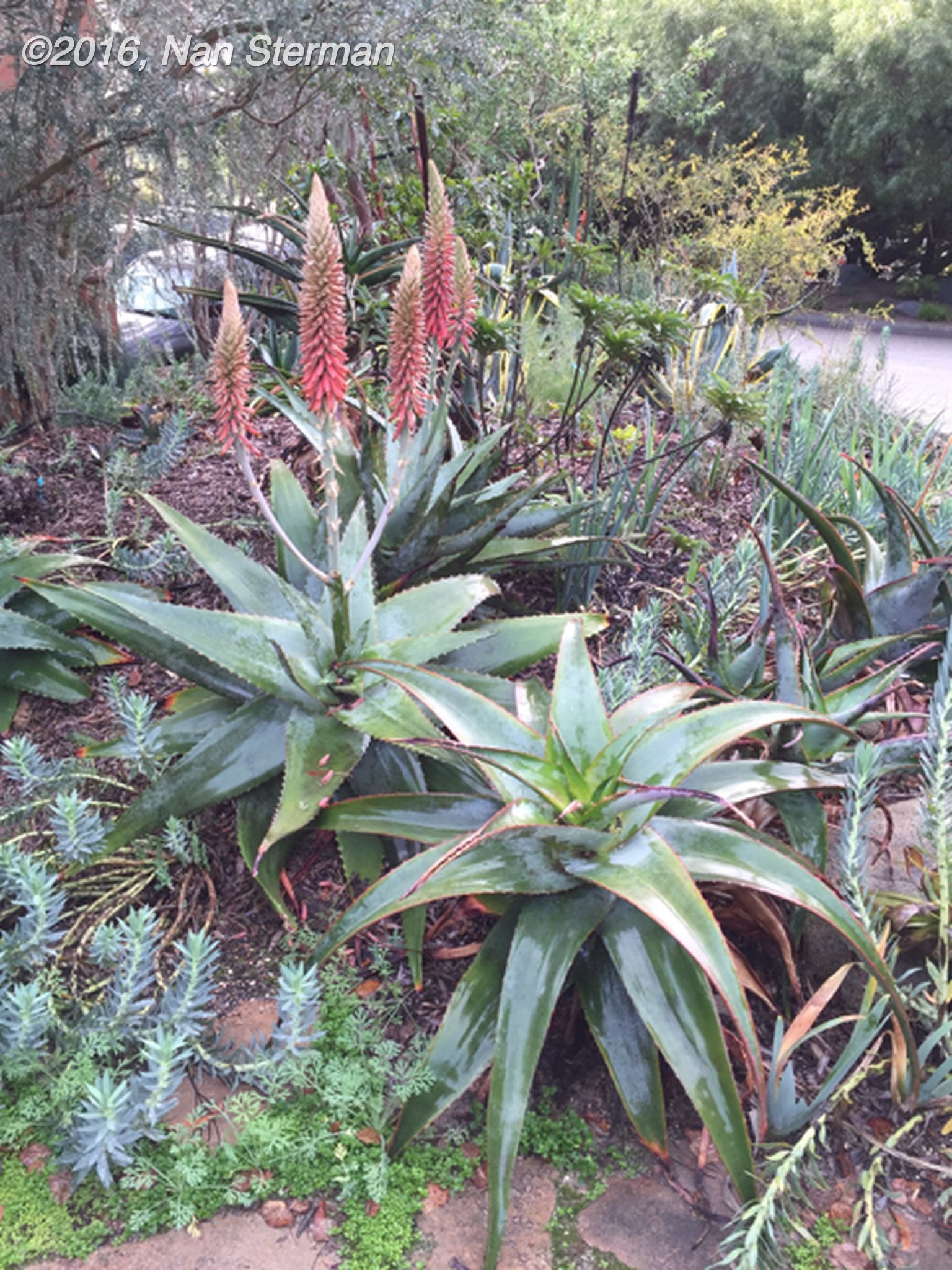
Aloes shine after a rainstorm

Aloes shine after a rainstorm

Many people ask me how to protect their plants from rains but that’s not really an issue. As I mentioned in a recent radio interview about El Niño, when it rains, plants do a happy dance. Water doesn’t hurt leaves or stems or branches. The risks instead, come from what happens to the water once it hits the ground. Standing water can drown plant roots; plants can be washed away in a mudslide or by fast moving water, or undermined by erosion.

How do you prepare for El Nino rains?  Here’s my to-do list:

  • Clean out rain gutters so water doesn’t spill over the sides and smash the plants below.
  • Redirect downspouts to disperse water into bio-swales. From there, it will slowly percolate into the soil. If you have poor draining clay soils, install rain barrels to save
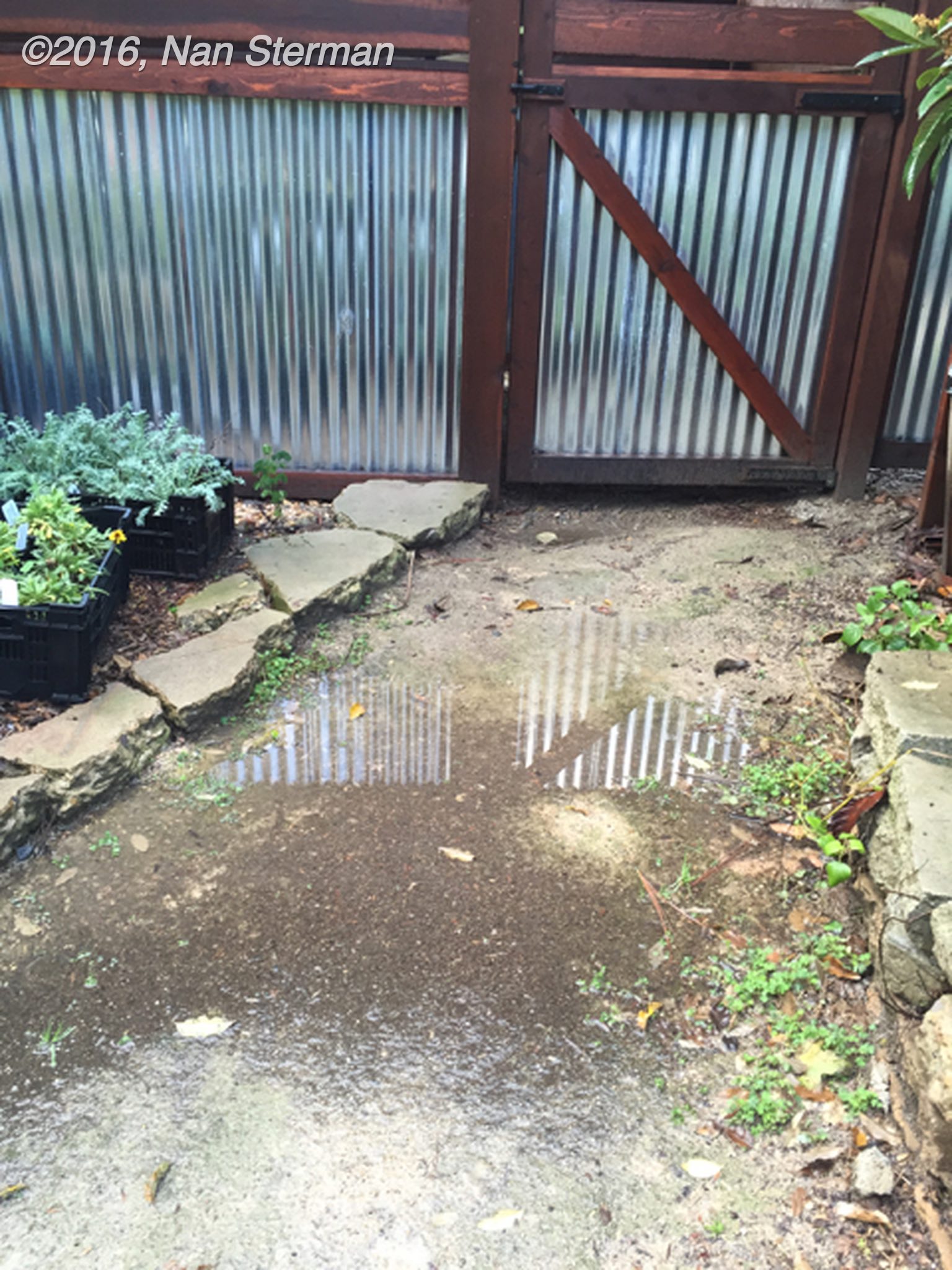
    Watch for low spots where water pools when it rains. If it stands longer than a day or two, it's a problem

    Watch for low spots where water pools when it rains. If it stands longer than a day or two, it’s a problem

    the water, then use it once the garden dries out.

  • Check drains to be sure they work properly. Clear clogs to avoid flooding.
  • Turn over pots, buckets and any other open containers that might collect and hold water long enough for mosquitoes to breed in.
  • Where you collect rainwater in open buckets, cover the buckets between downpours.
  • Protect bare slopes from erosion. Install straw wattles horizontally across hillsides. Wattles are mesh tubes filled with straw and staked in place to serve as speed bumps as water runs downhill. At the end of the season, once the straw breaks down, you can empty it onto the soil as mulch. Compost “socks” are similar to wattles but filled with compost.
  • Manage the water in your rain barrels. Don’t collect water from the first rain. That “first flush” carries chemicals, dust that settles from the air, dirt, bird poop, debris, etc. Let that water go and capture the next rainfall.
  • bark, wood, etc. — traps water as it falls.  That protects soil from erosion and absorbs water like a sponge. Once water percolates into the soil, mulch helps keep it there by slowing evaporation. And, as mulch breaks down, it builds healthy soil to support the plants in your garden.
  • Turn off your irrigation. If we get a long, hot dry spell or Santa Ana winds, you’ll need to water. That’s unlikely to happen more than a time or two between now and the end of March.
  • Use the time between storms to plant. Plant any of our native plants and plants from dry climates of South Africa, Australia, Chile and the Mediterranean coast. Make your plans, do your research, then head to the nursery.
  • Don’t plant right away, however. Let the soil dry for three or four days after a rain. Digging and standing on wet soil compacts it, the opposite of what we want to do.
  • When you do plant, plant directly into unamended soil. Research tells us that plants in “native” soils do better than those in amended soils. It’s OK to toss in a few handfuls of worm castings, but skip the fertilizer and don’t bother with soil amendments.
Remember this year’s rains are to be welcomed, not feared. While they won’t solve the drought, every drop certainly helps.
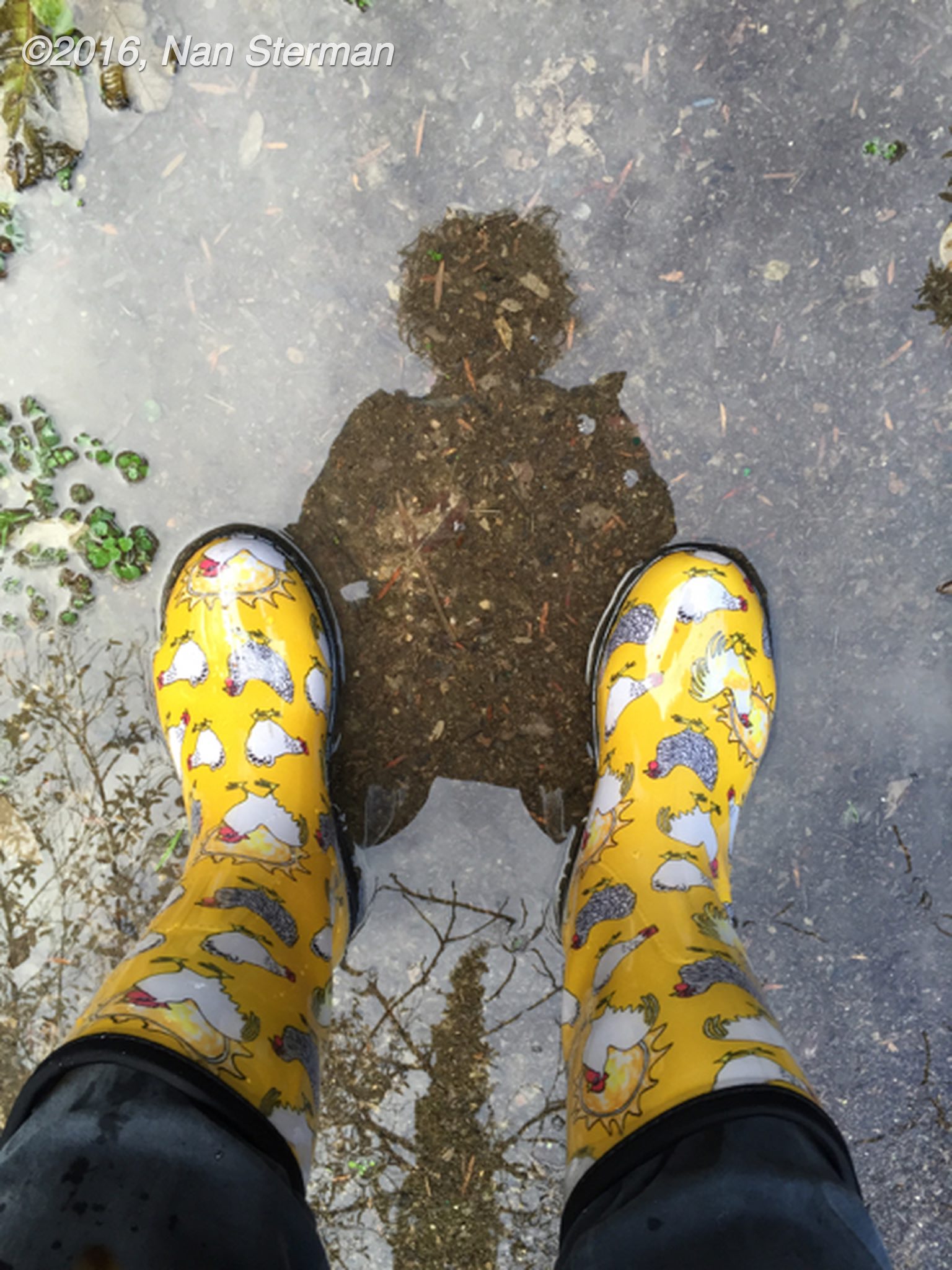
Nan tests her new yellow Sloggers chicken rainboots. Yeah! Dry feet!

Nan tests her new yellow Sloggers chicken rainboots. Yeah! Dry feet!

About the Author
California native Nan Sterman is host, co-producer, and co-writer of A Growing Passion, a television show that explores the ways plants power the planet, from farms and nurseries to backyards and schoolyards, rooftop gardens, community gardens, native habitats and more.
Social Share
  • google-share

Leave a Reply Cancel reply

*
*


Popular Posts

A big fried egg sized bloom
Grow a Fried Egg Plant - Matilija poppy
38 Comments
Tree babies
How to Water Your Trees
8 Comments
Stolons make Bermuda grass a challenge to remove
Whether Weed Cloth?
7 Comments

Categories

  • Agriculture
  • Animals
  • Art
  • Behind the Scenes
  • Botanical Garden
  • Community
  • Community Supported Agriculture
  • Cooking
  • Design
  • Explore More
  • Farm
  • Farm-to-Table
  • Food Justice
  • Fruit
  • Garden
  • Gardening
  • Gifts
  • History
  • How-to
  • Insects
  • Nan Sterman
  • Native Habitat
  • Nursery
  • Organic Farming
  • Plants
  • Projects
  • Public Gardens
  • Research
  • Tour
  • Travel
  • Vegetable Gardening
  • Waterwise
  • What's New
  • What's Trending

Archives

Contact Us

AGP Productions, LLC
PO Box 231034
Encinitas, CA 92023
info@agrowingpassion.com

Follow Us!

Follow Us on FacebookFollow Us on TwitterFollow Us on InstagramFollow Us on PinterestFollow Us on YouTubeFollow Us on RSS

Press

  • Media
  • Press
Ask-Nan
All Content and Images © 2018 AGP Productions, LLC | Privacy Policy
Designed by Belladia Marketing and Design