
facebook
rss
twitter
youtube
pinterest
  • Home
  • About
    • The Host, Nan Sterman
    • Awards and Reviews
    • Behind the Scenes
  • Videos
    • Clips/Segments
  • TV Schedule
    • Episode 701: The Beautiful Bromeliad
    • Episode 702: Beans, Beans – The Magical Legume
    • Episode 703: Grow Tiny
    • Episode 704: Food Is A Terrible Thing To Waste!
    • Episode 705: The Big Bloom
    • Episode 706: Gardening as a Community
    • Season 6
      • Episode 601: From Fruit to Nuts
      • Episode 602: Intoxicating Plumeria
      • Episode 603: The Art of a Garden
      • Episode 604: From Farm to Fork
      • Episode 605: Growing A Greener Golf Course
      • Episode 606: Plants: The Endangered Species
    • Season 5
      • Episode 501: Homegrown Hops – Local Flavor for Local Brews
      • Episode 502: Distant Roots And Tasty Shoots – Plants At The Zoo
      • Episode 503: The Story Of Seeds – From Breeding To Eating
      • Episode 504: Aquaponics – Fish Poop To Plant Roots
      • Episode 505: Urban Forests – Trees And Plants In The City
      • Episode 506: Wild And Wooly – Native Bee Pollinators
    • Season 4
      • Episode 401: Flowers and Floats – The Rose Parade
      • Episode 402: Citrus – California’s Second Gold Rush
      • Episode 403: Beneficial Insects
      • Episode 404: Bye, Bye Grass – How To Remove Your Lawn
      • Episode 405: After the Lawn is Gone – Waterwise Gardens
      • Episode 406: All About Algae
    • Season 3
      • Episode 301: Balboa Park: The Garden Faire
      • Episode 302: Big Trees: Giants Among Us
      • Episode 303: Garden Tours & Garden Shows: Finding Garden Inspiration
      • Episode 304: Preserve the Harvest
      • Episode 305: Coming to a Nursery Near You
      • Episode 306: How Water Flows
    • Season 2
      • Episode 201: From Vines and Wines
      • Episode 202: Chaparral, The Elfin Forest
      • Episode 203: Green Roofs
      • Episode 204: New Models of Farming
      • Episode 205: With Food and Justice for All
      • Episode 206: Growing Dreams and Memories
    • Season 1
      • Episode 101: The Business of Blooms
      • Episode 102: California Native Grown
      • Episode 103: Grow Your Own
      • Episode 104: Waterwise and Wonderful
      • Episode 105: Cycle and Recycle
      • Episode 106: Garden in a Pot
  • Explore More
  • Support The Show
  • Blog
  • Sponsors & Supporters
    • Founders
  • Shop
  • Contact

Bewitching Bromeliads

April 23, 2019
by Nan
Billbergia, Bromeliad, drought tolerant, Dyckia, ephiphyte, Neoregelia, Spanish moss, Tillandsia, tropical garden, waterwise
0 Comment

Add a touch of the exotic in your garden with colorful and surprisingly versatile bromeliads.  Dozens, if not hundreds of kinds of bromeliads are offered in nurseries and at society sales. They range from the tiniest, clumping Tillandsia, the so-called “air plants” whose icy green, tentacle-like leaves collect moisture and nutrients from the air. Their roots are basically non-existent.
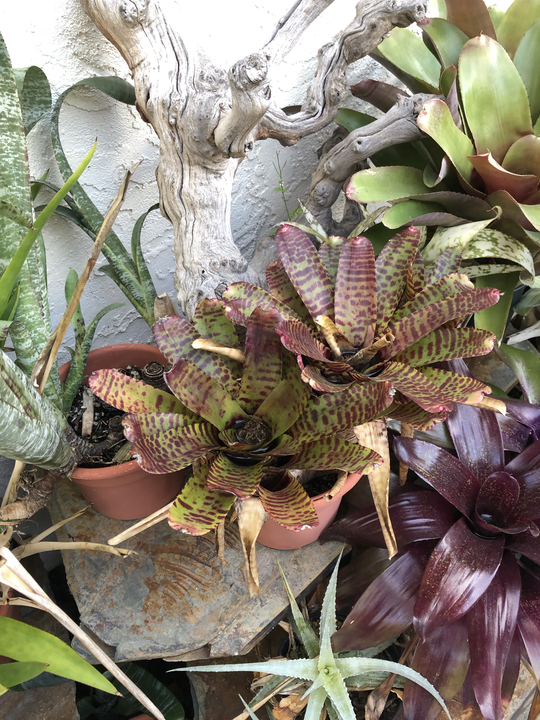
Exotic looking bromeliads in the garden

Bromeliads add a touch of the exotic to any garden

How bromeliads grow

Like Tillandsia, many bromeliads grow as epiphytes attached to trees or other plants, often in humid rainforests.

Some terrestrial bromeliads are adapted to growing in the rich leaf litter of shady forests; others to harshly sunny, sandy beaches. Their roots to absorb water and nutrients from the soil

A third category, the saxicolous bromeliads, attach to rocks, often on sheer cliff faces. Like epiphytic bromeliads, they gather water and nutrients from the atmosphere.

Bromeliads in your garden

Tillandsiaare fun to collect and display while many larger bromeliads make wonderful landscape plants for gardens that don’t freeze. In cold gardens, grow bromeliads potted in a protected spot in a courtyard or under an eave. In the ground, in a pot, or growing as an epiphyte, you’ll be surprised at how little water bromeliads require.

While bromeliads have beautiful flowers their foliage is their real claim to fame. Stiff, broad leaves are arranged in spiral rosettes. They range from tall, narrow vases to broad, flat rosettes with leaves so tightly arranged to form “tanks” where water collects. Each becomes a tiny pond with its own community of insects, amphibians, reptiles, and even small vertebrates. Tank bromeliads absorb nutrients from the critters’ waste as it accumulates in that stagnant water.

Leaf color is even more varied than shape. Some bromeliads are bright shiny green, others intense burgundy red; some deep bronze almost black, others flocked icy green. Some leaves are marked in squiggly bands of red, or with burgundy horizontal stripes on a green background. Others are vertical striped, green and yellow.
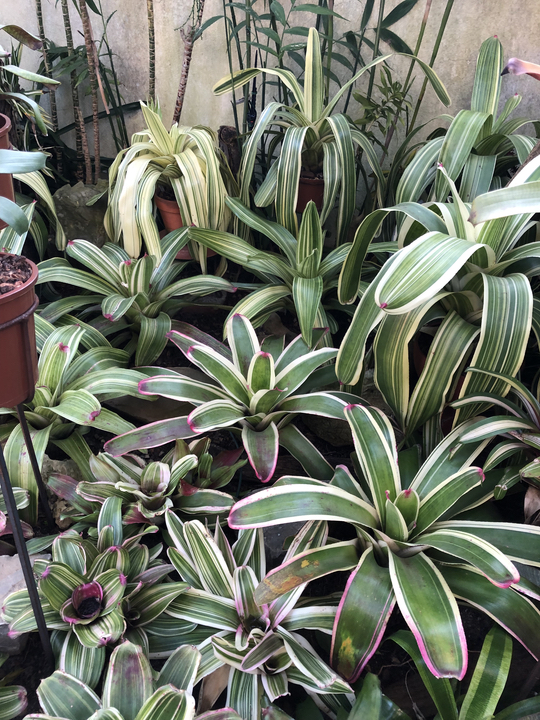
Striped bromeliad leaves make a big show

Leaves are the “big show” when it comes to bromeliads.

As each bromeliad vase matures, flower stalks form in the center. Some flowers are so small, you need a magnifying glass to see them. Other stalks are many feet long, upright or pendant. Flowers can be shockingly bright, neon orange to indigo blue, electric pink to canary yellow.

After each vase flowers, it forms pups (new side plants). Eventually the “mother” plant dies, leaving its family behind.

Bromeliads for beginners (and not so beginners, too!)

Eighteen-inch tall Billbergia nutans forms a lovely long, pendant stalk of peppermint pink and periwinkle blue flowers. Start a few clumps in a pot; soon, it will be completely filled.
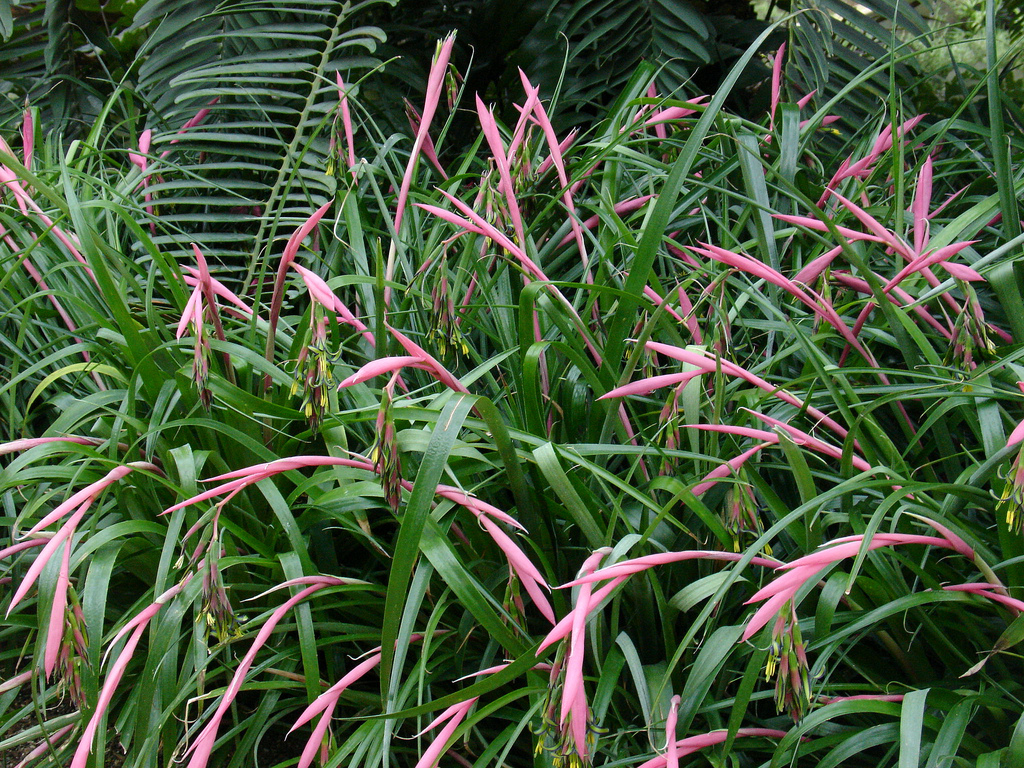
Grow this easy Bromeliad, Bilbergia nutans

Bilbergia nutans is bromeliad that is easy to grow in Southern California gardens

Neoregelia ‘Fireball’ is a small bromeliad, with rosettes not more than 10” tall and wide. The leaves are bright, bright red, and the flowers are tiny purple specs in the center. These beauties make large colonies in coastal gardens.
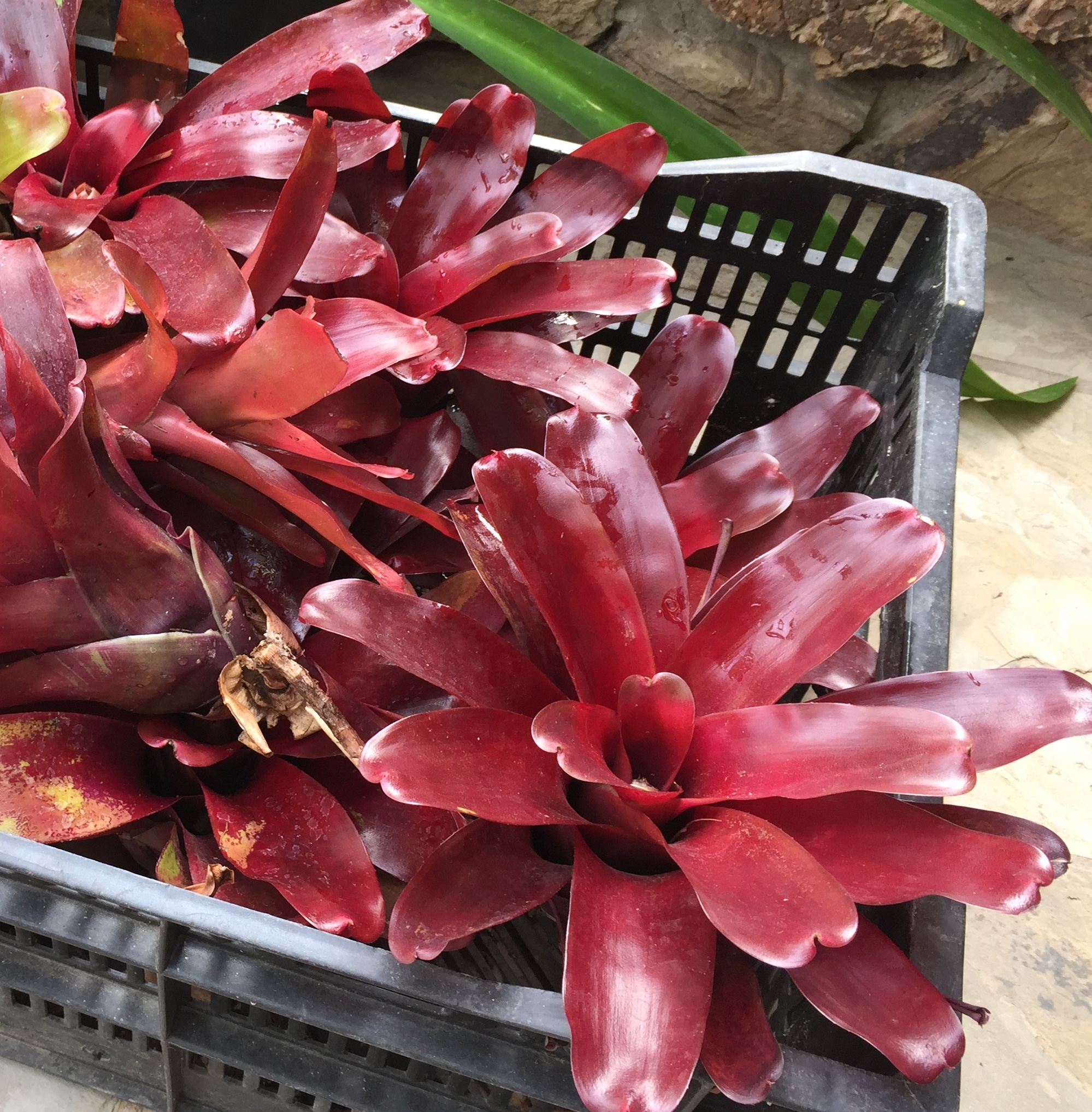
Cuttings of Neoregelia 'Fireball' are ready to be shared

It’s fun to share bromeliad cuttings, like these Neoregelia ‘Fireball’, which grow in low, broad colonies.

Dyckia are mounding terrestrial bromeliads, two feet tall by three feet wide. Grow in full sun so the wickedly spined leaves develop deep red/burgundy or metallic silver. Scary, but well worth growing, far from a path so no one gets hurt. Flowers are bright to deep orange.  
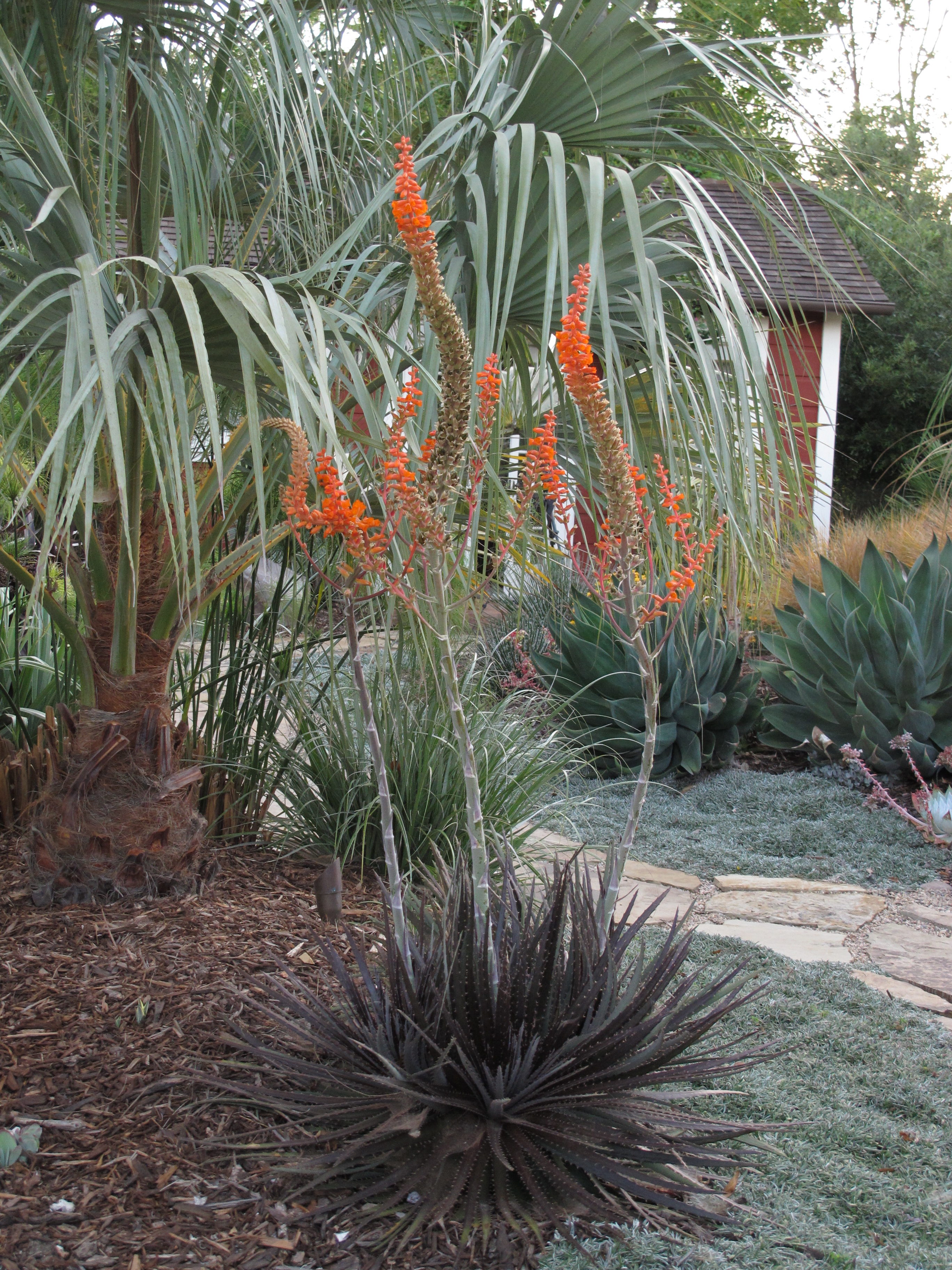
Dykia bromeliads bloom vivid orange atop deep red rosettes

Terrestrial Dykia bromeliads have wicked spines so plant them well away from walkways.

Spanish moss is a Tillandsia whose green leaves are covered in tiny white scales that create a silvery surface. Drape Spanish moss over a tree branch in gardens along the coast. Inland the air is too dry and winters too cold for this beauty,
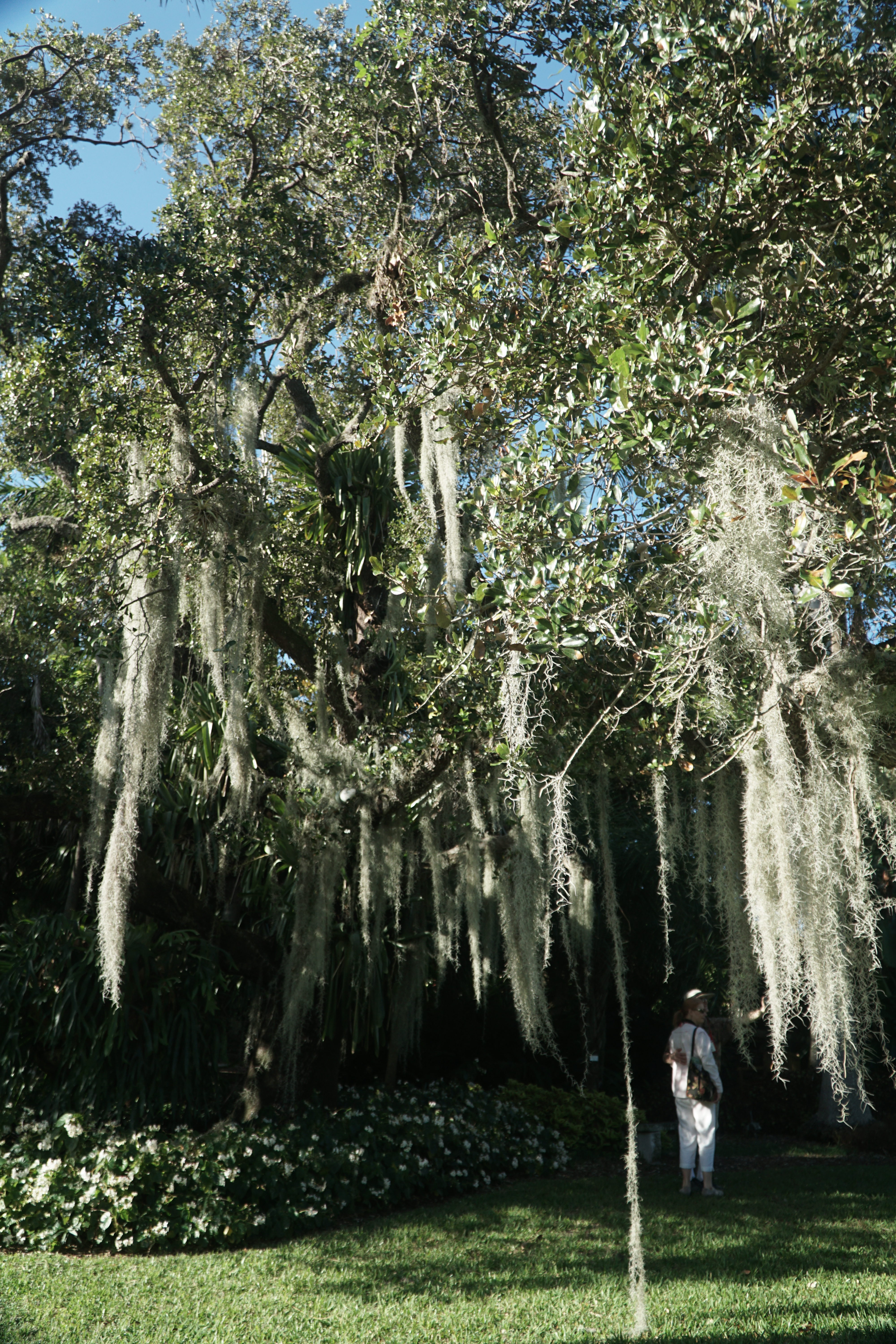
Spanish moss Tillandsia hanging on trees

Long, silvery strands of Spanish moss (Tillandsia) hang from trees in more humid regions

— Nan Sterman

About the Author
California native Nan Sterman is host, co-producer, and co-writer of A Growing Passion, a television show that explores the ways plants power the planet, from farms and nurseries to backyards and schoolyards, rooftop gardens, community gardens, native habitats and more.
Social Share
  • google-share

Leave a Reply Cancel reply

*
*


Popular Posts

A big fried egg sized bloom
Grow a Fried Egg Plant - Matilija poppy
38 Comments
Tree babies
How to Water Your Trees
8 Comments
Stolons make Bermuda grass a challenge to remove
Whether Weed Cloth?
7 Comments

Categories

  • Agriculture
  • Animals
  • Art
  • Behind the Scenes
  • Botanical Garden
  • Community
  • Community Supported Agriculture
  • Cooking
  • Design
  • Explore More
  • Farm
  • Farm-to-Table
  • Food Justice
  • Fruit
  • Garden
  • Gardening
  • Gifts
  • History
  • How-to
  • Insects
  • Nan Sterman
  • Native Habitat
  • Nursery
  • Organic Farming
  • Plants
  • Projects
  • Public Gardens
  • Research
  • Tour
  • Travel
  • Vegetable Gardening
  • Waterwise
  • What's New
  • What's Trending

Archives

Contact Us

AGP Productions, LLC
PO Box 231034
Encinitas, CA 92023
info@agrowingpassion.com

Follow Us!

Follow Us on FacebookFollow Us on TwitterFollow Us on InstagramFollow Us on PinterestFollow Us on YouTubeFollow Us on RSS

Press

  • Media
  • Press
Ask-Nan
All Content and Images © 2018 AGP Productions, LLC | Privacy Policy
Designed by Belladia Marketing and Design