
facebook
rss
twitter
youtube
pinterest
  • Home
  • About
    • The Host, Nan Sterman
    • Awards and Reviews
    • Behind the Scenes
  • Videos
    • Clips/Segments
  • TV Schedule
    • Episode 701: The Beautiful Bromeliad
    • Episode 702: Beans, Beans – The Magical Legume
    • Episode 703: Grow Tiny
    • Episode 704: Food Is A Terrible Thing To Waste!
    • Episode 705: The Big Bloom
    • Episode 706: Gardening as a Community
    • Season 6
      • Episode 601: From Fruit to Nuts
      • Episode 602: Intoxicating Plumeria
      • Episode 603: The Art of a Garden
      • Episode 604: From Farm to Fork
      • Episode 605: Growing A Greener Golf Course
      • Episode 606: Plants: The Endangered Species
    • Season 5
      • Episode 501: Homegrown Hops – Local Flavor for Local Brews
      • Episode 502: Distant Roots And Tasty Shoots – Plants At The Zoo
      • Episode 503: The Story Of Seeds – From Breeding To Eating
      • Episode 504: Aquaponics – Fish Poop To Plant Roots
      • Episode 505: Urban Forests – Trees And Plants In The City
      • Episode 506: Wild And Wooly – Native Bee Pollinators
    • Season 4
      • Episode 401: Flowers and Floats – The Rose Parade
      • Episode 402: Citrus – California’s Second Gold Rush
      • Episode 403: Beneficial Insects
      • Episode 404: Bye, Bye Grass – How To Remove Your Lawn
      • Episode 405: After the Lawn is Gone – Waterwise Gardens
      • Episode 406: All About Algae
    • Season 3
      • Episode 301: Balboa Park: The Garden Faire
      • Episode 302: Big Trees: Giants Among Us
      • Episode 303: Garden Tours & Garden Shows: Finding Garden Inspiration
      • Episode 304: Preserve the Harvest
      • Episode 305: Coming to a Nursery Near You
      • Episode 306: How Water Flows
    • Season 2
      • Episode 201: From Vines and Wines
      • Episode 202: Chaparral, The Elfin Forest
      • Episode 203: Green Roofs
      • Episode 204: New Models of Farming
      • Episode 205: With Food and Justice for All
      • Episode 206: Growing Dreams and Memories
    • Season 1
      • Episode 101: The Business of Blooms
      • Episode 102: California Native Grown
      • Episode 103: Grow Your Own
      • Episode 104: Waterwise and Wonderful
      • Episode 105: Cycle and Recycle
      • Episode 106: Garden in a Pot
  • Explore More
  • Support The Show
  • Blog
  • Sponsors & Supporters
    • Founders
  • Shop
  • Contact

Making Kokedama at Saint Madeliene Sophie’s Center

February 27, 2014
by Nan
0 Comment

Nan’s Report:  Heather Anderson’s smile is widest when her hands are dirty.  And boy, did her hands get dirty when she and Marion Happ showed me how they make Kokedama, Japanese string balls, also called Japanese moss balls.  I’d seen done before but their demonstration at Saint Madeleine Sophie’s Center in El Cajon, California was one of the most creative and enthusiastic versions ever.

Kokedama is an old Japanese art form that’s a take-off of Bonsai.  It’s essentially a small plant, set in a ball of clayey soil, all wrapped up in sphagnum moss.  Hang them from a trellis or set them in a dish.  Water by soaking or spritzing on occasion and you are set.

Kokedama make great gifts and are surprisingly easy to assemble.  Heather and Marion made two Kokedama for me – one using a small palm and the other using an African violet.  Here are the basic steps, using an African violet.
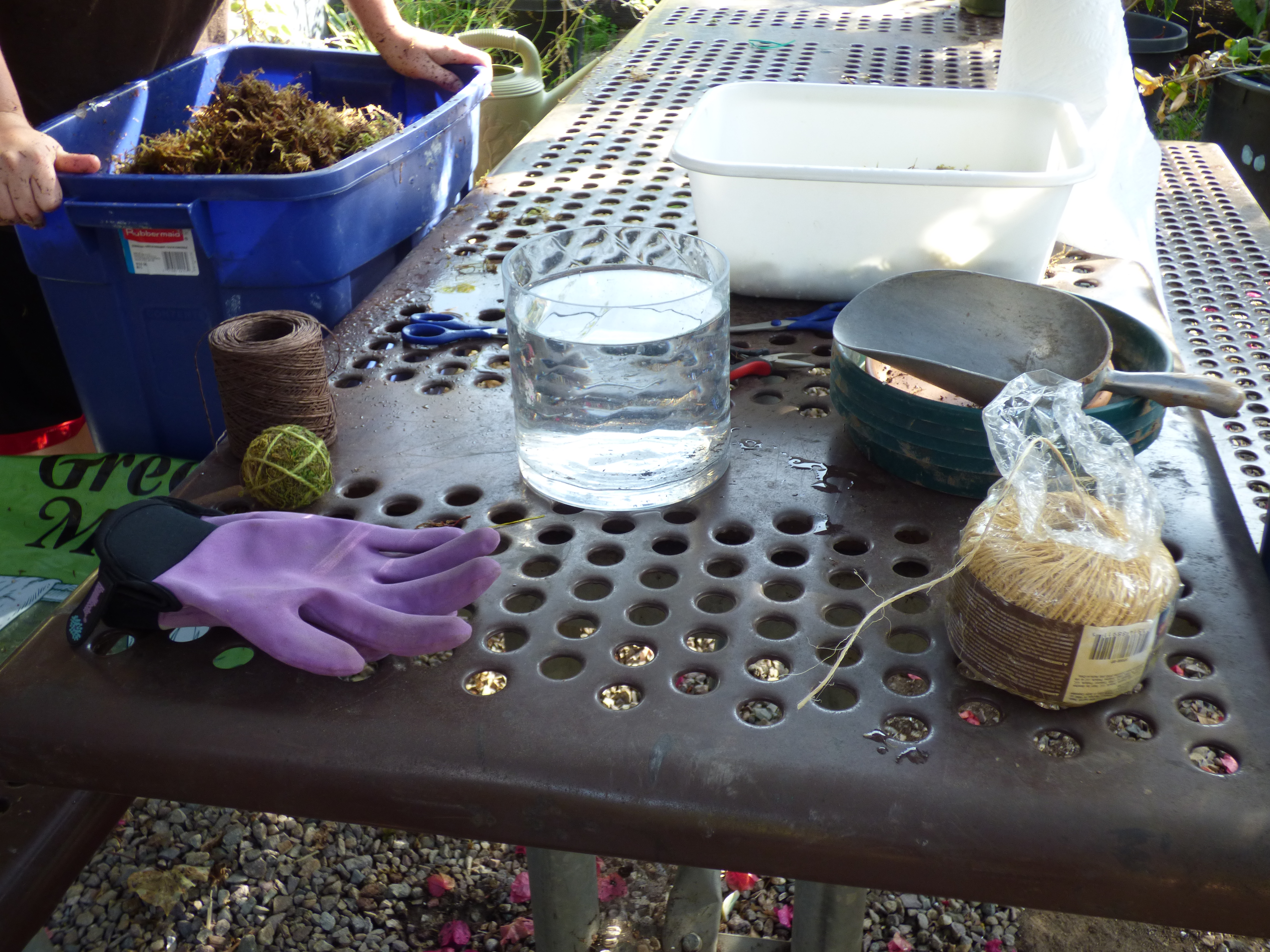
Kokedama supplies:  twine, a basin of water, sphagnum moss (dampened), scissors, clayey soil, a pot dish (the kind that goes under a potted plant), small plants (2" potted plants work well), gloves if you like.

Kokedama supplies: twine, a basin of water, sphagnum moss (dampened), scissors, clayey soil, a pot dish (the kind that goes under a potted plant), small plants (2″ potted plants work well), gloves if you like.
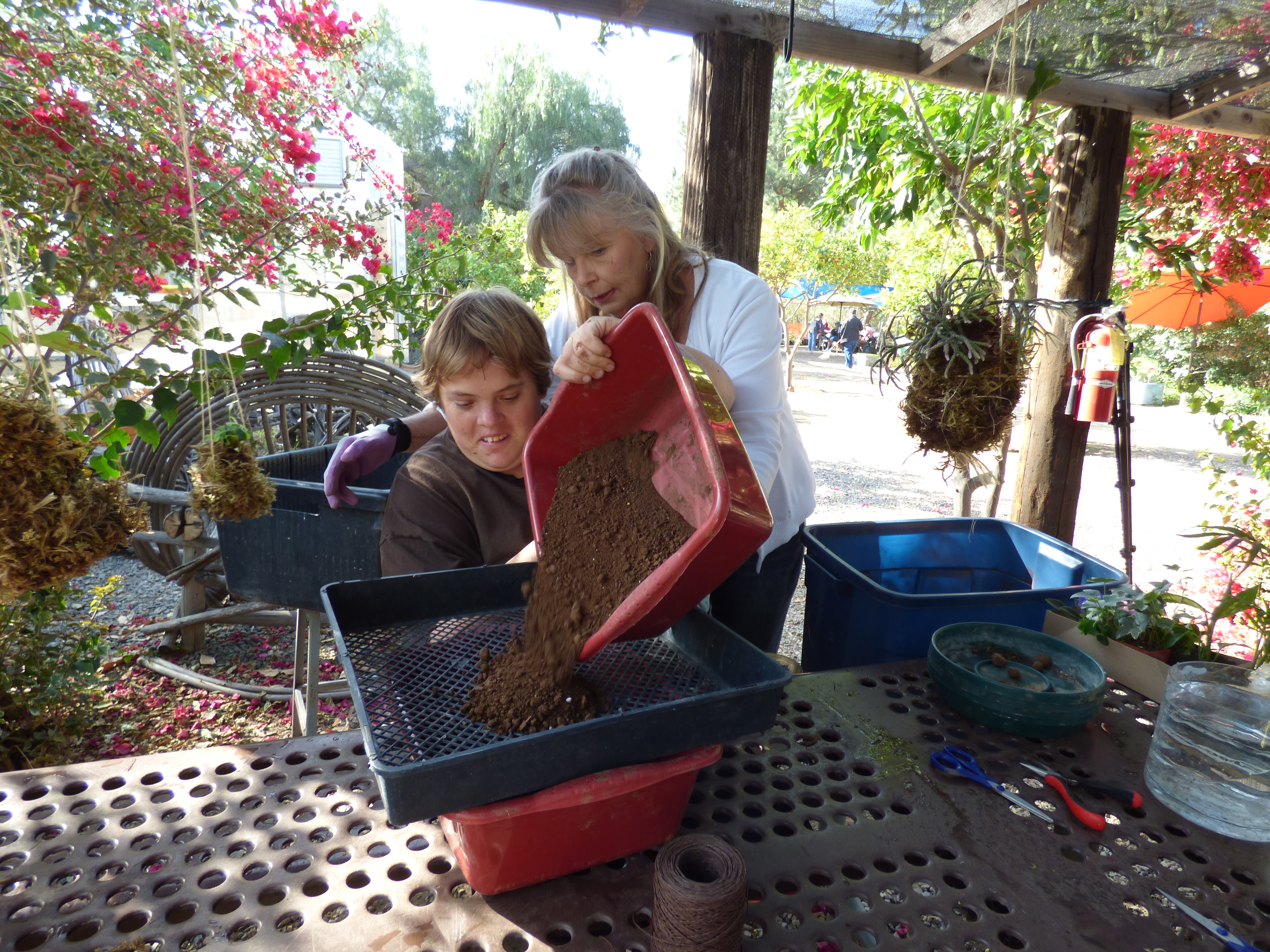
Soil gets sifted to remove lumps
Soil gets sifted to remove lumps

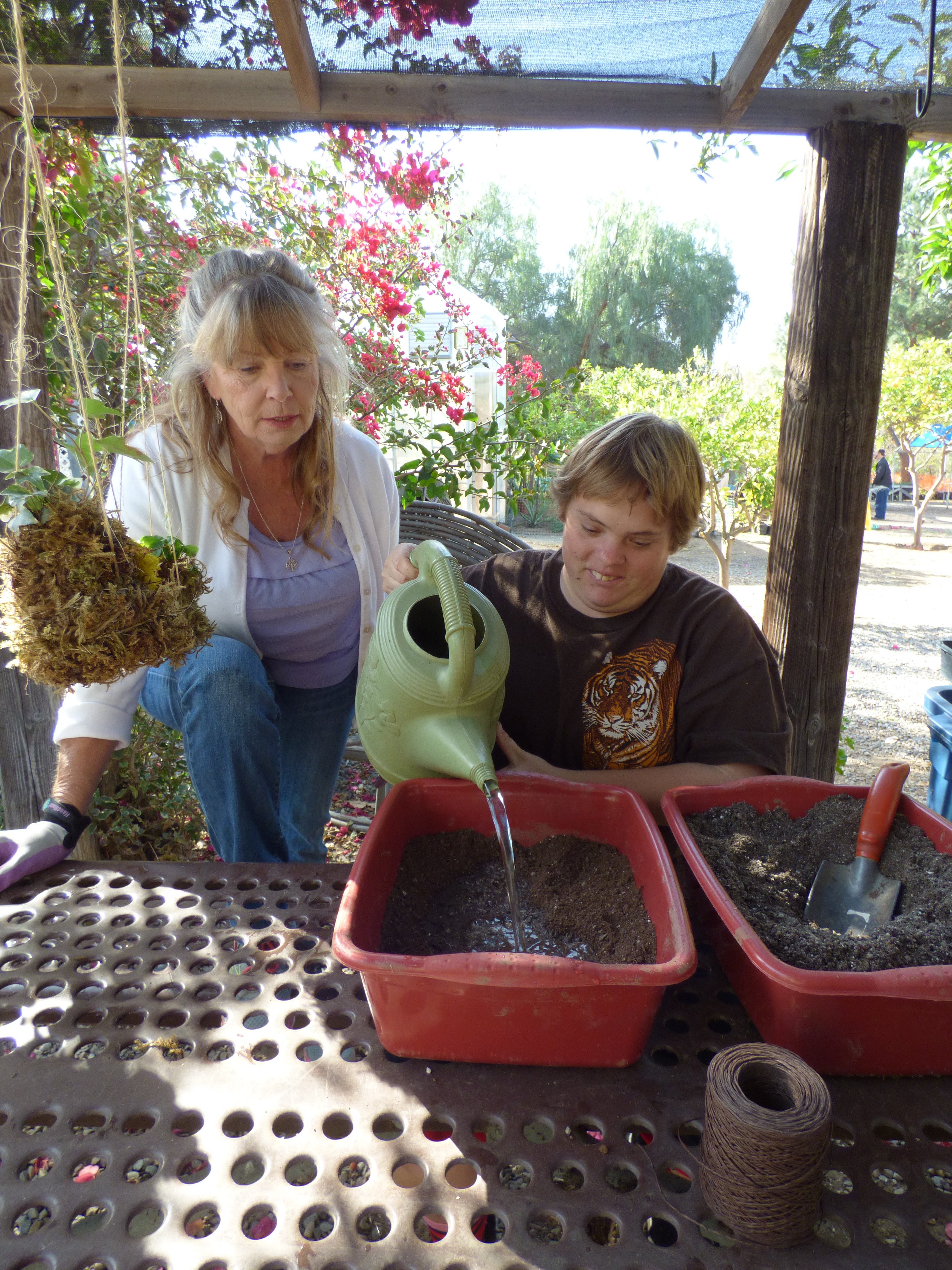
The soil has to be wet enough to stick together in a ball
The soil has to be wet enough to stick together in a ball


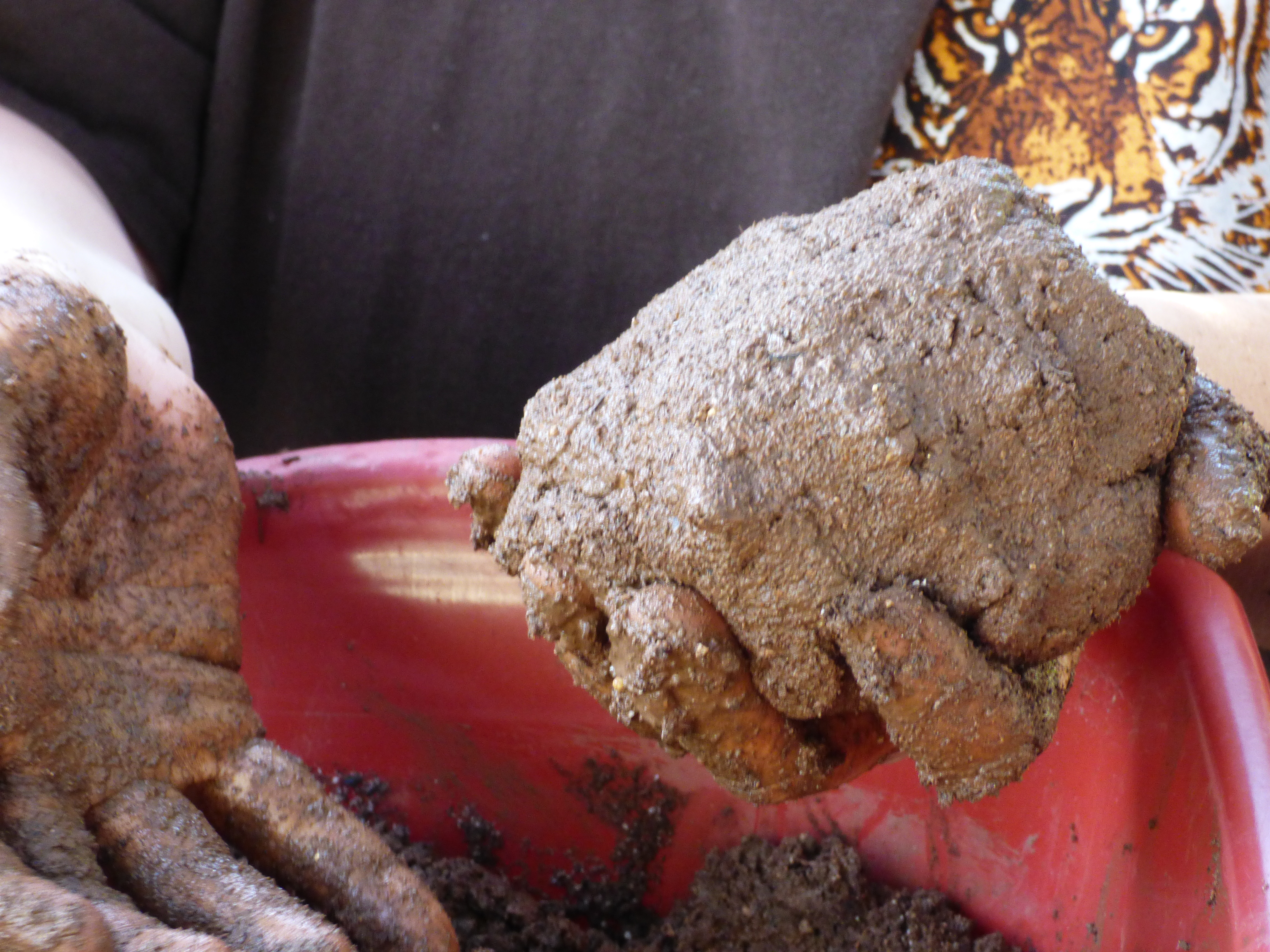
Heather creates a ball with the wet soil
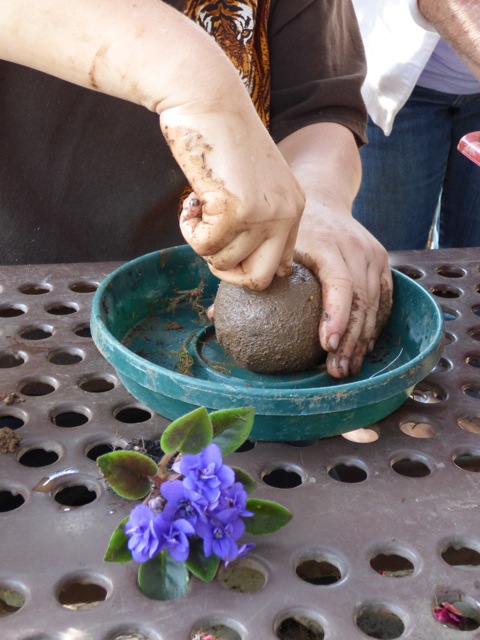
Heather creates a ball with the wet soil

Poke a planting hole in the center of the ball
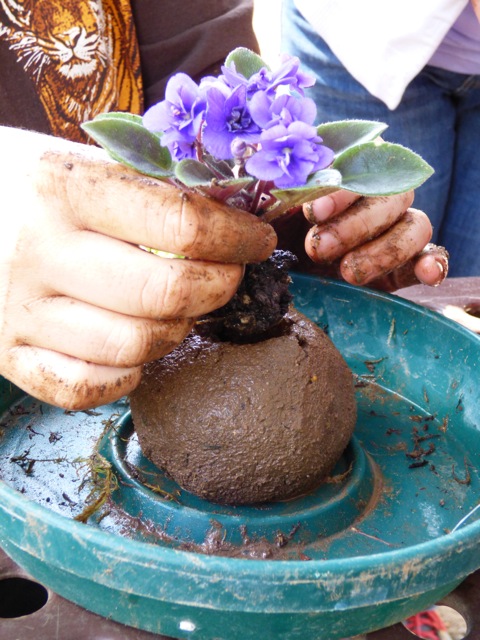
Poke a planting hole in the center of the ball

Wash soil off the roots, then slowly and gently twist the plant so the roots ease their way into the planting hole.
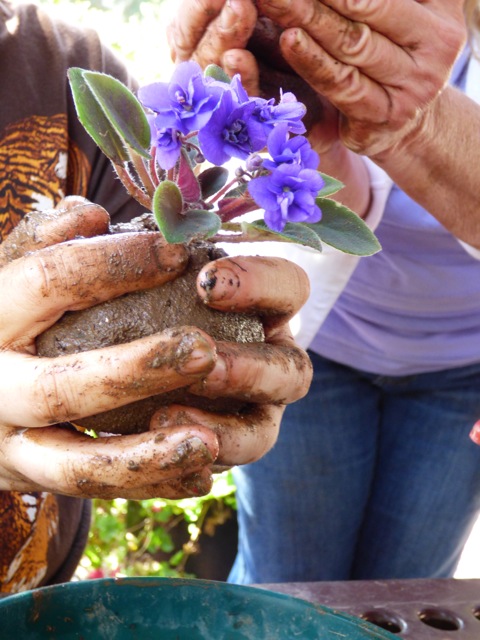
Wash soil off the roots, then slowly and gently twist the plant so the roots ease their way into the planting hole.

Firm the soil around the plant's roots

Firm the soil around the plant’s roots
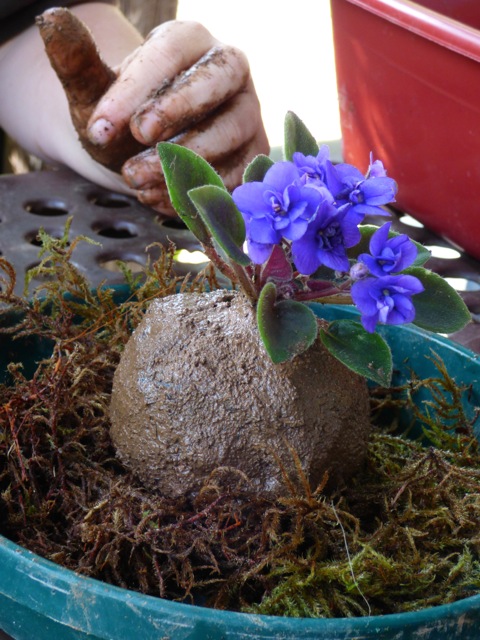
Spread out a sheet of dampened sphagnum moss, then set the ball into it.
Spread out a sheet of dampened sphagnum moss, then set the ball into it.

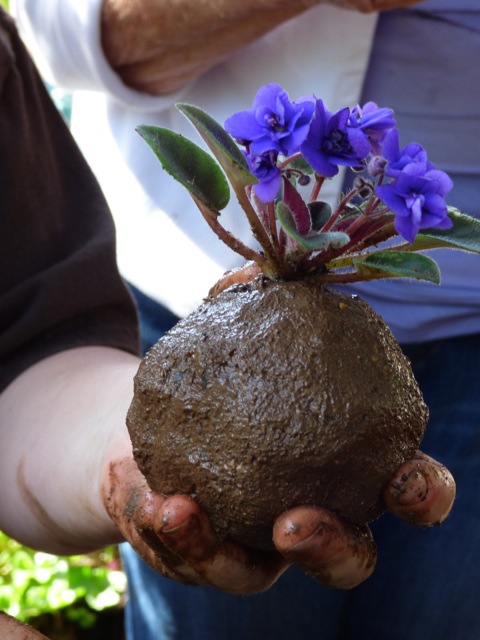
The African violet is firmly in the ball of soil
The African violet is firmly in the ball of soil

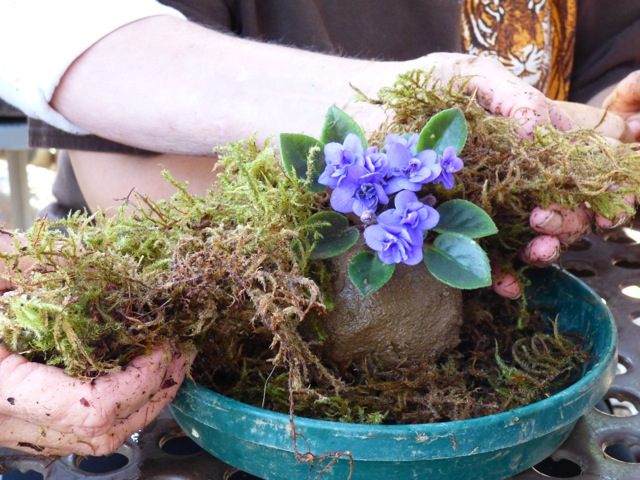
Gently wrap the ball in sphagnum
Gently wrap the ball in sphagnum

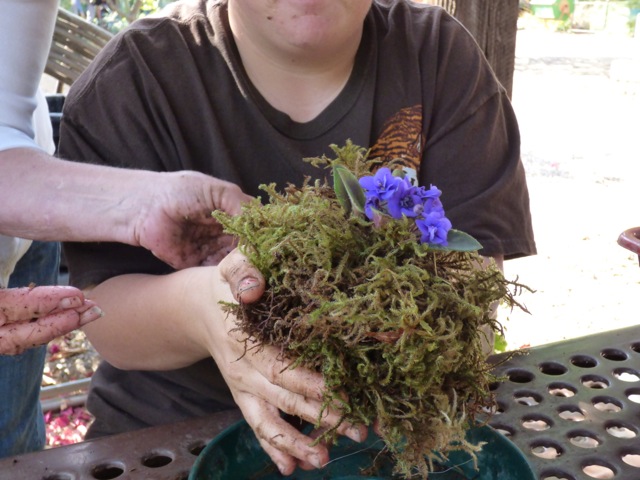
Continue wrapping the ball in sphagnum until there is no soil visible.
Continue wrapping the ball in sphagnum until there is no soil visible.

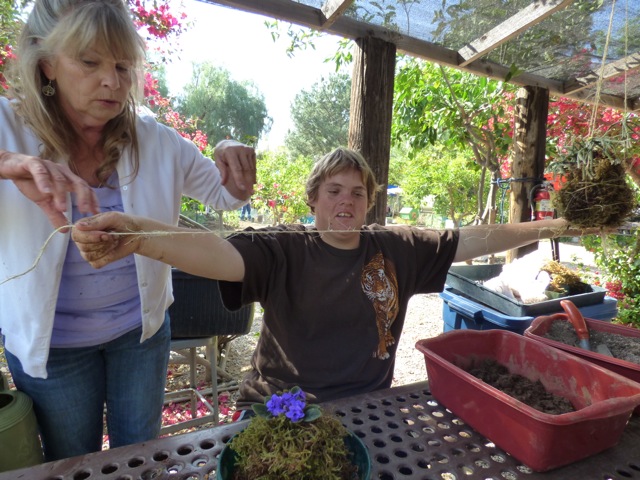
Measure twine to wrap around the ball and secure the sphagnum in place
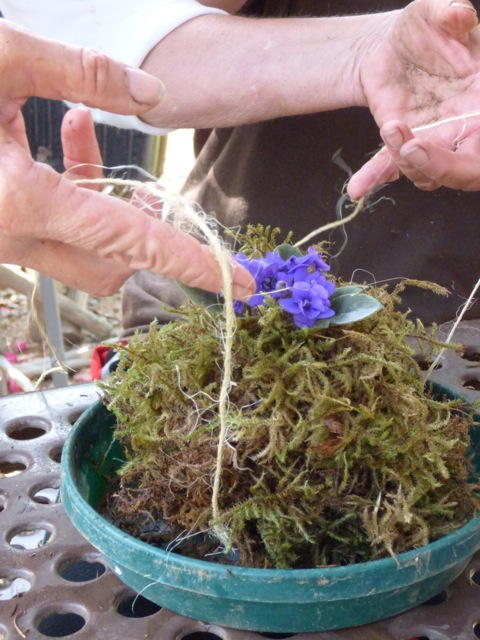
Measure twine to wrap around the ball and secure the sphagnum in place

Use the twine to wrap around the ball and hold the sphagnum in place
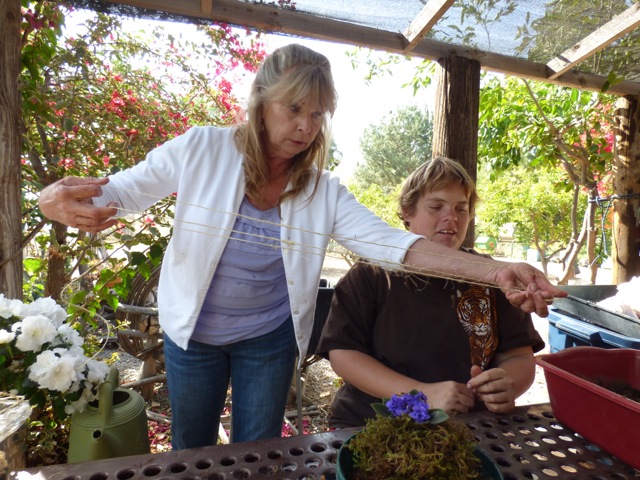
Use the twine to wrap around the ball and hold the sphagnum in place

After securing the sphagnum around the ball with twine, measure another length of twine to make a hanger.
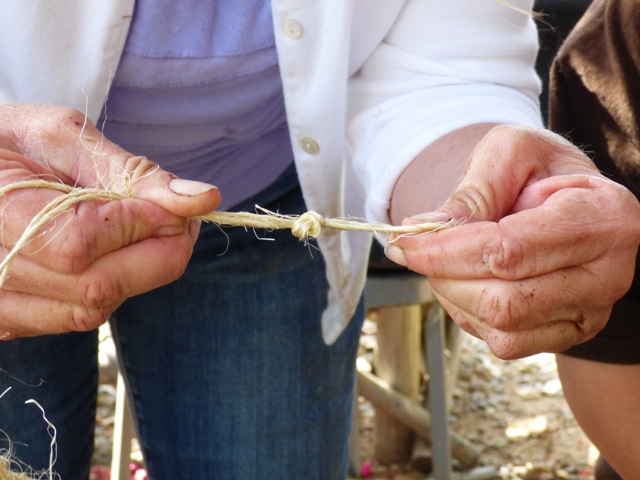
After securing the sphagnum around the ball with twine, measure another length of twine to make a hanger.

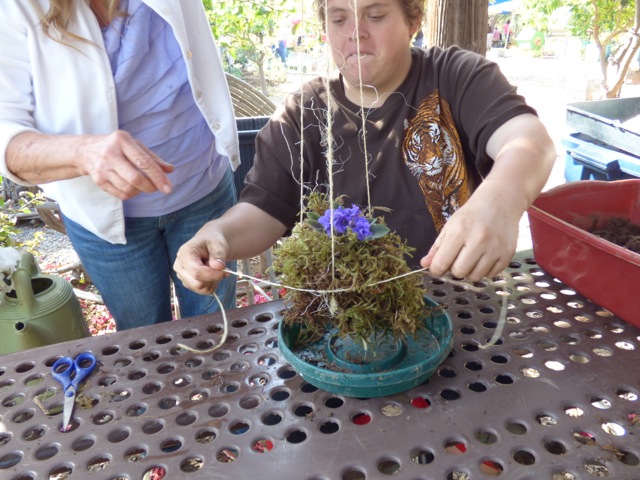
Marion ties a loop in the end of some twine to create a hanger for the Kokedama

Marion ties a loop in the end of some twine to create a hanger for the Kokedama.  The loop goes under the ball.
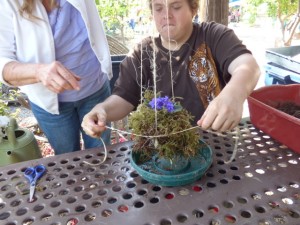
 

Heather wraps twine around the Kokedama to secure it for hanging
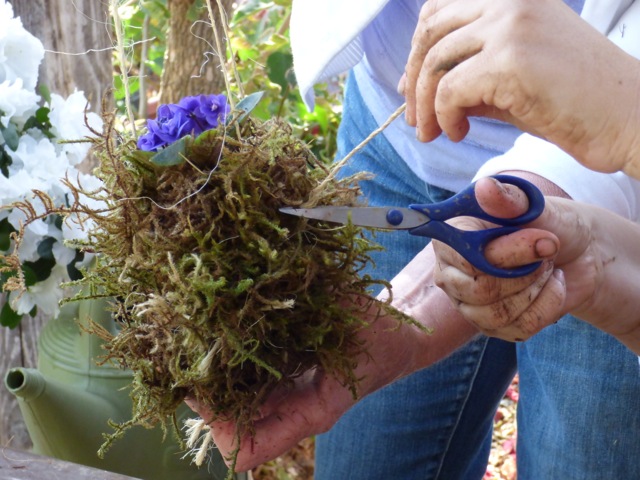
Heather uses a scissors to trim excess twine and tidy up the sphagnum moss
Heather uses a scissors to trim excess twine and tidy up the sphagnum moss

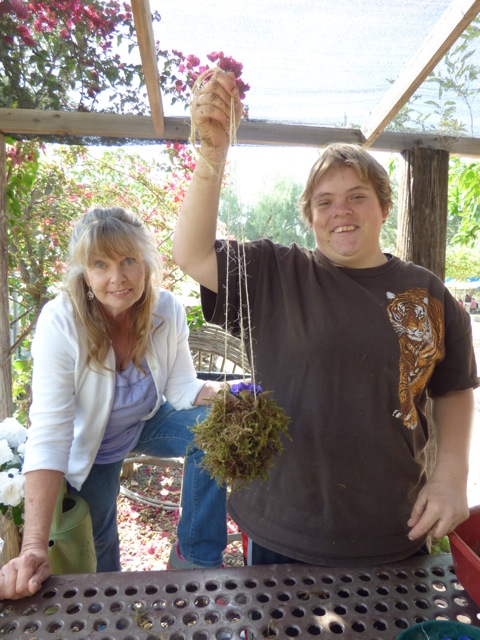
Heather Anderson and Marion Happ show their finished Kokedama

Heather Anderson and Marion Happ show their finished Kokedama

About the Author
California native Nan Sterman is host, co-producer, and co-writer of A Growing Passion, a television show that explores the ways plants power the planet, from farms and nurseries to backyards and schoolyards, rooftop gardens, community gardens, native habitats and more.
Social Share
  • google-share

Leave a Reply Cancel reply

*
*


Popular Posts

A big fried egg sized bloom
Grow a Fried Egg Plant - Matilija poppy
38 Comments
Tree babies
How to Water Your Trees
8 Comments
Stolons make Bermuda grass a challenge to remove
Whether Weed Cloth?
7 Comments

Categories

  • Agriculture
  • Animals
  • Art
  • Behind the Scenes
  • Botanical Garden
  • Community
  • Community Supported Agriculture
  • Cooking
  • Design
  • Explore More
  • Farm
  • Farm-to-Table
  • Food Justice
  • Fruit
  • Garden
  • Gardening
  • Gifts
  • History
  • How-to
  • Insects
  • Nan Sterman
  • Native Habitat
  • Nursery
  • Organic Farming
  • Plants
  • Projects
  • Public Gardens
  • Research
  • Tour
  • Travel
  • Vegetable Gardening
  • Waterwise
  • What's New
  • What's Trending

Archives

Contact Us

AGP Productions, LLC
PO Box 231034
Encinitas, CA 92023
info@agrowingpassion.com

Follow Us!

Follow Us on FacebookFollow Us on TwitterFollow Us on InstagramFollow Us on PinterestFollow Us on YouTubeFollow Us on RSS

Press

  • Media
  • Press
Ask-Nan
All Content and Images © 2018 AGP Productions, LLC | Privacy Policy
Designed by Belladia Marketing and Design