


Gardens and art were part of this past week’s adventure as I worked on recharging, reinvesting, and reinventing myself at the annual conference of the GWA, the Association of Garden Communicators (www.gardenwriters.org).
This year, more than 300 of us gathered in Atlanta, Georgia to polish our communication skills and visit area gardens.
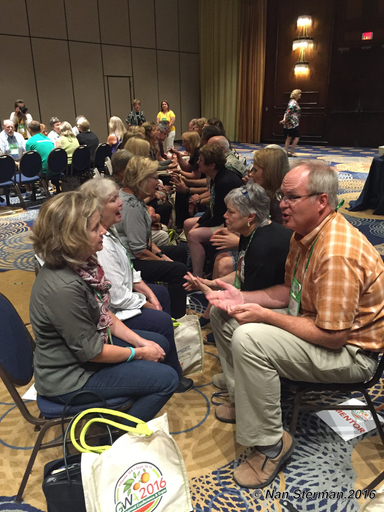
Garden communicators doing what they do best – communicating!
Thirty years ago, I spent a long, hot, humid summer in Atlanta, working in the science reporting unit at CNN (then known as Cable News Network). In the intervening years, the gardens, like the rest of the region, have grown and matured.
Private Gardens
We visited beautiful private gardens not far from the city center. One was styled in a Southern version of Tuscany-meets-France and included a formal knot garden.
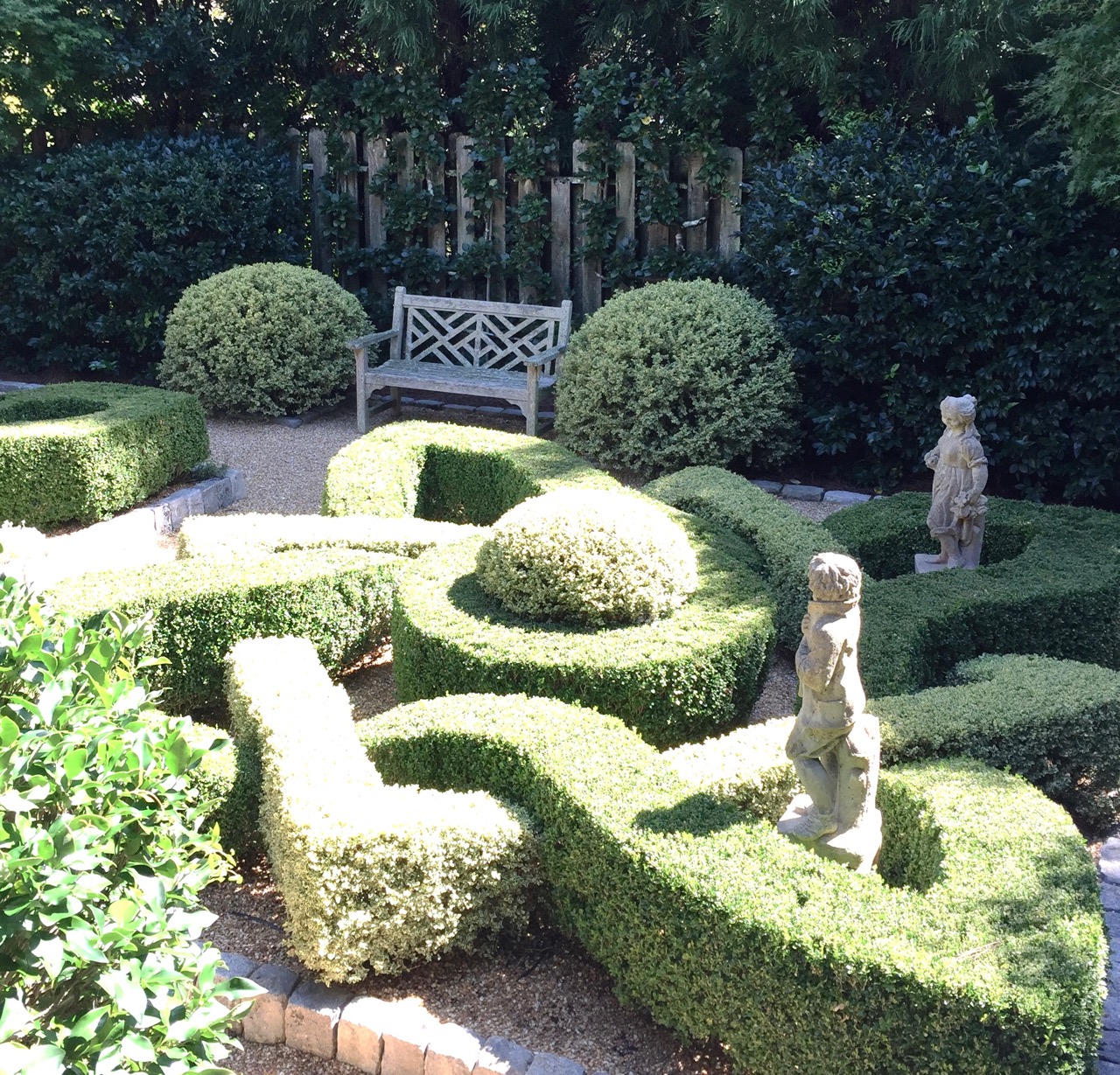
Dark green and bright green leaved shrubs carefully planted and pruned form a traditional knot garden.
Knot gardens are carefully constructed plantings of small scale shrubs, usually two or three different types, chosen to create color contrast: deep green against light green or silver or lime green and sometimes burgundy. The plants are tightly pruned so when seen from above, they look like colored threads woven in intricate knots.
In another corner of that garden, an espaliered Ginko tree caught my eye. I’ve seen fruit trees as espalier and shrubs as espalier but never a Ginko. It was stunning.

An unusual espaliered Gingko tree is pruned and shaped into a living sculpture to dress up a white brick wall
The Atlanta Botanical Garden
Our visit to the Atlanta Botanical Garden coincided with an exhibition of Chihuly blown glass. Stunning glass pieces were placed strategically among the garden’s plantings.
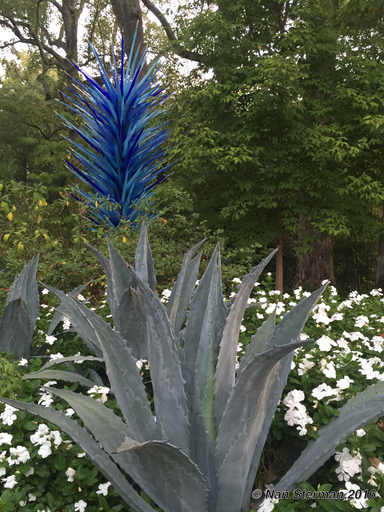
Dale Chihuly’s blue blown glass Yucca looks right at home with the blue agaves
We found Chihuly glass around every corner and integrated into every area of the botanical garden.
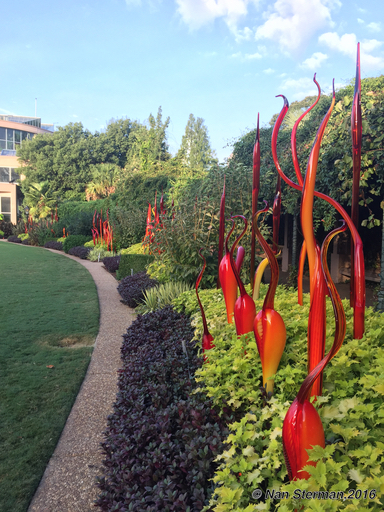
Dancing hot orange and red Chihuly glass flames amidst chartreuse and burgundy sweet potato vine line the pathway to the tropical plant conservatory
Past the dancing glass flames is the Tropical Rotunda, their tropical plant conservatory, which is filled with palms, bananas, epiphytes, and other plants I expected to see. What made it even more magical were the narrow roots of Cissus vines, cleverly planted high overhead so their roots hang down in etherial veils.
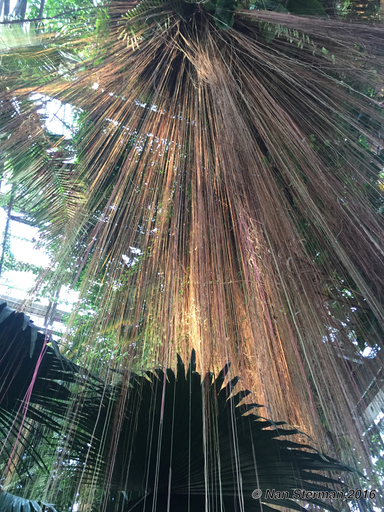
Looking up at the pink roots of Cissus vine that form an ethereal, overhead veil at the Atlanta Botanical Garden’s Tropical Rotunda
Next to the tropical rotunda is the Garden’s orchid display house which, in a word, is fabulous.

Dendrobium spectabilis is one of 2,000 species of orchids in the garden’s Fuqua Orchid Collection
Atlanta Botanical Garden also features two fantastic plant sculptures similar to those we saw on display at the 2012 Floriade in the Netherlands. This horticultural art form is called “mosaiculture” and is described as the “evolution of topiary.”
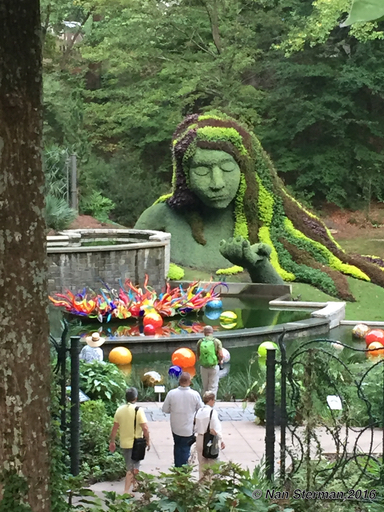
This massive, planted living sculpture is named “Earth Goddess.” She looks out over a colorful collection of Chihuly blown floating glass orbs
Mosaiculture starts with a steel skeleton that gets covered in steel mesh, then a moss-filled netting, and fitted with complex irrigation systems before being planted. Some are elaborate, others whimsical. The process reminded me of the episode of A Growing Passion where we followed the construction of Rose Parade floats.

It was hard not to pet this 15 foot tall “shaggy dog” mosaiculture