
facebook
rss
twitter
youtube
pinterest
  • Home
  • About
    • The Host, Nan Sterman
    • Awards and Reviews
    • Behind the Scenes
  • Videos
    • Clips/Segments
  • TV Schedule
    • Episode 701: The Beautiful Bromeliad
    • Episode 702: Beans, Beans – The Magical Legume
    • Episode 703: Grow Tiny
    • Episode 704: Food Is A Terrible Thing To Waste!
    • Episode 705: The Big Bloom
    • Episode 706: Gardening as a Community
    • Season 6
      • Episode 601: From Fruit to Nuts
      • Episode 602: Intoxicating Plumeria
      • Episode 603: The Art of a Garden
      • Episode 604: From Farm to Fork
      • Episode 605: Growing A Greener Golf Course
      • Episode 606: Plants: The Endangered Species
    • Season 5
      • Episode 501: Homegrown Hops – Local Flavor for Local Brews
      • Episode 502: Distant Roots And Tasty Shoots – Plants At The Zoo
      • Episode 503: The Story Of Seeds – From Breeding To Eating
      • Episode 504: Aquaponics – Fish Poop To Plant Roots
      • Episode 505: Urban Forests – Trees And Plants In The City
      • Episode 506: Wild And Wooly – Native Bee Pollinators
    • Season 4
      • Episode 401: Flowers and Floats – The Rose Parade
      • Episode 402: Citrus – California’s Second Gold Rush
      • Episode 403: Beneficial Insects
      • Episode 404: Bye, Bye Grass – How To Remove Your Lawn
      • Episode 405: After the Lawn is Gone – Waterwise Gardens
      • Episode 406: All About Algae
    • Season 3
      • Episode 301: Balboa Park: The Garden Faire
      • Episode 302: Big Trees: Giants Among Us
      • Episode 303: Garden Tours & Garden Shows: Finding Garden Inspiration
      • Episode 304: Preserve the Harvest
      • Episode 305: Coming to a Nursery Near You
      • Episode 306: How Water Flows
    • Season 2
      • Episode 201: From Vines and Wines
      • Episode 202: Chaparral, The Elfin Forest
      • Episode 203: Green Roofs
      • Episode 204: New Models of Farming
      • Episode 205: With Food and Justice for All
      • Episode 206: Growing Dreams and Memories
    • Season 1
      • Episode 101: The Business of Blooms
      • Episode 102: California Native Grown
      • Episode 103: Grow Your Own
      • Episode 104: Waterwise and Wonderful
      • Episode 105: Cycle and Recycle
      • Episode 106: Garden in a Pot
  • Explore More
  • Support The Show
  • Blog
  • Sponsors & Supporters
    • Founders
  • Shop
  • Contact

Care for Your Backyard Fruit

June 05, 2018
by Nan
backyard fruit, deciduous, drought tolerant, edibles, fruit, Garden, grape, Nan Sterman, peach leaf curl, peaches, plant care, plum, pluot, San Diego, scratch test, winery
1 Comment

Backyard fruit is the talk of the town right now – or maybe talk of the garden. Gardeners are worried about trees that have yet to leaf out or bloom, about grapes that don’t seem to be developing, about leaves that look misshapen, and more.
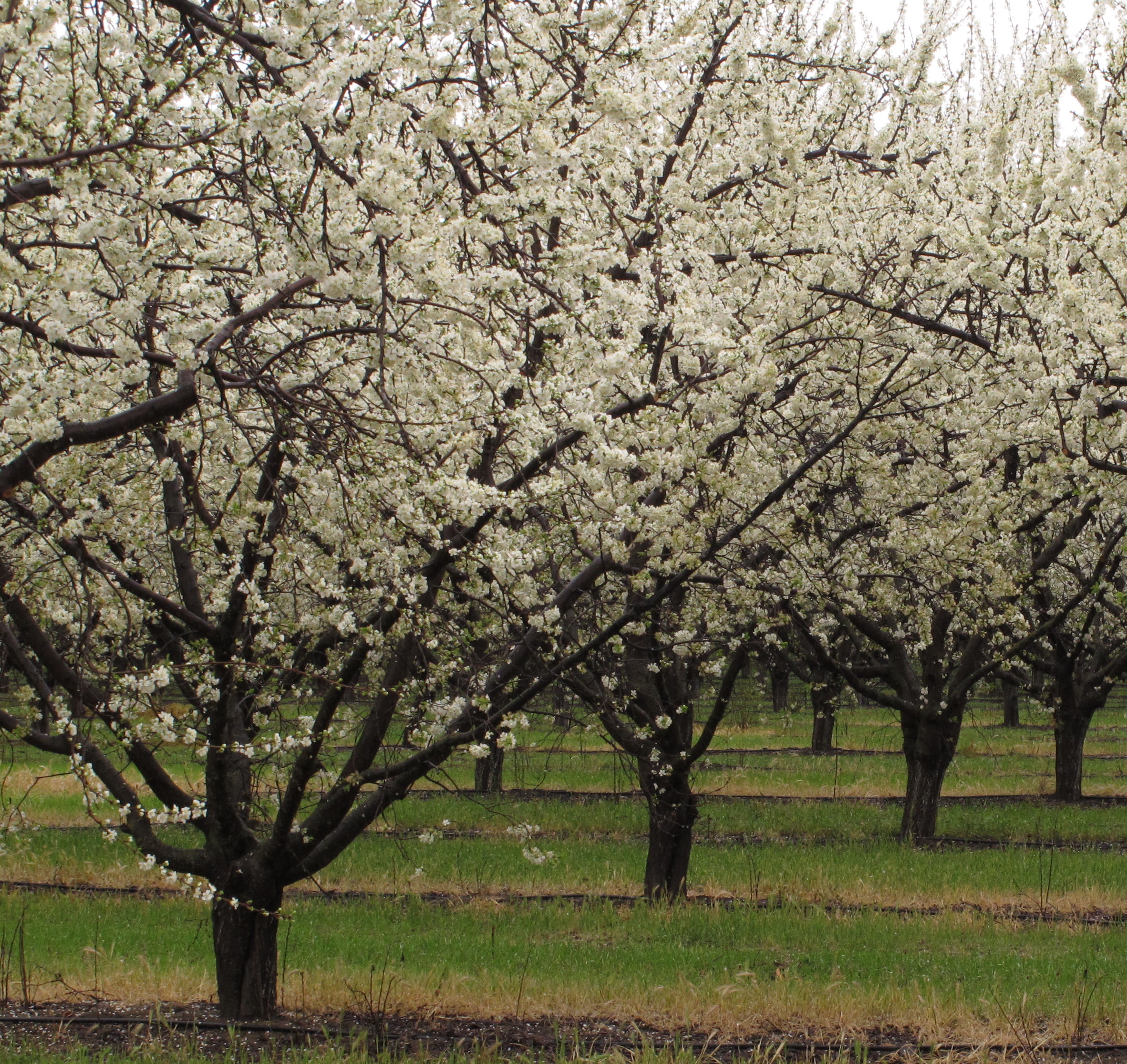
Water deciduous fruit trees only when their flowers, fruits, and leaves are present

Deciduous fruit trees need irrigation only once they flower and leaf out in spring.

Most of these concerns are a lot to do about nothing. Southern California had a late cold snap that set back some deciduous fruits like plums, apricots, and peaches by several weeks if not a month.

Water and fertilizer won’t change anything. Since dormant trees are basically sleeping, they won’t use the extra water or fertilizer, so there’s no point in offering it.

If your tree is truly bare, do a “scratch test.” Use your fingernail or the edge of your pruning shears to gently scratch away the paper-thin, outermost layer of bark on the smallest branches of the tree. If it is green beneath, the tree is alive. If it is brown, test some other branches including some larger branches nearer to the trunk. If there is no green under any of the bark, the tree could be dead. If you find any green, the tree is simply waiting for the right moment to break dormancy and flower or flush with leaves.

Curled leaves on stone fruits (plums, pluots, apricots, peaches, etc.) is evidence of a fungal infection we call peach leaf curl. It is too late in the year to treat peach leaf curl; instead spray the tree while it is dormant next winter.

If you haven’t already thinned young apples, pears, or stone fruits, do that now. When there are too many fruits for the tree to support, each fruit stays small. For larger fruits, thin young fruits to one every four to six inches along the branch. Collect and compost the fruits you remove.

Once deciduous fruit trees leaf out, its time to up the water and fertilizer. I prefer granular organic fruit tree fertilizers, always applied according label directions. For backyard fruits in containers, use half the recommended amount.
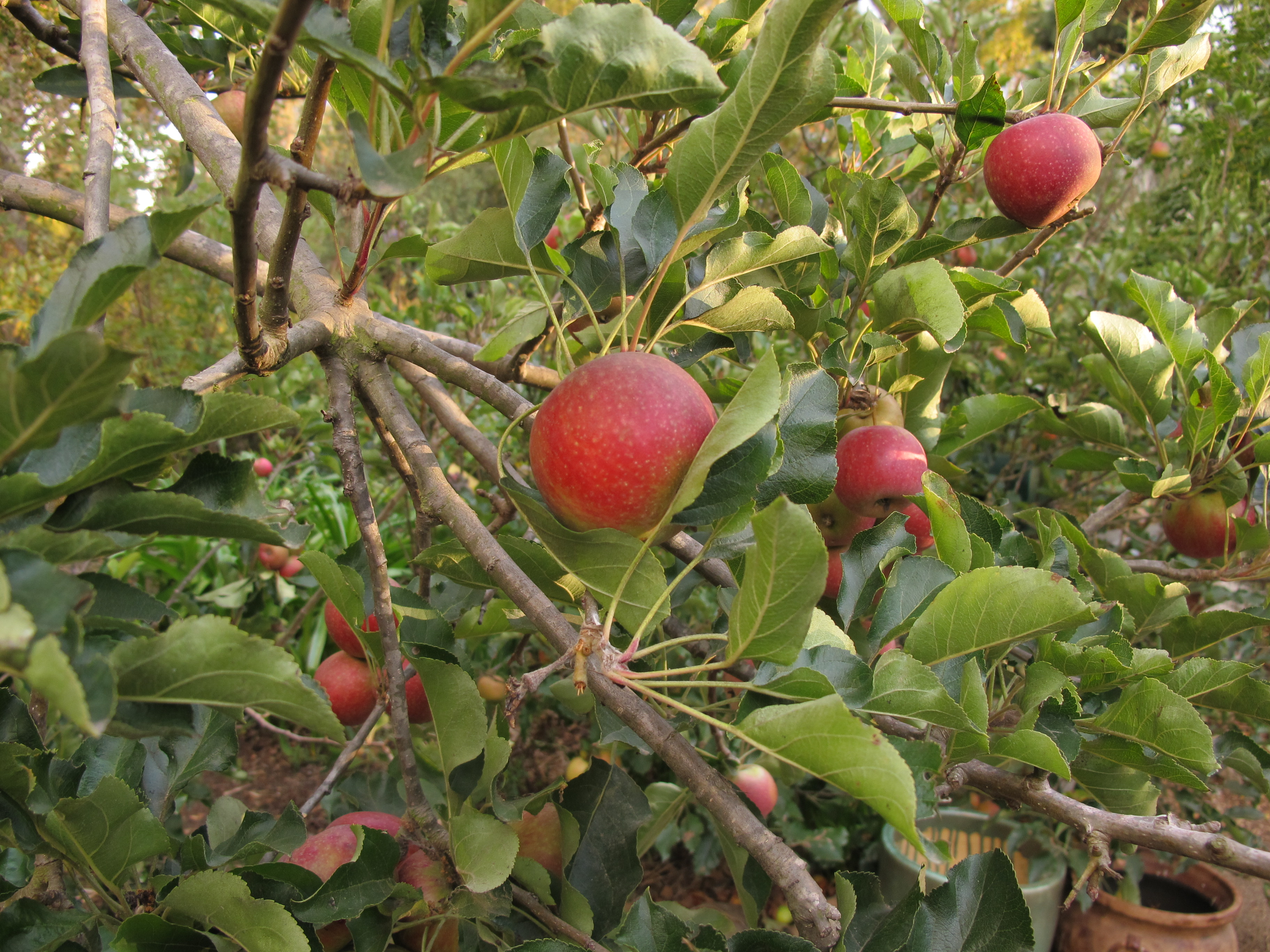
Home grown apples are better than any store bought

‘Sundowner’ apples ripening on the tree

I’ve seen grapevines that have just sprouted leaves, and some that have the beginnings of fruits. Grape vines are also deciduous and respond to cold, so some are also behind for this time of year. They will catch up, though fruits might ripen a little later than usual.

By the way, from late 1800s until the 1930s, San Diego County had a substantial vineyard and winery industry. Grapes were “dry grown” in those days, meaning vines were watered at planting, then only by rainfall. That tells you how drought tolerant these fruiting vines are.

The combination of Prohibition and Pierce’s Disease (transmitted to grapevines courtesy of the glassy-winged sharp shooter) brought San Diego’s early vineyards and winery industry to its knees.

Keep all fruiting plants well mulched with a three-inch thick layer of plant-based mulch. Start the mulch six to 12 inches away from the trunk. That ring of bare dirt keeps the trunk dry and protected from fungi or insect pests.
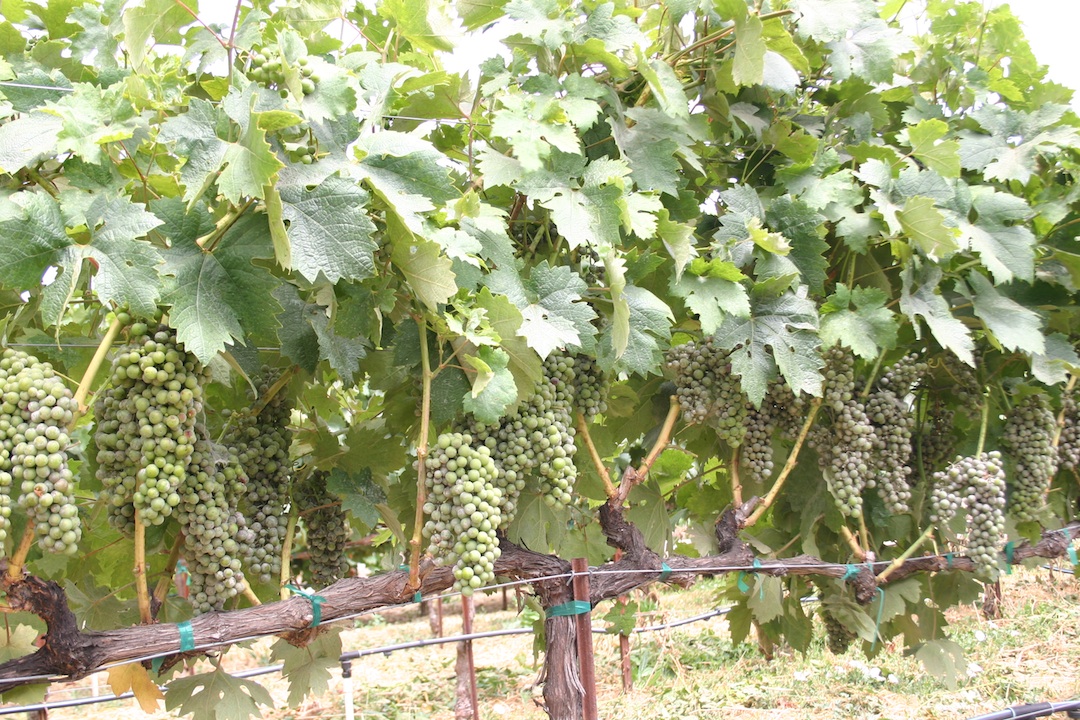
Perfectly pruned and trained backyard grapes

Grapes properly trained and pruned are beautiful as well as delicious

Please, don’t worry. Mother Nature has her own timetable. You’ll be eating homegrown backyard fruit soon enough. In the meantime, enjoy our episode, From Fruits to Nuts  to see how new kinds of fruit trees are bred and brought to market.

— Nan Sterman

About the Author
California native Nan Sterman is host, co-producer, and co-writer of A Growing Passion, a television show that explores the ways plants power the planet, from farms and nurseries to backyards and schoolyards, rooftop gardens, community gardens, native habitats and more.
Social Share
  • google-share
One Comment
  1. Debbie Lobatz June 7, 2018 at 8:16 pm Reply

    Thanks Nan! I was looking at my plum tree wondering what was happening with it, as in very little. Although I did see a few very small green plums way up high.
    Appreciating your blogs….
    Debbie

Leave a Reply Cancel reply

*
*


Popular Posts

A big fried egg sized bloom
Grow a Fried Egg Plant - Matilija poppy
38 Comments
Tree babies
How to Water Your Trees
8 Comments
Stolons make Bermuda grass a challenge to remove
Whether Weed Cloth?
7 Comments

Categories

  • Agriculture
  • Animals
  • Art
  • Behind the Scenes
  • Botanical Garden
  • Community
  • Community Supported Agriculture
  • Cooking
  • Design
  • Explore More
  • Farm
  • Farm-to-Table
  • Food Justice
  • Fruit
  • Garden
  • Gardening
  • Gifts
  • History
  • How-to
  • Insects
  • Nan Sterman
  • Native Habitat
  • Nursery
  • Organic Farming
  • Plants
  • Projects
  • Public Gardens
  • Research
  • Tour
  • Travel
  • Vegetable Gardening
  • Waterwise
  • What's New
  • What's Trending

Archives

Contact Us

AGP Productions, LLC
PO Box 231034
Encinitas, CA 92023
info@agrowingpassion.com

Follow Us!

Follow Us on FacebookFollow Us on TwitterFollow Us on InstagramFollow Us on PinterestFollow Us on YouTubeFollow Us on RSS

Press

  • Media
  • Press
Ask-Nan
All Content and Images © 2018 AGP Productions, LLC | Privacy Policy
Designed by Belladia Marketing and Design