
facebook
rss
twitter
youtube
pinterest
  • Home
  • About
    • The Host, Nan Sterman
    • Awards and Reviews
    • Behind the Scenes
  • Videos
    • Clips/Segments
  • TV Schedule
    • Episode 701: The Beautiful Bromeliad
    • Episode 702: Beans, Beans – The Magical Legume
    • Episode 703: Grow Tiny
    • Episode 704: Food Is A Terrible Thing To Waste!
    • Episode 705: The Big Bloom
    • Episode 706: Gardening as a Community
    • Season 6
      • Episode 601: From Fruit to Nuts
      • Episode 602: Intoxicating Plumeria
      • Episode 603: The Art of a Garden
      • Episode 604: From Farm to Fork
      • Episode 605: Growing A Greener Golf Course
      • Episode 606: Plants: The Endangered Species
    • Season 5
      • Episode 501: Homegrown Hops – Local Flavor for Local Brews
      • Episode 502: Distant Roots And Tasty Shoots – Plants At The Zoo
      • Episode 503: The Story Of Seeds – From Breeding To Eating
      • Episode 504: Aquaponics – Fish Poop To Plant Roots
      • Episode 505: Urban Forests – Trees And Plants In The City
      • Episode 506: Wild And Wooly – Native Bee Pollinators
    • Season 4
      • Episode 401: Flowers and Floats – The Rose Parade
      • Episode 402: Citrus – California’s Second Gold Rush
      • Episode 403: Beneficial Insects
      • Episode 404: Bye, Bye Grass – How To Remove Your Lawn
      • Episode 405: After the Lawn is Gone – Waterwise Gardens
      • Episode 406: All About Algae
    • Season 3
      • Episode 301: Balboa Park: The Garden Faire
      • Episode 302: Big Trees: Giants Among Us
      • Episode 303: Garden Tours & Garden Shows: Finding Garden Inspiration
      • Episode 304: Preserve the Harvest
      • Episode 305: Coming to a Nursery Near You
      • Episode 306: How Water Flows
    • Season 2
      • Episode 201: From Vines and Wines
      • Episode 202: Chaparral, The Elfin Forest
      • Episode 203: Green Roofs
      • Episode 204: New Models of Farming
      • Episode 205: With Food and Justice for All
      • Episode 206: Growing Dreams and Memories
    • Season 1
      • Episode 101: The Business of Blooms
      • Episode 102: California Native Grown
      • Episode 103: Grow Your Own
      • Episode 104: Waterwise and Wonderful
      • Episode 105: Cycle and Recycle
      • Episode 106: Garden in a Pot
  • Explore More
  • Support The Show
  • Blog
  • Sponsors & Supporters
    • Founders
  • Shop
  • Contact

Easy, Waterwise Summer Blooming Bulbs

June 12, 2018
by Nan
Amaryllis belladonna, Bulbs, Drimia maritima, drought tolerant, Flowers, Garden, Hymenocallis, Mediterranean, Naked lady, Nan Sterman, Neomarica caerulea, San Diego, sea squill, spider lily, summer bloomers, summer flowers, Urginea maritima, waterwise
2 Comments
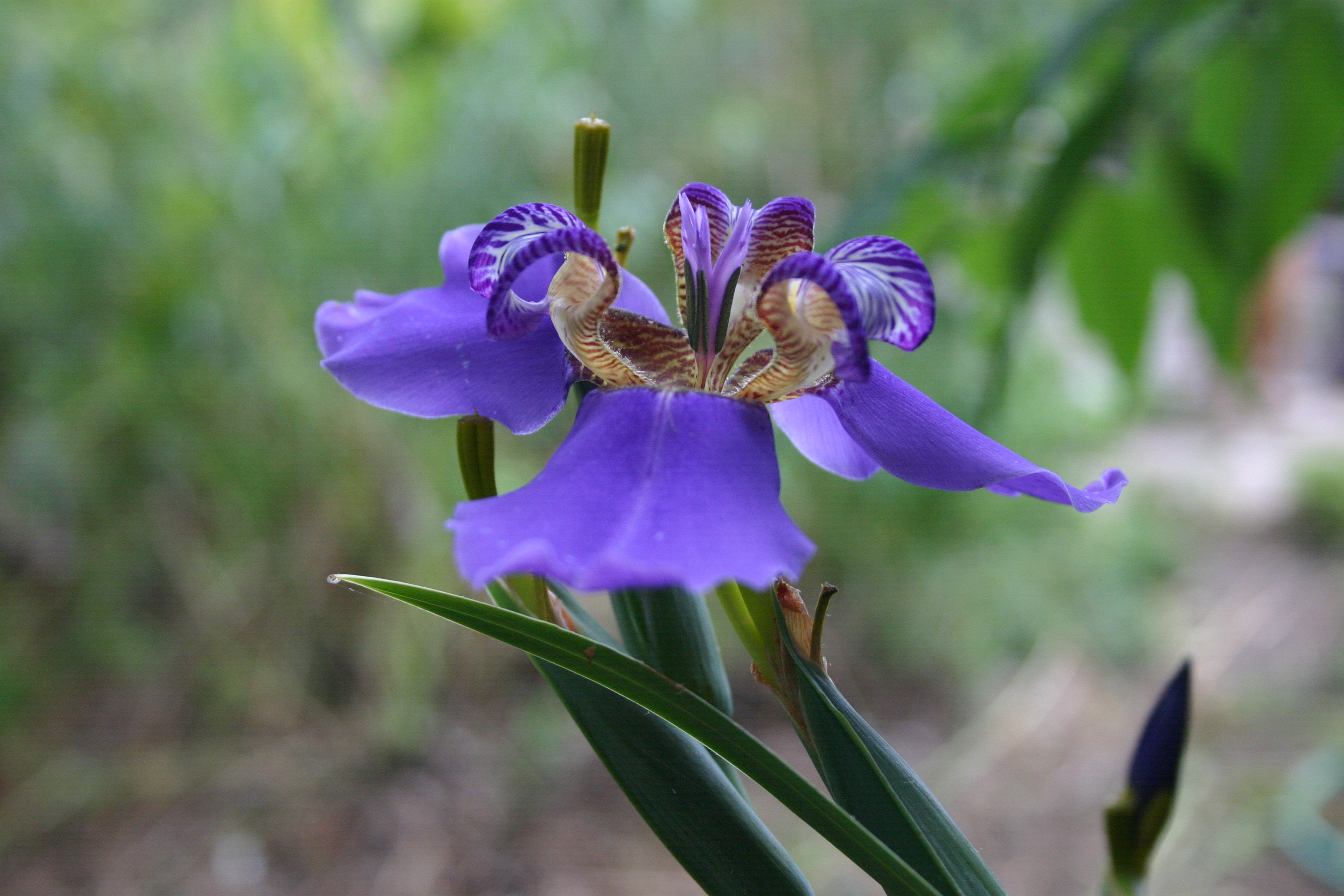
Violet blue Neomarica caerulea

Iris relative, Neomarica caerulea blooms appear in summer in waterwise gardens

There aren’t many waterwise summer blooming bulbs for Southern California’s hot and dry climate.  Most waterwise bulbs bloom in spring here, then go dormant.  But there are a few that bloom in summer with a very little irrigation, and an extraordinary few that bloom with no irrigation at all. These are the ones at the top of my list.

Walking iris,Neomarica caeruleais an evergreen member of the iris family that grows four or five-foot tall fans of upright green leaves, topped in summer by taller stalks of spectacular flowers. Like other iris, the flowers have three petals that hang down – known as “falls,” and three upright petals called “standards.” The species name “caerulea” comes from the incredible violet blue color that infuses the petals. Add gold and brown ripples on a white background towards the base of each fall and covering the standards for a most magnificent bloom.

Each fan makes one flower stalk to start with, topped in multiple buds that open in sequence for just one day each. As the fan matures, it produces more flower stalks, and more fans so eventually, one Neomarica plant commands a big summertime presence.
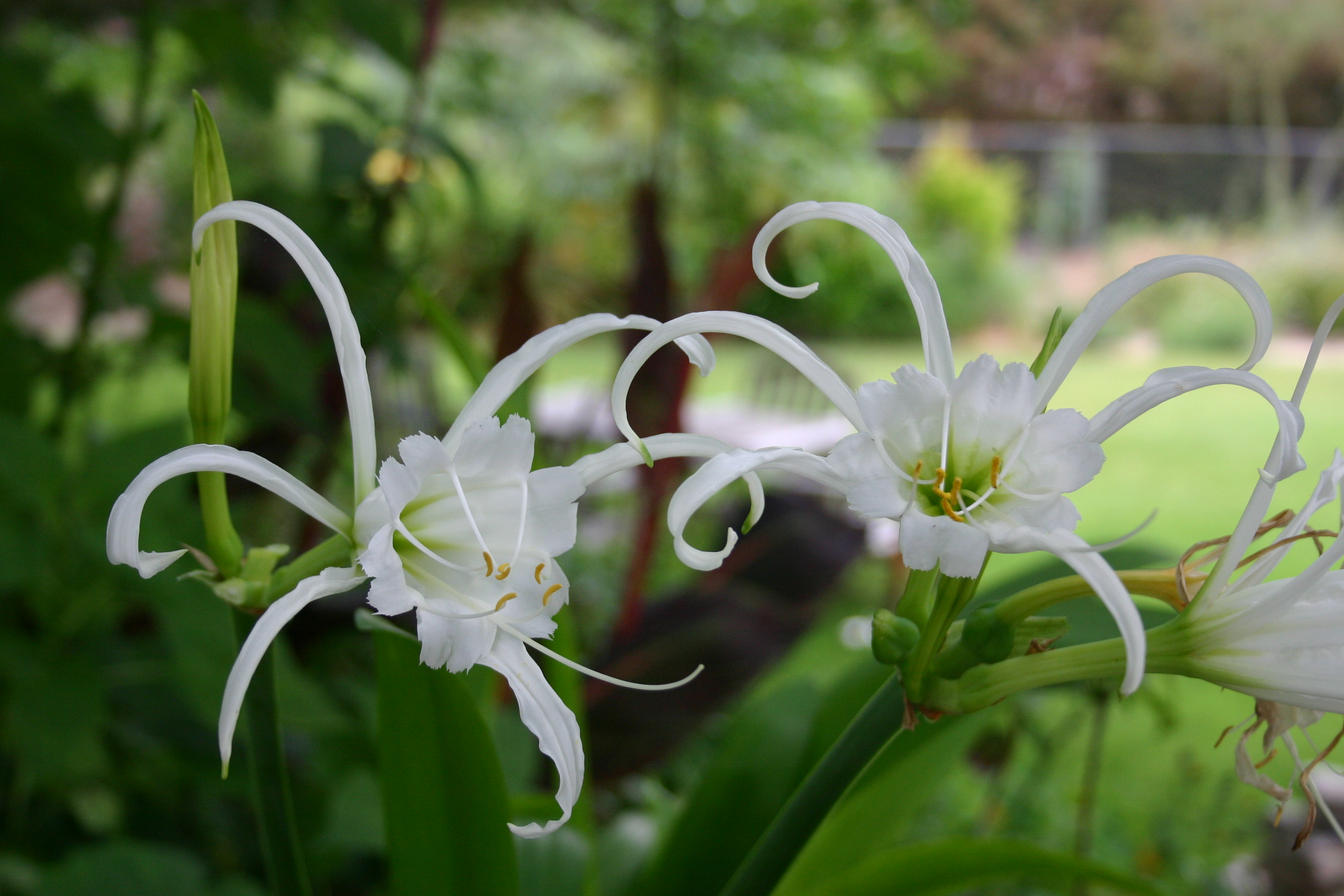
spidery white flowers of spider lily

Fused petals that taper to long projections make these blooms look spidery

Rather than form seedpods, flowers make new plantlets that can be separated from the mother stalk and rooted into a pot once they begin to show some root – hence the common name “walking” iris.

Very dry growing in coastal gardens and in inland gardens with cooler sun or light shade and well draining soil. Good under the dappled light of a tree canopy.

Spider lily, Hymenocallis (also sold asIsmene)are lily relatives native from the southern US down into central and South America. The petals of their large white flowers are fused at the base, then taper to long, narrow pointed “legs” that sometimes curl. The net result looks like a giant white spider amidst long, strappy, bright green leaves
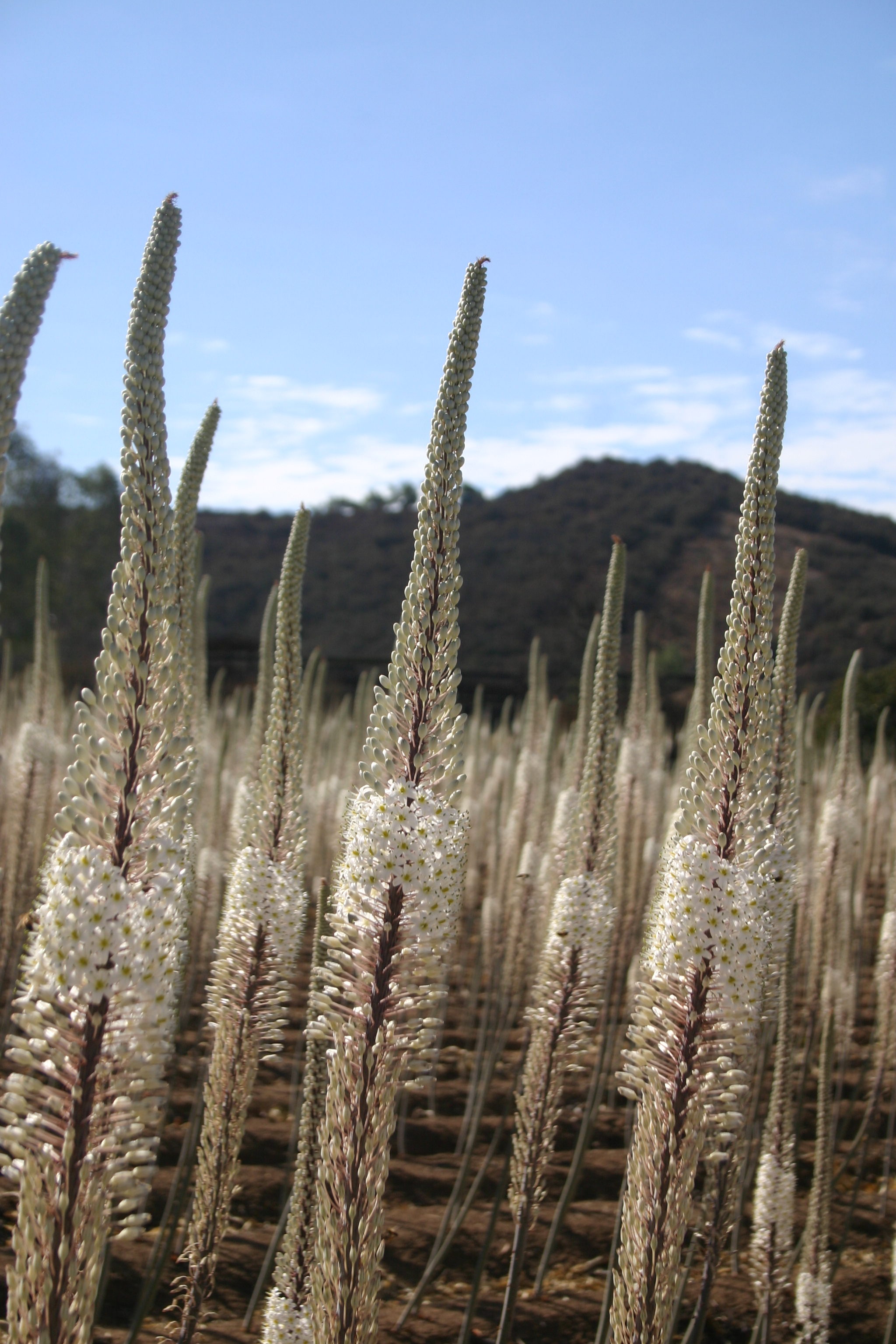
Tall seq squill

Sea squill flower stalks can ultimately reach six feet tall

Spider lilies form flower stalks that are three feet tall, so they hold their own in a garden bed. They are spectacular in containers (my favorite). Grow in morning sun or daylong light shade, especially inland.

Sea Squill, Urginea maritima also calledDrimia maritima,is a Mediterranean bulb that can reach the size of a basketball! Most of the year, sea squill is a pretty cluster of broad, wavy green leaves. In July, the leaves turn yellow and die back. Within a few weeks, a chocolaty brown flowering stalk arises from where the leaves had been.

The older the bulb, the talker the flower stalk, up to six feet tall and topped in a long poker head of tiny white flowers. The flowers open in sequence that starts at the bottom. Each flower opens to reveal a bright yellow center. By fall, the flowers are gone and new leaves poke up out of the ground.

In the baking sun and heat of Murrieta, California, this bulb is grown without irrigation, so it is right at home in a waterwise garden. Cite in full, hot, sun, planted so the bulbs’ “shoulders” are a few inches above the soil. Alternatively plant into a large pot, in very well draining potting soil. Plant high – bury the roots and lower third of the bulb, but leave the rest visible. The bulb itself is poisonous so take precautions with children and pets.

Naked lady, Amaryllis belladonna, like sea squill, blooms on tall stems after the bright green leaves have faded in summer’s heat.
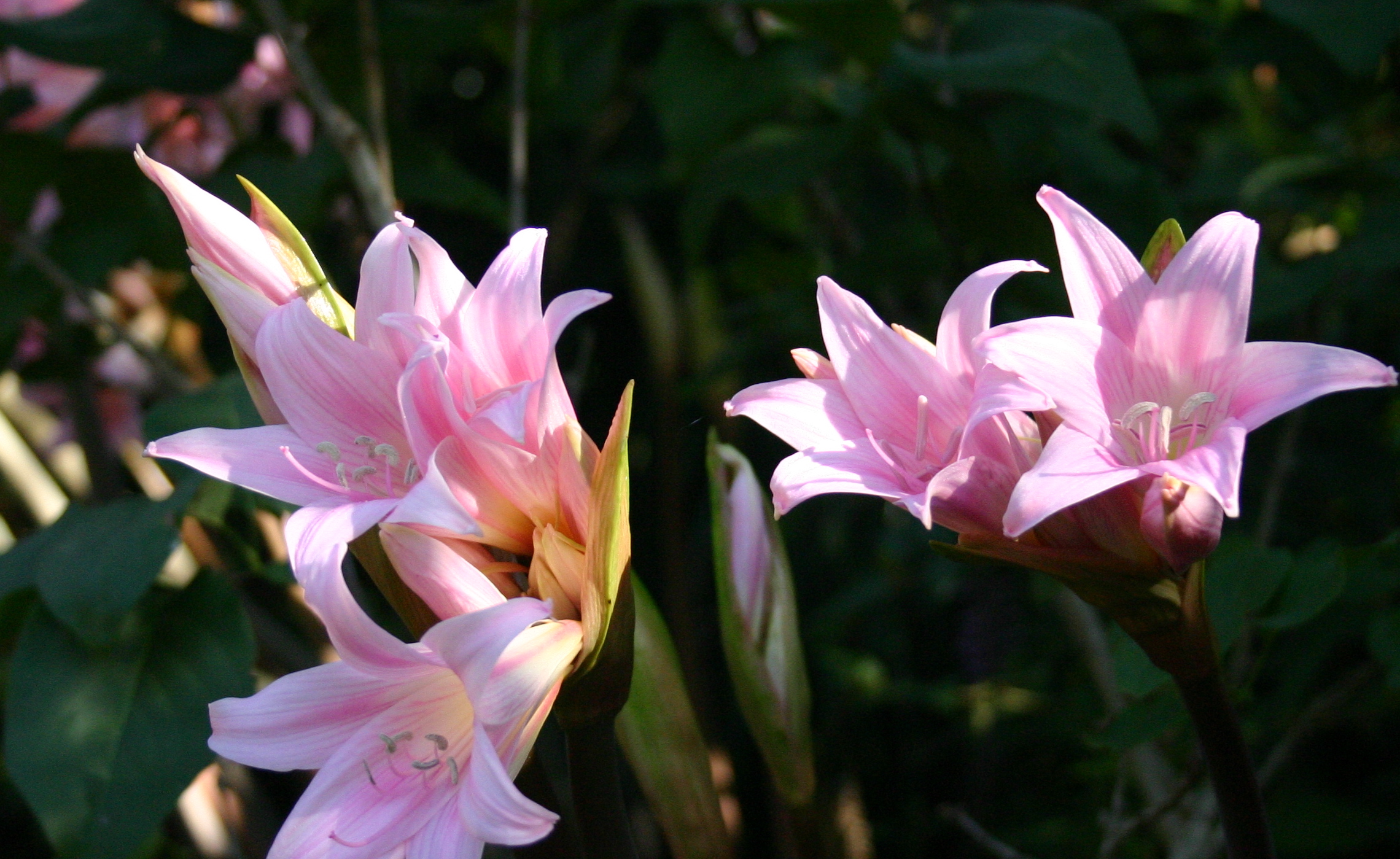
Naked ladies bloom pink

Naked lady flowers appear in late summer, after the leaves have died back. Their afternoon fragrance is heavenly.

Their huge, pink trumpet shaped blooms release a sweet fragrance in the late afternoon. These South African bulbs multiply over time so a planting of three bulbs is soon a planting of nine bulbs, then 15 and so on; perfect to share with friends and relatives. Plant in full sun, with no irrigation, and set bulbs so their “shoulders” are above ground.

— Nan Sterman

About the Author
California native Nan Sterman is host, co-producer, and co-writer of A Growing Passion, a television show that explores the ways plants power the planet, from farms and nurseries to backyards and schoolyards, rooftop gardens, community gardens, native habitats and more.
Social Share
  • google-share
2 Comments
  1. Jan Williams October 28, 2018 at 10:23 pm Reply

    Hello, I have just planted a Sea Squill and trying to learn as much as possible about the plant.
    When Nan visited Murrieta to see the sea squill’s was it videoed? If it was I would love to see it.

    Thank you in advance

    • Nan November 27, 2018 at 3:19 pm Reply

      I do have videos – what in particular are you hoping to see?

Leave a Reply Cancel reply

*
*


Popular Posts

A big fried egg sized bloom
Grow a Fried Egg Plant - Matilija poppy
38 Comments
Tree babies
How to Water Your Trees
8 Comments
Stolons make Bermuda grass a challenge to remove
Whether Weed Cloth?
7 Comments

Categories

  • Agriculture
  • Animals
  • Art
  • Behind the Scenes
  • Botanical Garden
  • Community
  • Community Supported Agriculture
  • Cooking
  • Design
  • Explore More
  • Farm
  • Farm-to-Table
  • Food Justice
  • Fruit
  • Garden
  • Gardening
  • Gifts
  • History
  • How-to
  • Insects
  • Nan Sterman
  • Native Habitat
  • Nursery
  • Organic Farming
  • Plants
  • Projects
  • Public Gardens
  • Research
  • Tour
  • Travel
  • Vegetable Gardening
  • Waterwise
  • What's New
  • What's Trending

Archives

Contact Us

AGP Productions, LLC
PO Box 231034
Encinitas, CA 92023
info@agrowingpassion.com

Follow Us!

Follow Us on FacebookFollow Us on TwitterFollow Us on InstagramFollow Us on PinterestFollow Us on YouTubeFollow Us on RSS

Press

  • Media
  • Press
Ask-Nan
All Content and Images © 2018 AGP Productions, LLC | Privacy Policy
Designed by Belladia Marketing and Design