


California has more rare, threatened, and endangered plants than any other state. Plant populations disappear as homes, shopping centers, schools, and other developments replace habitats. Native plants are also lost to too-frequent wildfires, to climate change, and to human overuse and misuse.
Some habitats can be restored but many, sadly cannot. Rather than lose those plants entirely, however, you can grow them in your garden. Not all rare, threatened, or endangered plants are sold in nurseries, but many are. Here is a selection of those plants that are available and look good in gardens.
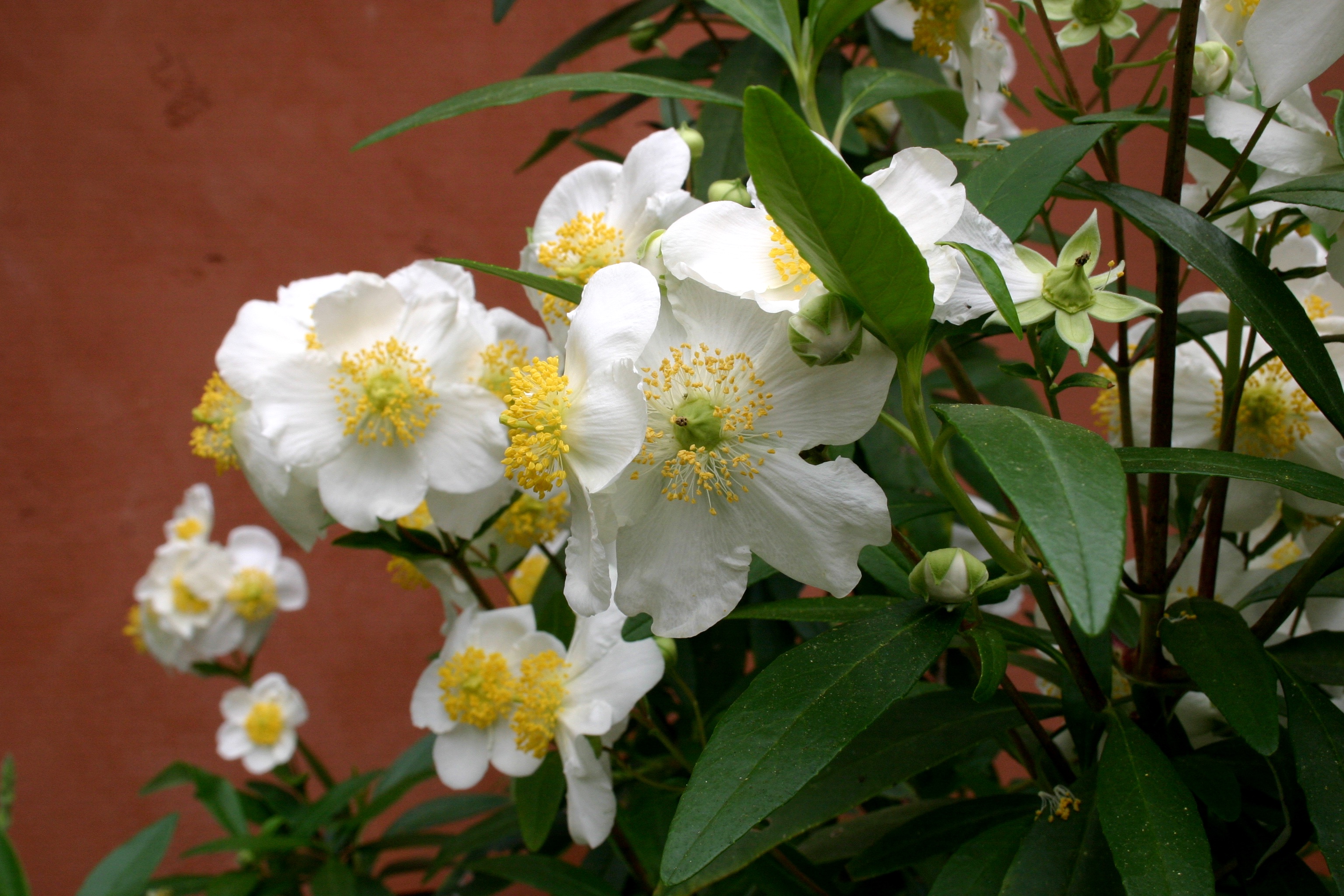
Bush anemone is a California native related to Hydrangea. Its spring bloom is slightly fragrant
Bush anemone (Carpenteria californica)
This flowering evergreen Hydrangea relative is native only to Fresno and Madera counties to our north. There, bush anemone evolved in chaparral and woodlands along stream banks, gullies and other moist soils, where it grows among oaks and pines, all between 1000 and 3000 feet elevation.
Since there are only seven locations where bush anemone grows in the wild, it is ranked as “rare or endangered,” and “critically imperiled.”
In gardens, bush anemone performs well in full sun on east or north facing exposures or part sun/light shade on south and west facing exposures. These beautiful shrubs grow between six and 10 feet tall, and are more upright/narrow unless you pinch the top growth after flowering ends. Deep green leaves are complemented with beautiful, big white flowers with yellow centers. These mildly fragrant blooms appear between May and July.
Del Mar Manzanita (Arctostaphylos glandulosa ssp. crassifolia)
This seriously endangered evergreen shrub is native to chaparral habitats from sea level to 1000-foot elevation. These are habitats are where people most like to live and grow crops, so this manzanita is threatened by urbanization, and agriculture, as well as by removal by people who regard it as a fire hazard. When it was last inventoried in 2010, only 54 populations of Del Mar manzanita remained in San Diego County, though there are populations in Baja.
Del Mar manzanita branches are covered in beautiful silvery green to blue-green leaves that emerge pinkish in spring. The plants grow to eight feet tall and six feet wide. Cream or pink flowers appear between December and June. Plant in sun or part shade, in fall or winter. Water through the first year, then stop watering by summer. This manzanita, like many others, is subject to “branch dieback,” which is when a single branch suddenly browns and dies. Prune it off and don’t worry. The plant will survive.
Lakeside Ceanothus (Ceanothus cyaneus)
Find this flowering evergreen shrub in chaparral and closed cone conifer forests located between 700 and 2300 feet elevation. There are 42 locations where this Ceanothus is known to grow wild, all in Riverside County and around Lakeside and Ramona in San Diego County. That might sound like a lot of places, but it is few enough for this shrub to be rated as “rare or endangered in California and elsewhere.” Lakeside Ceanothus is primarily threated by habitat destruction that results from development and by frequent wildfires.
Lakeside Ceanothus grows to about 15 feet tall with branches that spread to about 12 feet. Between April and June, tiny, bright blue flowers develop in tight clusters that are six inches or larger. Each flower has a yellow speck in the center.
This Ceanothus can be a challenging garden plant to establish. Plant in fall, in full sun or part shade. Site it near a rock or on a north-facing slope, so its roots can access to a bit of moisture after you cut off the irrigation before its first summer in the ground.
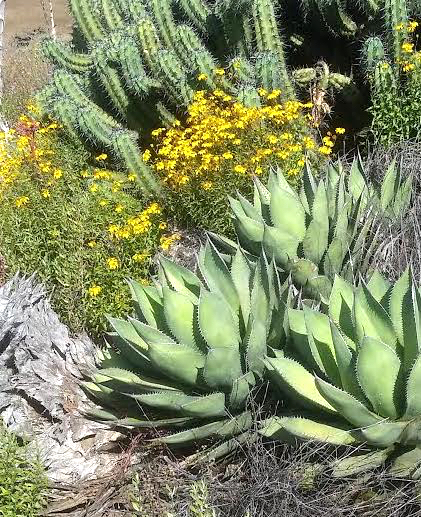
Agave shawii in its native habitat and in gardens, grows as a colony of small, succulent rosettes. Photo courtesy Moosa Creek Nursery
Shaw’s agave (Agave shawii)
Shaw’s agave is a native succulent that grows wild in scrub habitats along the coast, from sea level to 360 foot elevation. In California, Shaw’s agave grows wild only in six locations in Point Loma, Imperial Beach, and Del Mar, earning it a rating of “Seriously Endangered.”
This agave’s status is threatened by “habitat loss, habitat disturbance, development, trampling, genetic isolation, low recruitment, and genetic dilution from introduced plants.” In other words, the plants are threatened largely by human activity that both destroys plants and makes it difficult for them to reproduce.
This lovely little agave grows well in coastal gardens in particular. Each rosette reaches about three feet tall and wide, though flower stalks can reach 13 feet in height. This is a spiny agave, so plant it away from traffic and children. The spines and blade edges are brownish or purple in contrast with its succulent green blades. A single plant eventually pups to form a colony.
Tecate Cypress (Cupressus forbesii aka Hesperocyparis forbesii)
Trees can be endagered plants, too, this is one we featured in our episode “Plants, the Endangered Species. This beautiful evergreen is a relic of ancient forests and is seriously endangered in California. It grows wild in closed-cone (watch the episode to find out what that means), coniferous forest and chaparral, from about 250 ft. elevation to 4500 feet (mountains). Tecate cypress grows wild in only 25 locations in Orange, Riverside, and San Diego Counties. It grows in Baja as well.
Tecate cypress is threatened by mining, by development, and by too frequent wildfires that kill juvenile trees before they are mature enough to make new seeds.
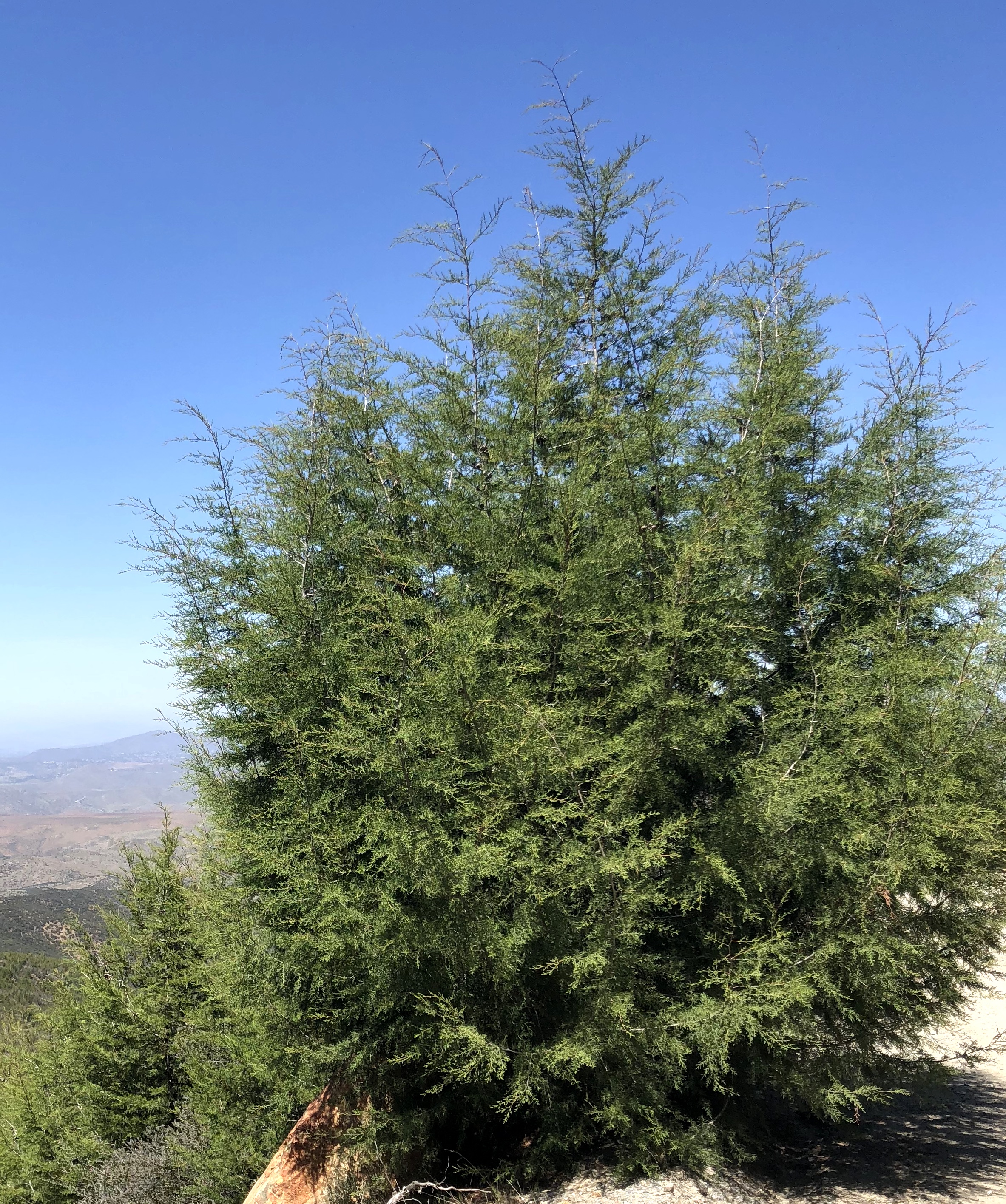
Tecate cypress in its native habitat on Otay Mountain grows this beautifully in gardens, too.
Fortunately, Tecate cypress is an excellent garden tree. This pyramidal conifer is a great substitute for Italian cypress. These are fast growing smaller trees reach about 30 feet tall by 25 feet wide. Irrigate young trees, then stop irrigating.
Tecate cypress is the only host plant for the native Thorne’s Hairstreak butterfly.
Leave Wild and Endangred Plants in the Wild
If you happen to encounter any of these plants growing in nature, leave them be. NEVER collect plants, cuttings, or seeds in the wild. Instead, purchase native plants through your local nurseries. If the nursery doesn’t have them in stock, ask to have them ordered from native plant growers such as Moosa Creek Nursery, Recon Native Plants, and Tree of Life Nursery.
For More Information
For more information on rare, threatened, and endangered plants, visit the Center for Plant Conservation. For informaiton on gardening with native plants, check out California Native Plant Society’s excellent website.
— Nan Sterman



Hi Nan,
How many of these natives will grow in our yard? I am willing to work with you & Phil (& Roland, of course) to make room for some in our “lower40”.
The bush anemone is already in your garden, Loreen. The others should all work for you too!