
facebook
rss
twitter
youtube
pinterest
  • Home
  • About
    • The Host, Nan Sterman
    • Awards and Reviews
    • Behind the Scenes
  • Videos
    • Clips/Segments
  • TV Schedule
    • Episode 701: The Beautiful Bromeliad
    • Episode 702: Beans, Beans – The Magical Legume
    • Episode 703: Grow Tiny
    • Episode 704: Food Is A Terrible Thing To Waste!
    • Episode 705: The Big Bloom
    • Episode 706: Gardening as a Community
    • Season 6
      • Episode 601: From Fruit to Nuts
      • Episode 602: Intoxicating Plumeria
      • Episode 603: The Art of a Garden
      • Episode 604: From Farm to Fork
      • Episode 605: Growing A Greener Golf Course
      • Episode 606: Plants: The Endangered Species
    • Season 5
      • Episode 501: Homegrown Hops – Local Flavor for Local Brews
      • Episode 502: Distant Roots And Tasty Shoots – Plants At The Zoo
      • Episode 503: The Story Of Seeds – From Breeding To Eating
      • Episode 504: Aquaponics – Fish Poop To Plant Roots
      • Episode 505: Urban Forests – Trees And Plants In The City
      • Episode 506: Wild And Wooly – Native Bee Pollinators
    • Season 4
      • Episode 401: Flowers and Floats – The Rose Parade
      • Episode 402: Citrus – California’s Second Gold Rush
      • Episode 403: Beneficial Insects
      • Episode 404: Bye, Bye Grass – How To Remove Your Lawn
      • Episode 405: After the Lawn is Gone – Waterwise Gardens
      • Episode 406: All About Algae
    • Season 3
      • Episode 301: Balboa Park: The Garden Faire
      • Episode 302: Big Trees: Giants Among Us
      • Episode 303: Garden Tours & Garden Shows: Finding Garden Inspiration
      • Episode 304: Preserve the Harvest
      • Episode 305: Coming to a Nursery Near You
      • Episode 306: How Water Flows
    • Season 2
      • Episode 201: From Vines and Wines
      • Episode 202: Chaparral, The Elfin Forest
      • Episode 203: Green Roofs
      • Episode 204: New Models of Farming
      • Episode 205: With Food and Justice for All
      • Episode 206: Growing Dreams and Memories
    • Season 1
      • Episode 101: The Business of Blooms
      • Episode 102: California Native Grown
      • Episode 103: Grow Your Own
      • Episode 104: Waterwise and Wonderful
      • Episode 105: Cycle and Recycle
      • Episode 106: Garden in a Pot
  • Explore More
  • Support The Show
  • Blog
  • Sponsors & Supporters
    • Founders
  • Shop
  • Contact

Help Your Garden Handle the Heat

August 01, 2018
by Nan
Aprium, Banksia, drip irrigation, dry garden, fruit trees, Grevillea, Hakea, heat, humidity, irrigate, mulch, native plants, pluot, powdery mildew, Protea, prune, soaker hose, soil fungi, sprinklers, water
0 Comment

Care for Your Garden and Yourself in the Heat

It’s hot. Back dripping, forehead wiping, ear perspiringly HOT. This morning’s weather report said temperatures are ten degrees above normal this week, and unusually humid too. So how can you help your garden handle the heat?

First, take care of yourself. Garden early in the morning and from late afternoon until dark. Stay out of the garden in the middle of the day, except for a midday snooze in the hammock.

When you work outside, wear sunscreen, a hat, long pants and long sleeves.
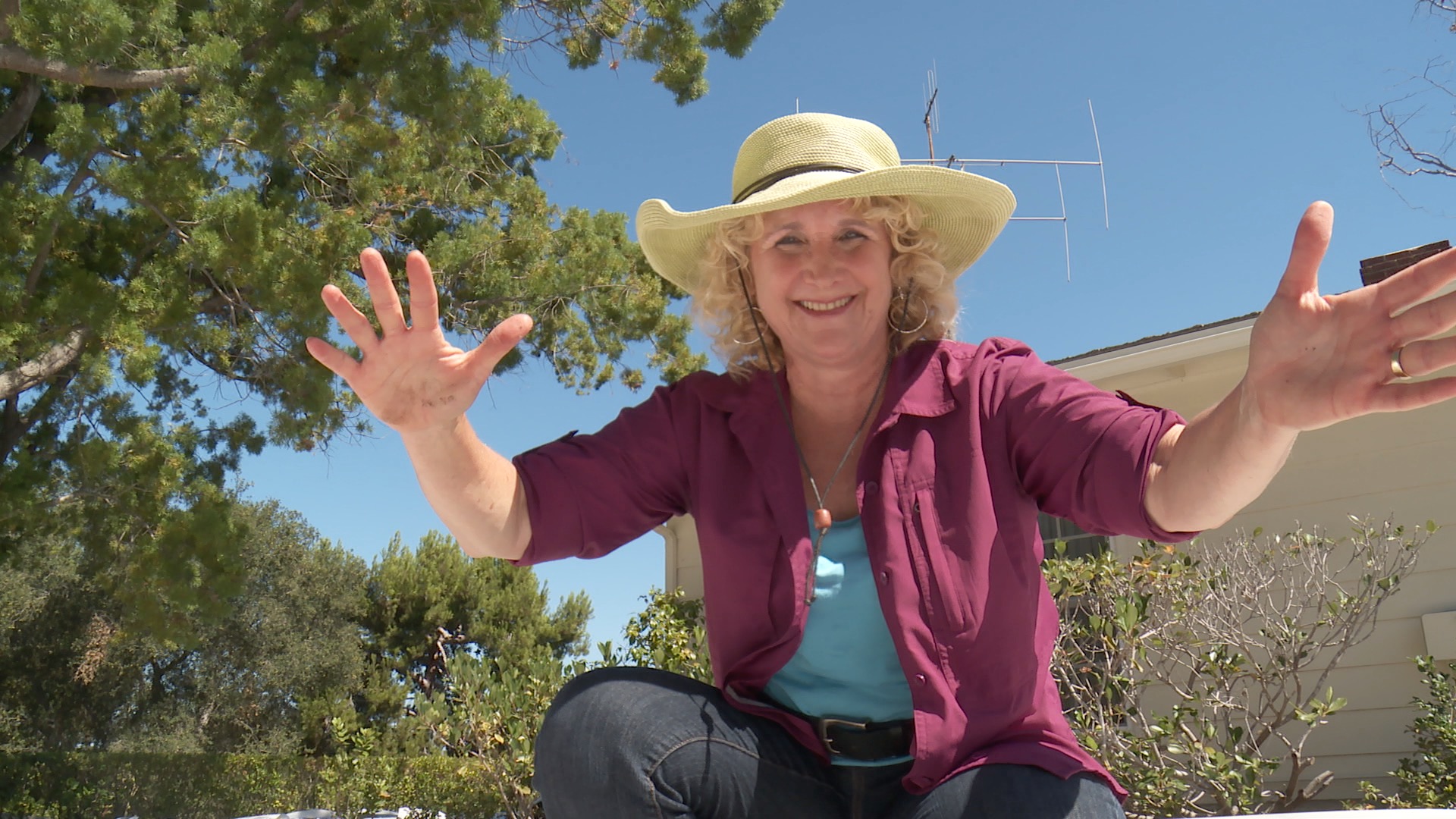
Summer garden garb: hat, long sleeves, long pants. Sunscreen, too!

Sunglasses are a good idea too, as is a wet bandana under your hat or wrapped around your neck.

Drink lots of liquids to stay hydrated.

Keep Plants Hydrated, Too.

If plants are droopy at the end of the day, don’t worry. Roots work overnight to replace the water lost through leaves during the day. If plants are droopy in the morning, though, give them a good soak.
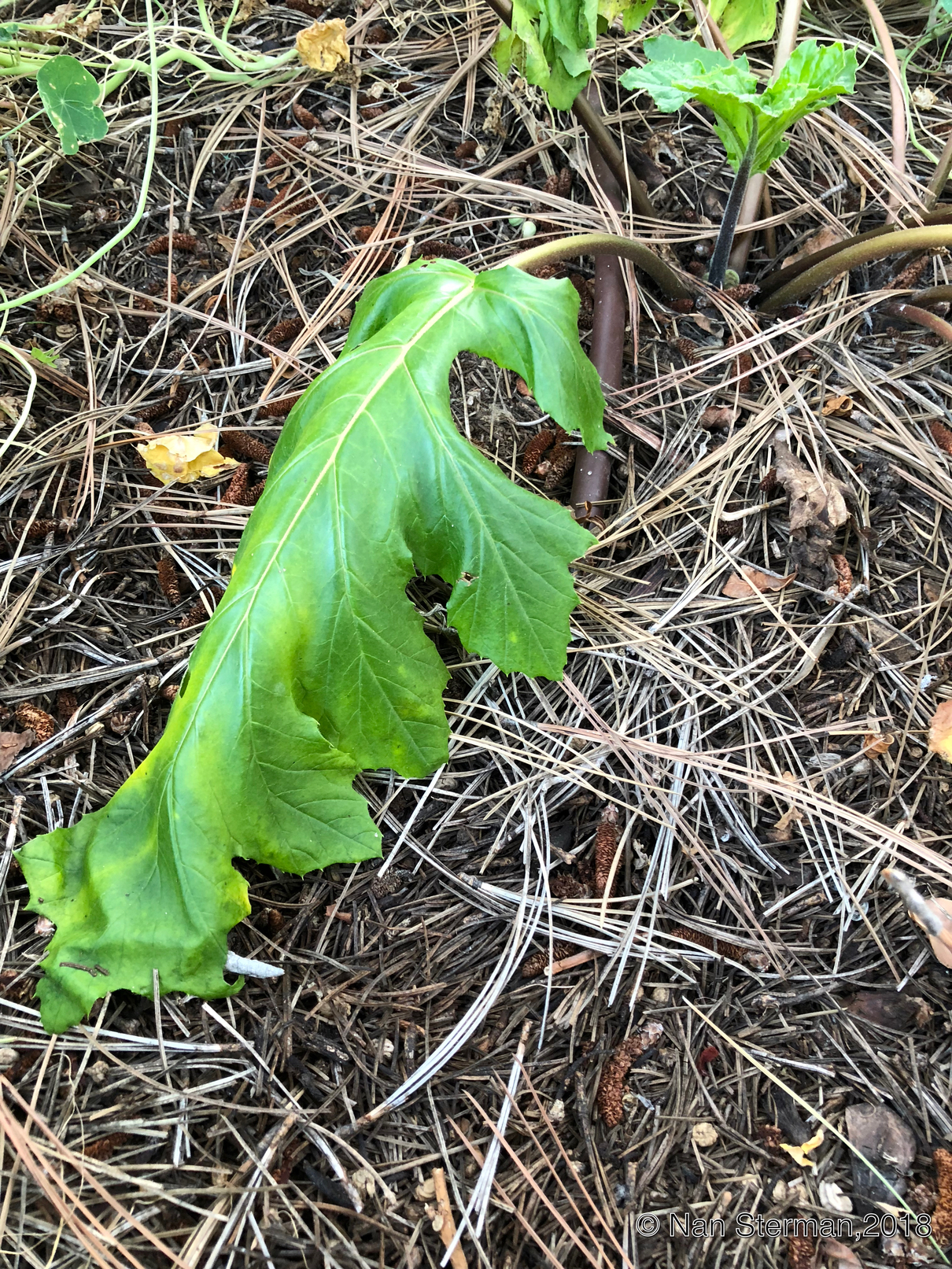
Drooping Acanthus leaves

Drooping leaves in the afternoon are not an issue, but they shouldn’t droop in the afternoon.

When you water your garden matters too. Run overhead sprinklers early in the morning; run drip irrigation overnight. Roots are deep in the soil, so run your irrigation system long enough to saturate the soil deep into the entire garden bed. How do you know how deep the soil is saturated? After you water, dig into the soil. If it isn’t wet six or eight inches deep, keep watering.

Don’t water natives or plants in the Protea family (Protea, conebush, Grevillea, pincushions, Banksia, Hakea and a few others). Soil fungi thrive in warm, wet soils, and those fungi attack the roots of Protea family plants (and our natives too). These plants are adapted to drier soils, so don’t water.

Vegetables, however, do need regular watering. Use soaker hoses or drip irrigation so leaves don’t get wet. That helps prevent powdery mildew and other leaf maladies that can kill vegetable plants.

Check your garden’s mulch. Maintain a layer three to four inches deep at all times. Thick mulch helps hold water in the soil. It also makes it hard to wet the soil if you irrigate using overhead spray. With the mulch as a barrier, the water never reaches the roots in the soil. This is another reason to switch to in-line drip irrigation.

In inland and desert gardens, use shade cloth or spun row cover fabric to protect vegetable plants from the intense sunlight. That much sun can be really damaging to leaves and fruits. With the combination of too much sun and too little moisture, plants can really suffer.

There Are Some Benefits
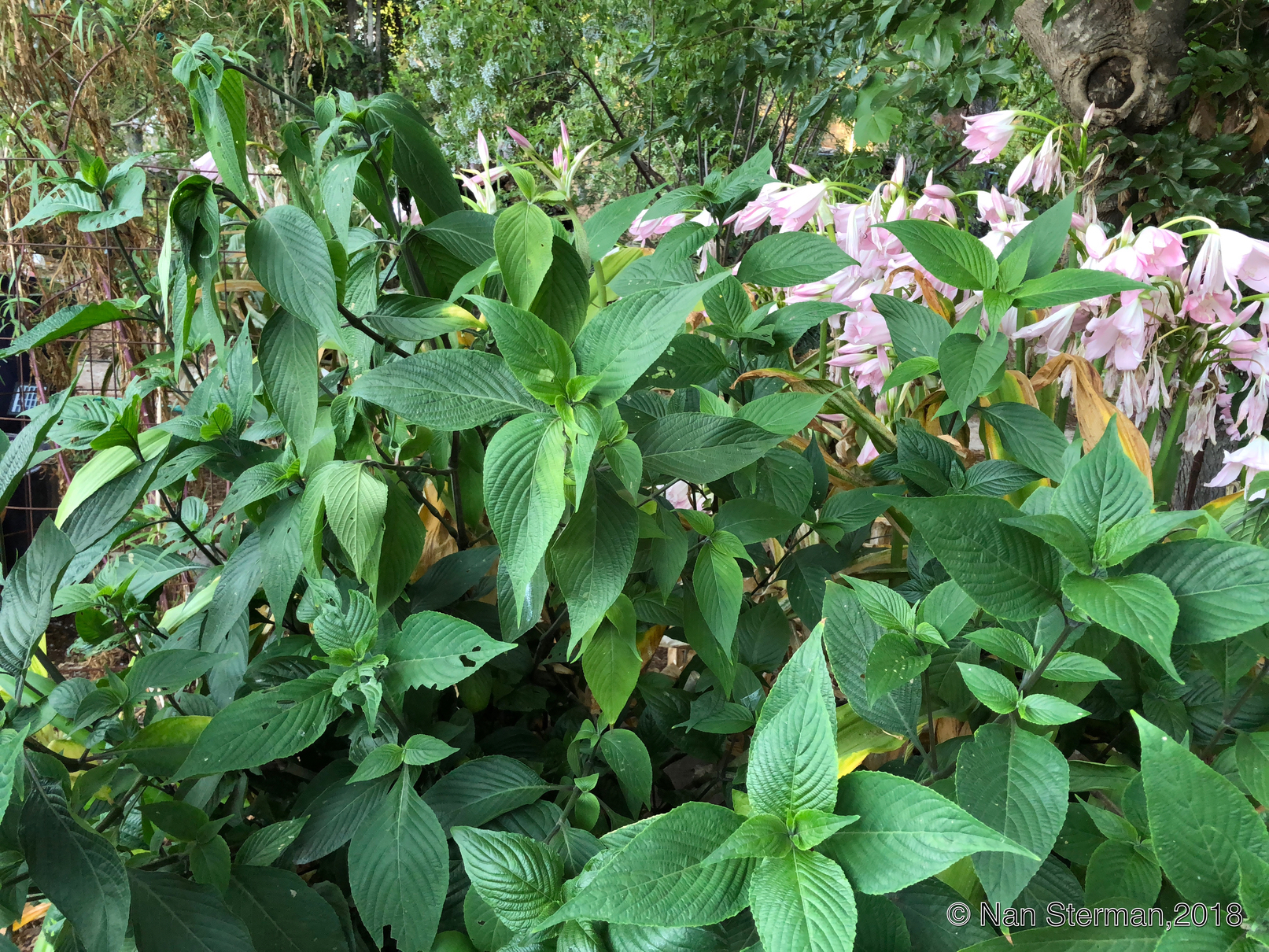
The garden overflows

The garden feels almost like a jungle this time of year!

Heat and humidity are not all doom and gloom for the garden. Garden plants are growing like crazy right now. Many of my garden’s ornamental plants have doubled in size in just a few weeks. Leaves look gorgeous and plants are more filled out than is typical this time of year.

Flowering plants that have finished blooming, then, are ready for a good haircut. Be sure to cut back to a branching point; don’t ever leave stubs.

I’m ready to prune the new fruit trees I planted as bare root plants for our recent episode on fruit trees. This is the time for these young Pluot™and Aprium™trees to get their first summer haircuts. The idea is to keep them small, so all the fruits are within reach. In winter, I will prune them again, but focus on their shape.

— Nan Sterman

About the Author
California native Nan Sterman is host, co-producer, and co-writer of A Growing Passion, a television show that explores the ways plants power the planet, from farms and nurseries to backyards and schoolyards, rooftop gardens, community gardens, native habitats and more.
Social Share
  • google-share

Leave a Reply Cancel reply

*
*


Popular Posts

A big fried egg sized bloom
Grow a Fried Egg Plant - Matilija poppy
38 Comments
Tree babies
How to Water Your Trees
8 Comments
Stolons make Bermuda grass a challenge to remove
Whether Weed Cloth?
7 Comments

Categories

  • Agriculture
  • Animals
  • Art
  • Behind the Scenes
  • Botanical Garden
  • Community
  • Community Supported Agriculture
  • Cooking
  • Design
  • Explore More
  • Farm
  • Farm-to-Table
  • Food Justice
  • Fruit
  • Garden
  • Gardening
  • Gifts
  • History
  • How-to
  • Insects
  • Nan Sterman
  • Native Habitat
  • Nursery
  • Organic Farming
  • Plants
  • Projects
  • Public Gardens
  • Research
  • Tour
  • Travel
  • Vegetable Gardening
  • Waterwise
  • What's New
  • What's Trending

Archives

Contact Us

AGP Productions, LLC
PO Box 231034
Encinitas, CA 92023
info@agrowingpassion.com

Follow Us!

Follow Us on FacebookFollow Us on TwitterFollow Us on InstagramFollow Us on PinterestFollow Us on YouTubeFollow Us on RSS

Press

  • Media
  • Press
Ask-Nan
All Content and Images © 2018 AGP Productions, LLC | Privacy Policy
Designed by Belladia Marketing and Design