


By Nan Sterman
Here’s something I’ve long wondered about. There are more than 4,000 species of bees native to North America, all of which are pollinators. With the problems that European honeybees have had in recent years, are there enough native bees to pollinate our crops instead?
Evidently I’m not the only person whose asked that question, and that’s what I get to show you in this week’s episode of A Growing Passion, Wild and Woolly: Native Bee Pollinators.
San Diego: A Native Bee Hotspot
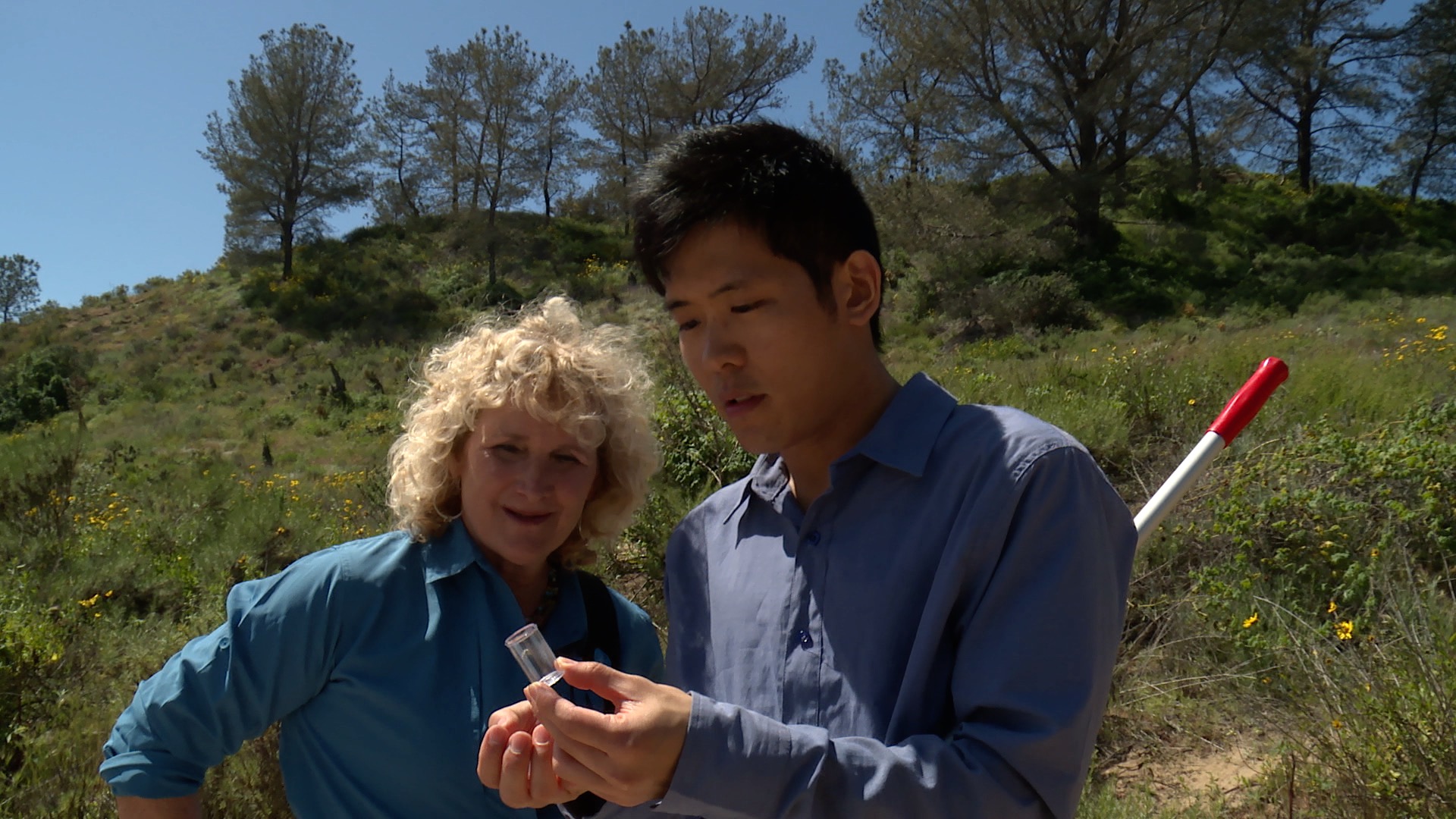
James Hung and Nan examine a bee before releasing it
A few years back, I read about Keng-Lou James Hung, then a PhD student at UC San Diego who was doing an inventory of San Diego County’s wild bees. Evidently, the county is a hotspot of bee diversity, which is not surprising since it is a hotspot of plant biodiversity, too.
James’ bee collection is huge! I met him in the lab right after he finished his degree. He showed me examples of native bees’ amazing variety of sizes, shapes, colors, and behaviors.
James took the crew and me to see native bees in the wild, first in the coastal chaparral, then to the desert. Usually we travel to see plants, which of course we had to find in order to find mason bees, sweat bees, bumble bees, and many others.

Native bees “muck around” in flowers, eating pollen, sipping nectar and in the process, collecting some pollen grains while dropping others – that’s pollination
It took a while to change my focus but eventually I got the knack of looking for bees. And wait until you see James’ elegant acrobatics as he swings his net to capture bees to show us!
Native Bees and Agriculture
I came away even more interested in native bees and crop pollination so I reached out to Shea O’Keefe at the Natural Resources Conservation Service. Her agency is funded under the Farm Bill to do pollinator conservation. She is an advisor on the restoration of Los Jilgueros Preserve in the heart of Fallbrook, California and owned by the Fallbrook Land Conservancy.
I was surprised to hear that the Farm Bill funds native bee enhancement, but Shea explained that the USDA sees native pollinators as playing an important role in agriculture, so they pay landowners to create or retain native pollinator habitat. Los Jilgueros (Spanish for “the goldfinches”), for example, is in the middle of Fallbrook where agriculture is number one. So by creating habitat for ground nesting bees like sweat bees and tunnel nesting bees like carpenter and mason bees, there is a ready army of pollinators for the surrounding farms.
Native Bees in My Backyard
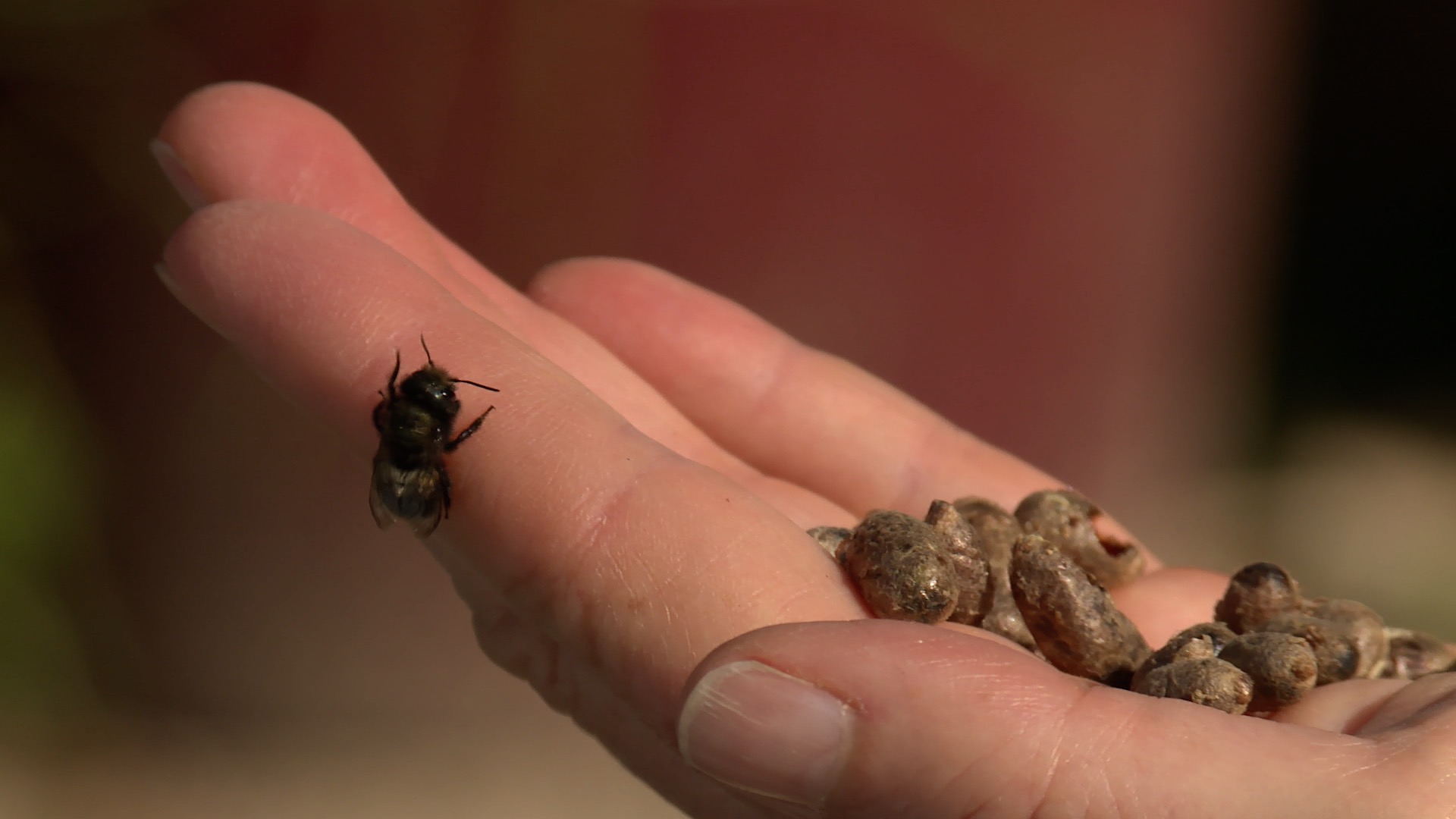
Mason bees hatch out of tiny cocoons. Holding them is not a problem since they rarely sting.
What about native bees pollinating home gardens? That was the question I put to Charlie Mohr, co-owner of Crown Bees, a company that promotes native bees, mostly mason bees, as an alternate to European honeybees as agricultural and backyard pollinators.
With the help of my friend, beekeeper James Conor McDonald, we set up a bee house in my backyard. Since these are solitary bees rather than social bees, they don’t live in hives and they don’t make honey. Instead, they nest in holes in the ground or holes in trees or in hollow plant stems – or in bee houses.
Charlie brought me mason bees still in their cocoons. We held some as they hatched out (we didn’t have to worry about getting stung), and put some into my new bee house. That way, they would remember where there home is when, in a few months, they are ready to lay eggs for the next generation.
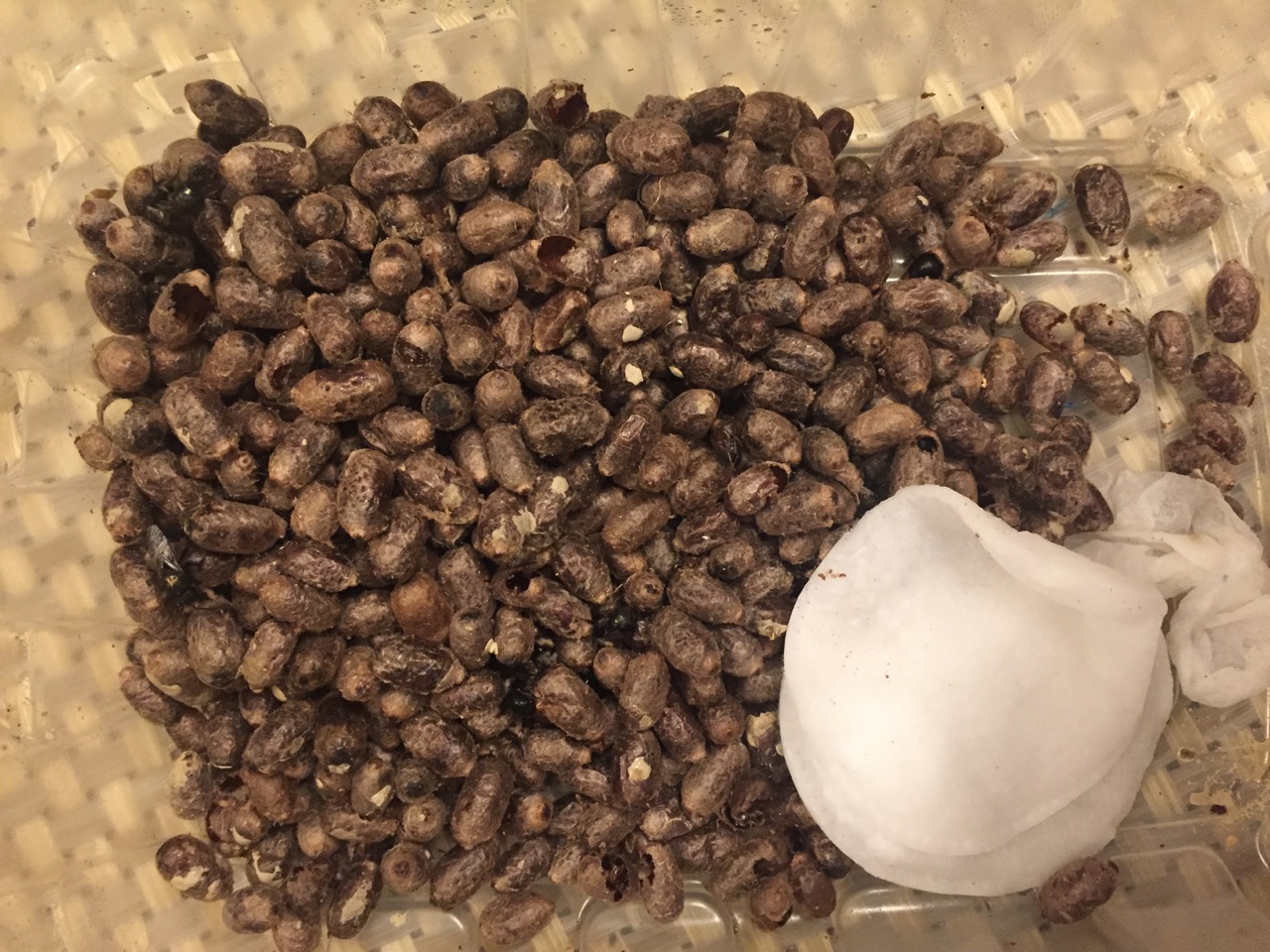
These mason bee cocoons are about the size of a pencil eraser.
I am thrilled to have a bee house on my back patio and I can’t wait until the bees return to lay their eggs. And if you like the idea of having a bee house in your backyard, watch our Facebook page because we’ll be giving one away in a few days.



Hi,
We are getting ready to plant 4-8 fruit/citrus trees between our front and backyard. I am relandscaping our yard to include more native plants. Can a resident with a small backyard host a native bee house? Are there specific requirements that must be in place to support a native bee house?
Thanks for asking! Absolutely a small backyard can host a native bee house. Your garden needs to have the right kinds of flowers for the native bees you would like to support. For mason bees, you need some damp clay, and if you use a manufactured native bee house, all you need is the house and if you want, some bees (rather than waiting for the bees to find the house). For more information, please visit http://www.crownbees.com. These are the folks we featured in the show and they have all the information you need to set your garden up to support native bees. Good luck!
For those who may be interested, I found mason bee houses for sale at the Poway Costco for about $14.00 (made in Taiwan). They had a limited supply.
Best wishes.
— Peter
PS Wild and Wooly, Native bee polinators, was an excellent program. The segments with Dr. Keng-Lou James Hung were especially interesting. AGP is local programming at its best!