
facebook
rss
twitter
youtube
pinterest
  • Home
  • About
    • The Host, Nan Sterman
    • Awards and Reviews
    • Behind the Scenes
  • Videos
    • Clips/Segments
  • TV Schedule
    • Episode 701: The Beautiful Bromeliad
    • Episode 702: Beans, Beans – The Magical Legume
    • Episode 703: Grow Tiny
    • Episode 704: Food Is A Terrible Thing To Waste!
    • Episode 705: The Big Bloom
    • Episode 706: Gardening as a Community
    • Season 6
      • Episode 601: From Fruit to Nuts
      • Episode 602: Intoxicating Plumeria
      • Episode 603: The Art of a Garden
      • Episode 604: From Farm to Fork
      • Episode 605: Growing A Greener Golf Course
      • Episode 606: Plants: The Endangered Species
    • Season 5
      • Episode 501: Homegrown Hops – Local Flavor for Local Brews
      • Episode 502: Distant Roots And Tasty Shoots – Plants At The Zoo
      • Episode 503: The Story Of Seeds – From Breeding To Eating
      • Episode 504: Aquaponics – Fish Poop To Plant Roots
      • Episode 505: Urban Forests – Trees And Plants In The City
      • Episode 506: Wild And Wooly – Native Bee Pollinators
    • Season 4
      • Episode 401: Flowers and Floats – The Rose Parade
      • Episode 402: Citrus – California’s Second Gold Rush
      • Episode 403: Beneficial Insects
      • Episode 404: Bye, Bye Grass – How To Remove Your Lawn
      • Episode 405: After the Lawn is Gone – Waterwise Gardens
      • Episode 406: All About Algae
    • Season 3
      • Episode 301: Balboa Park: The Garden Faire
      • Episode 302: Big Trees: Giants Among Us
      • Episode 303: Garden Tours & Garden Shows: Finding Garden Inspiration
      • Episode 304: Preserve the Harvest
      • Episode 305: Coming to a Nursery Near You
      • Episode 306: How Water Flows
    • Season 2
      • Episode 201: From Vines and Wines
      • Episode 202: Chaparral, The Elfin Forest
      • Episode 203: Green Roofs
      • Episode 204: New Models of Farming
      • Episode 205: With Food and Justice for All
      • Episode 206: Growing Dreams and Memories
    • Season 1
      • Episode 101: The Business of Blooms
      • Episode 102: California Native Grown
      • Episode 103: Grow Your Own
      • Episode 104: Waterwise and Wonderful
      • Episode 105: Cycle and Recycle
      • Episode 106: Garden in a Pot
  • Explore More
  • Support The Show
  • Blog
  • Sponsors & Supporters
    • Founders
  • Shop
  • Contact

Native Plants Give Your Garden a Sense of Place

May 31, 2018
by Nan
Calflora, Ceanothus, Center for Plant Conservation, chaparral, Dendromecon, drought tolerant, endangered species, Garden, how-to, Matilija poppy, Nan Sterman, native plants, Nursery, Plant Atlas, restoration, San Diego Natural History Museum
0 Comment

There’s no better way to give your garden a sense of place than by using native plants. Still, it can be challenging to decide what is truly native, and figuring out how to use those plants in a garden setting, rather than a restoration. Restorations essentially recreate the plant communities that existed on your site before it was scraped clean to build your home. Restored native habitat is great for the outer regions of larger properties; but right up against the house, most people are happier with a garden
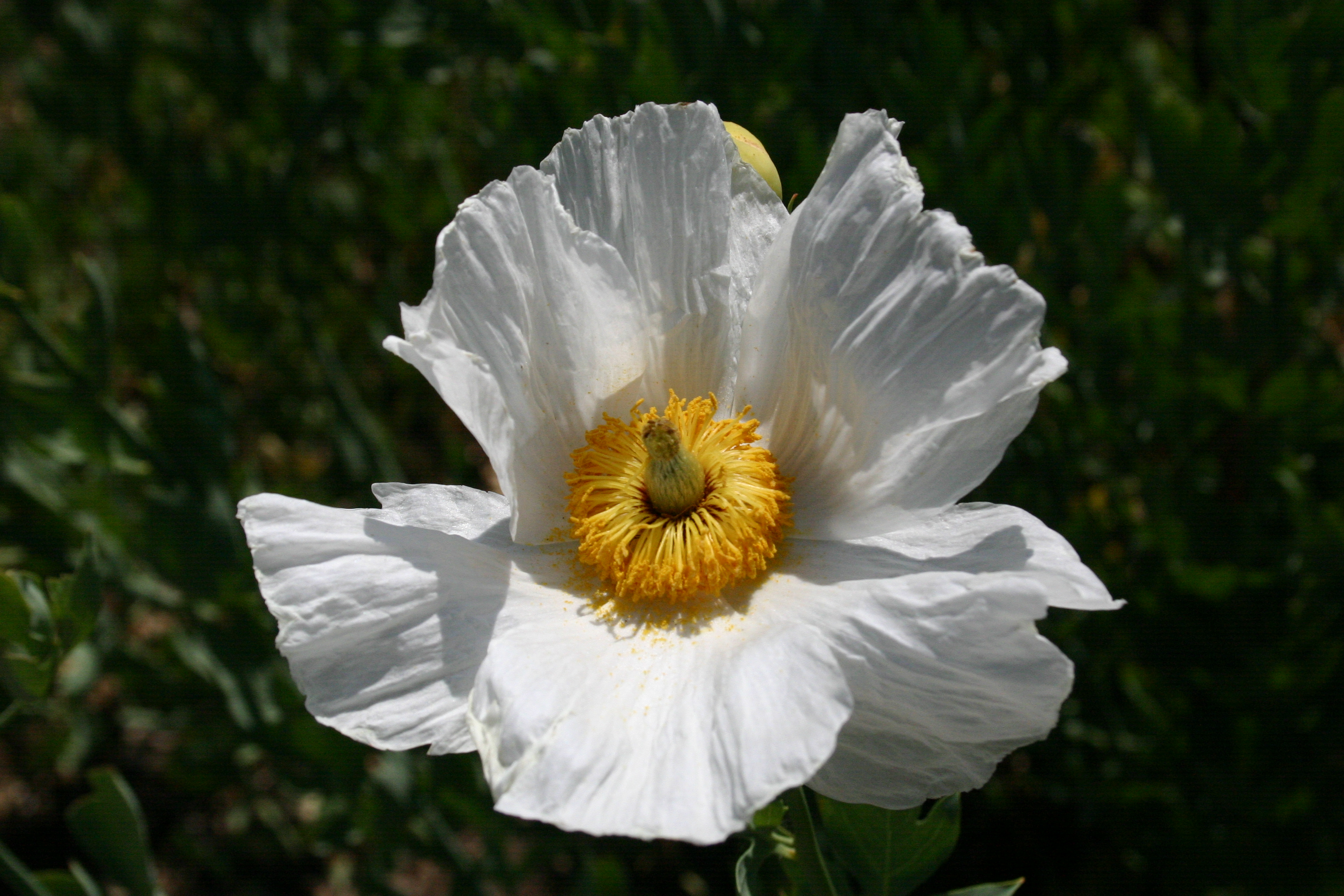
blooming matilija poppy

Matilija poppy is a native plant that grows in San Diego County’s chaparral habitat

I recently designed a hillside planting of local natives mixed with drought tolerant non-natives for clients in Escondido, California. Since their community is carved out of chaparral-covered hillsides, I started the project by assembling lists of plants native to the surrounding chaparral.

I also turned to Calflora native plant database and the San Diego Natural History Museum’s Plant Atlas  which is a database of plants mapped-out over the entire county. Between those resources and a few others, I pulled together a list of plants likely to have existed on my client’s site before their home was built.

With that information, I created a master list and compared that to what native plant nurseries grow and sell. I considered each plant’s aesthetic, its function as a pollinator or habitat plant, how easy or difficult it is to grow, it’s height, width, etc.

While the natives serve as the backbone, the non-natives add to the function and aesthetic. Together, the plants will eventually grow into a beautiful, waterwise garden that helps stabilize the hillside and offers at some of the functions of a plant restoration.

So in this case, “native” translates to native to the site and the habitat that once existed there.
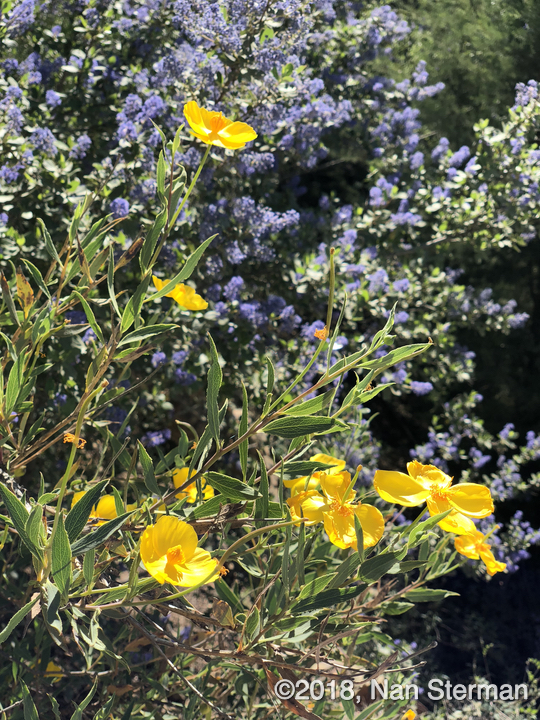
Blue flowering Ceanothus and yellow bush poppy native plants from San Diego’s Otay Mountain

San Diego County is home to more kinds of habitats than any other area of the state and more than any other region of the contiguous United States. To go along with that, we have more endangered native plant species. While endangered in the wild, some of those plants are already in cultivation and are offered for sale by native plant nurseries. By adding them to your garden, you help prevent their extinction.

Learn more about San Diego’s endangered plants by watching our episode, Plants: The Endangered Species. Then, take the next step by supporting the Center for Plant Conservation, the network of organizations across the country that work to end plant extinction.

— Nan Sterman

About the Author
California native Nan Sterman is host, co-producer, and co-writer of A Growing Passion, a television show that explores the ways plants power the planet, from farms and nurseries to backyards and schoolyards, rooftop gardens, community gardens, native habitats and more.
Social Share
  • google-share

Leave a Reply Cancel reply

*
*


Popular Posts

A big fried egg sized bloom
Grow a Fried Egg Plant - Matilija poppy
38 Comments
Tree babies
How to Water Your Trees
8 Comments
Stolons make Bermuda grass a challenge to remove
Whether Weed Cloth?
7 Comments

Categories

  • Agriculture
  • Animals
  • Art
  • Behind the Scenes
  • Botanical Garden
  • Community
  • Community Supported Agriculture
  • Cooking
  • Design
  • Explore More
  • Farm
  • Farm-to-Table
  • Food Justice
  • Fruit
  • Garden
  • Gardening
  • Gifts
  • History
  • How-to
  • Insects
  • Nan Sterman
  • Native Habitat
  • Nursery
  • Organic Farming
  • Plants
  • Projects
  • Public Gardens
  • Research
  • Tour
  • Travel
  • Vegetable Gardening
  • Waterwise
  • What's New
  • What's Trending

Archives

Contact Us

AGP Productions, LLC
PO Box 231034
Encinitas, CA 92023
info@agrowingpassion.com

Follow Us!

Follow Us on FacebookFollow Us on TwitterFollow Us on InstagramFollow Us on PinterestFollow Us on YouTubeFollow Us on RSS

Press

  • Media
  • Press
Ask-Nan
All Content and Images © 2018 AGP Productions, LLC | Privacy Policy
Designed by Belladia Marketing and Design