
facebook
rss
twitter
youtube
pinterest
  • Home
  • About
    • The Host, Nan Sterman
    • Awards and Reviews
    • Behind the Scenes
  • Videos
    • Clips/Segments
  • TV Schedule
    • Episode 701: The Beautiful Bromeliad
    • Episode 702: Beans, Beans – The Magical Legume
    • Episode 703: Grow Tiny
    • Episode 704: Food Is A Terrible Thing To Waste!
    • Episode 705: The Big Bloom
    • Episode 706: Gardening as a Community
    • Season 6
      • Episode 601: From Fruit to Nuts
      • Episode 602: Intoxicating Plumeria
      • Episode 603: The Art of a Garden
      • Episode 604: From Farm to Fork
      • Episode 605: Growing A Greener Golf Course
      • Episode 606: Plants: The Endangered Species
    • Season 5
      • Episode 501: Homegrown Hops – Local Flavor for Local Brews
      • Episode 502: Distant Roots And Tasty Shoots – Plants At The Zoo
      • Episode 503: The Story Of Seeds – From Breeding To Eating
      • Episode 504: Aquaponics – Fish Poop To Plant Roots
      • Episode 505: Urban Forests – Trees And Plants In The City
      • Episode 506: Wild And Wooly – Native Bee Pollinators
    • Season 4
      • Episode 401: Flowers and Floats – The Rose Parade
      • Episode 402: Citrus – California’s Second Gold Rush
      • Episode 403: Beneficial Insects
      • Episode 404: Bye, Bye Grass – How To Remove Your Lawn
      • Episode 405: After the Lawn is Gone – Waterwise Gardens
      • Episode 406: All About Algae
    • Season 3
      • Episode 301: Balboa Park: The Garden Faire
      • Episode 302: Big Trees: Giants Among Us
      • Episode 303: Garden Tours & Garden Shows: Finding Garden Inspiration
      • Episode 304: Preserve the Harvest
      • Episode 305: Coming to a Nursery Near You
      • Episode 306: How Water Flows
    • Season 2
      • Episode 201: From Vines and Wines
      • Episode 202: Chaparral, The Elfin Forest
      • Episode 203: Green Roofs
      • Episode 204: New Models of Farming
      • Episode 205: With Food and Justice for All
      • Episode 206: Growing Dreams and Memories
    • Season 1
      • Episode 101: The Business of Blooms
      • Episode 102: California Native Grown
      • Episode 103: Grow Your Own
      • Episode 104: Waterwise and Wonderful
      • Episode 105: Cycle and Recycle
      • Episode 106: Garden in a Pot
  • Explore More
  • Support The Show
  • Blog
  • Sponsors & Supporters
    • Founders
  • Shop
  • Contact

Plant a Grapevine!

January 20, 2014
by mgerdes3
1 Comment

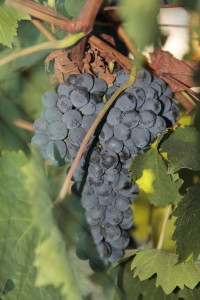
_MG_9930Planting Grape Vines – Watch the Video

People have been growing grapes for thousands of years and like any plant that’s been in domestication for a long time there are lots and lots of grape varieties.  Some have seeds, others are seedless; some are green, blue, black, yellow, or red.  Some are best for eating, others for making juice, wine, or raisins.  You can even blanch the leaves and stuff them to make dolmades.  So think carefully about what you want to do with your grapes before you choose your plant.

Next, consider where you’re going to plant your grapes.  Grapes need a strong support structure like an arbor, a strong fence, or a pergola.  Lightweight support like a trellis is not recommended.  Grape vines are heavy especially when covered with ripe fruit.  And if you’re planting your grapevine in a high traffic area consider the color of the grape.  A green grape will leave a lighter color stain on concrete than purple or red grapes.  Grapes require full sun at least 7 to 8 hours every day.  They do best in well draining soil.  If your soil type is heavy clay, be careful not to over water.  You can also plant a grapevine in a really big pot filled with good, well draining potting mix.

To plant, dig a hole just a little deeper and a bit wider than the root ball.  Add a couple of hand fulls of worm castings mixed with a balanced organic fertilizer.  A balanced fertilizer is one where the three numbers on the label are the same — nitrogen, phosphorus, and potassium.  Water the vine well when you plant — and then mulch.  Keep the mulch away from the plant stem to avoid rotting the stem or encouraging insects from chewing on the plant.  Over the next two years continue to water deeply to keep the soil damp, but not wet.  After year two, deep water just in the summer every couple of weeks depending upon how hot your garden gets.

Fertilizer isn’t really necessary.  Avoid applying too much nitrogen which will produce beautiful lush leaves but not much fruit.

As soon as you plant, start training the grapevine onto it’s support.  Grapevines can grow up to 200′ a year so an adequate support system is a must.

Grape fruits — they’re called berries — appear in the spring and ripen through the summer.  Harvest is at the end of the summer when the weather is warmest and the grapes are sweetest.  Bees, birds, possums, and other critters all love grapes.  Some people net their vines to protect them.

Pruning is critical.  This is done in the fall once the leaves have dropped.  Find the main vines.  On these main vines cut back all the branches, called canes, leaving the first two nodes — they look like joints — on each branch closest to the main vine.   In the spring, these nodes will send out new shoots that will make next year’s grapes.

It can take two to three years before a grapevine is mature enough to really produce.  After that, it can keep producing for 25 to 30 years.  And when the end product is as delicious as a sweet, juicy grape…it’s worth the wait.

About the Author
Social Share
  • google-share
One Comment
  1. vivian blackstone January 27, 2014 at 9:28 am Reply

    nicely done article, and looking forward to your next show

Leave a Reply Cancel reply

*
*


Popular Posts

A big fried egg sized bloom
Grow a Fried Egg Plant - Matilija poppy
38 Comments
Tree babies
How to Water Your Trees
8 Comments
Stolons make Bermuda grass a challenge to remove
Whether Weed Cloth?
7 Comments

Categories

  • Agriculture
  • Animals
  • Art
  • Behind the Scenes
  • Botanical Garden
  • Community
  • Community Supported Agriculture
  • Cooking
  • Design
  • Explore More
  • Farm
  • Farm-to-Table
  • Food Justice
  • Fruit
  • Garden
  • Gardening
  • Gifts
  • History
  • How-to
  • Insects
  • Nan Sterman
  • Native Habitat
  • Nursery
  • Organic Farming
  • Plants
  • Projects
  • Public Gardens
  • Research
  • Tour
  • Travel
  • Vegetable Gardening
  • Waterwise
  • What's New
  • What's Trending

Archives

Contact Us

AGP Productions, LLC
PO Box 231034
Encinitas, CA 92023
info@agrowingpassion.com

Follow Us!

Follow Us on FacebookFollow Us on TwitterFollow Us on InstagramFollow Us on PinterestFollow Us on YouTubeFollow Us on RSS

Press

  • Media
  • Press
Ask-Nan
All Content and Images © 2018 AGP Productions, LLC | Privacy Policy
Designed by Belladia Marketing and Design