
facebook
rss
twitter
youtube
pinterest
  • Home
  • About
    • The Host, Nan Sterman
    • Awards and Reviews
    • Behind the Scenes
  • Videos
    • Clips/Segments
  • TV Schedule
    • Episode 701: The Beautiful Bromeliad
    • Episode 702: Beans, Beans – The Magical Legume
    • Episode 703: Grow Tiny
    • Episode 704: Food Is A Terrible Thing To Waste!
    • Episode 705: The Big Bloom
    • Episode 706: Gardening as a Community
    • Season 6
      • Episode 601: From Fruit to Nuts
      • Episode 602: Intoxicating Plumeria
      • Episode 603: The Art of a Garden
      • Episode 604: From Farm to Fork
      • Episode 605: Growing A Greener Golf Course
      • Episode 606: Plants: The Endangered Species
    • Season 5
      • Episode 501: Homegrown Hops – Local Flavor for Local Brews
      • Episode 502: Distant Roots And Tasty Shoots – Plants At The Zoo
      • Episode 503: The Story Of Seeds – From Breeding To Eating
      • Episode 504: Aquaponics – Fish Poop To Plant Roots
      • Episode 505: Urban Forests – Trees And Plants In The City
      • Episode 506: Wild And Wooly – Native Bee Pollinators
    • Season 4
      • Episode 401: Flowers and Floats – The Rose Parade
      • Episode 402: Citrus – California’s Second Gold Rush
      • Episode 403: Beneficial Insects
      • Episode 404: Bye, Bye Grass – How To Remove Your Lawn
      • Episode 405: After the Lawn is Gone – Waterwise Gardens
      • Episode 406: All About Algae
    • Season 3
      • Episode 301: Balboa Park: The Garden Faire
      • Episode 302: Big Trees: Giants Among Us
      • Episode 303: Garden Tours & Garden Shows: Finding Garden Inspiration
      • Episode 304: Preserve the Harvest
      • Episode 305: Coming to a Nursery Near You
      • Episode 306: How Water Flows
    • Season 2
      • Episode 201: From Vines and Wines
      • Episode 202: Chaparral, The Elfin Forest
      • Episode 203: Green Roofs
      • Episode 204: New Models of Farming
      • Episode 205: With Food and Justice for All
      • Episode 206: Growing Dreams and Memories
    • Season 1
      • Episode 101: The Business of Blooms
      • Episode 102: California Native Grown
      • Episode 103: Grow Your Own
      • Episode 104: Waterwise and Wonderful
      • Episode 105: Cycle and Recycle
      • Episode 106: Garden in a Pot
  • Explore More
  • Support The Show
  • Blog
  • Sponsors & Supporters
    • Founders
  • Shop
  • Contact

Pick a Pepper for Your Garden

June 28, 2017
by Nan
bell pepper, cooking, edible, Farm, fertilize, freeze, Garden, Gardening, home grown, hot pepper, how-to, indigestion, irrigate, orange pepper, pepper, peppers, preserve, purple pepper, red pepper, Scoville Scale, sweet, vegetable, vegetable garden
0 Comment

— Nan Sterman

They’re sweet, they’re hot, they’re the coolest things around. I’m talking peppers. Big peppers, small peppers, red, orange, purple, yellow, and of course, green.
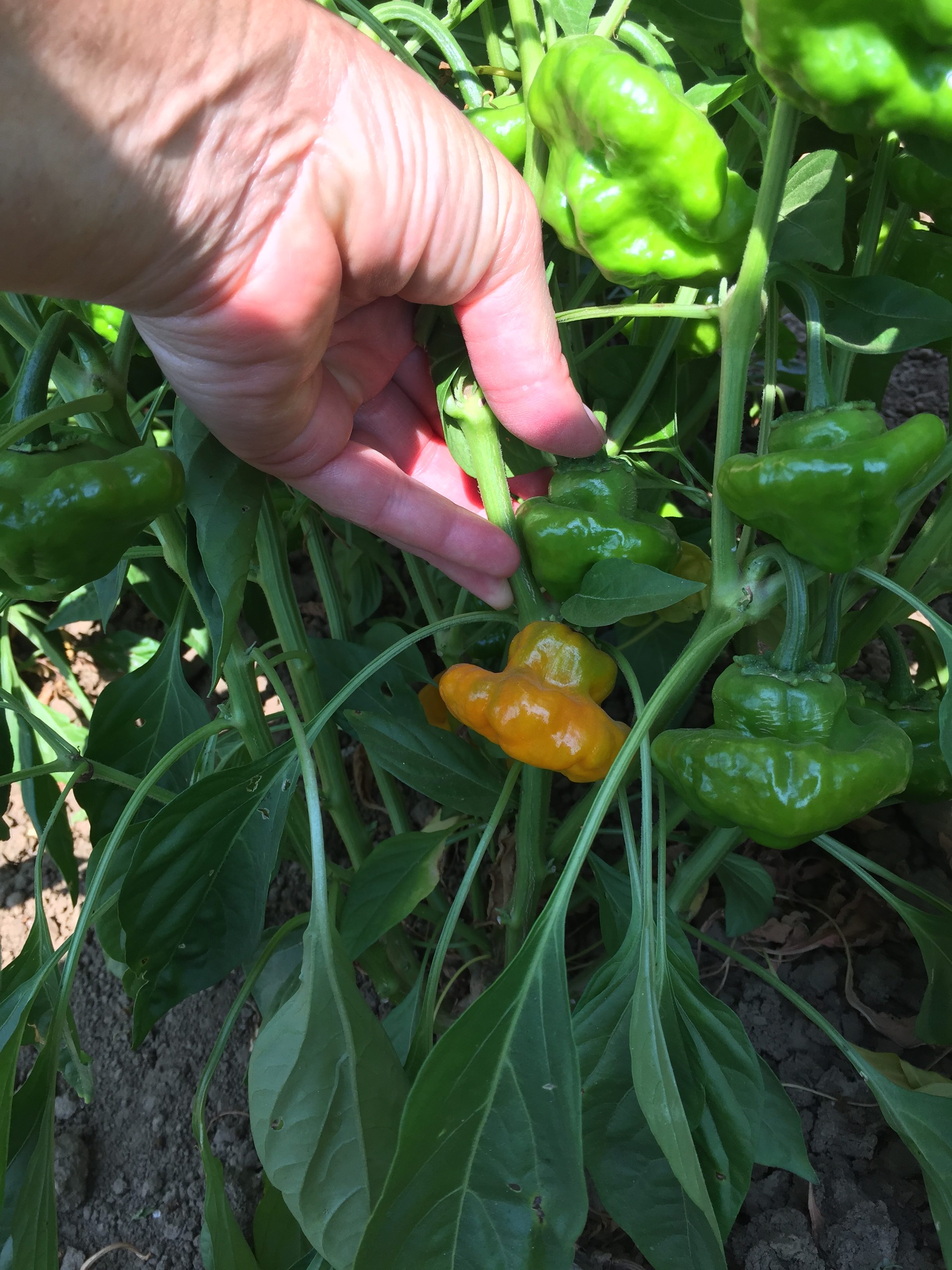
Scotch Bonnet peppers are really hot!

Scotch Bonnet peppers ripen golden yellow. These Carribean favorites rate between 100,000–350,000 on the Scoville heat scale (Jalapeno peppers rate 2,500 – 8,000 Scoville heat units)

With so many kinds of peppers on the market, you might be surprised to learn that culinary peppers are all variations on a theme. All are Capsicum anuum, an annual in the nightshade family, which makes them cousins to tomatoes, eggplants, potatoes, and tomatillos. Capsicum anuum is thought to have originated in South America. Columbus took peppers back to the King and Queen of Spain. From there, they spread worldwide.

As with most edibles that have a long history of human use, different cultures and cuisines select for their favorite “types” or styles of peppers: sweet bells, hot peppers, Asian peppers, Italian peppers, and so on.

Hot peppers’ heat comes from a compound called capsaicin, which stimulates nerve endings in skin and mucous membranes (in your nose, eyes, mouth, etc.) Around 1912, American pharmacist Wilbur Scoville devised a scale to rate the heat of different peppers known as the “Scoville Scale.”

The Scoville scale ranges from bell peppers on the bottom end, to law enforcement grade pepper spray at the hot end. Not all hot peppers grow hot, however. Their heat depends in part on your garden conditions: soil, climate, etc.

Pepper How-to

Grow peppers in full sun, in rich, well-amended soil. Space plants at least 18” apart, depending on the size of the plant (allow more space between larger plants). Irrigate frequently enough to keep the soil damp (not wet), watering with in-line drip irrigation so you don’t wet leaves. Fertilize with an organic vegetable fertilizer, according to directions. Harvest fruits when you decide the color is right (green, red, orange, etc.)
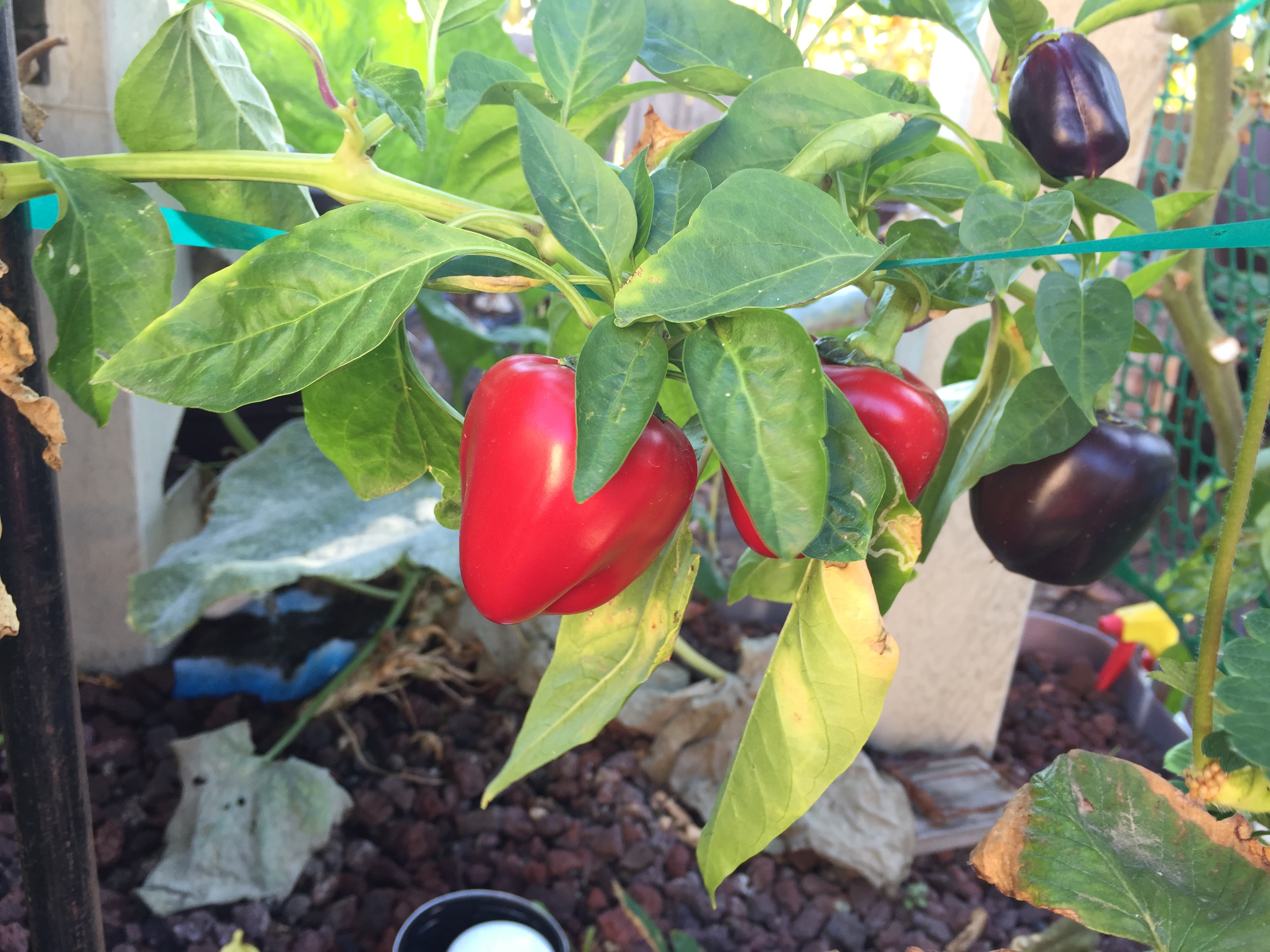
Peppers turn from green to color when they ripen

Red and purple sweet peppers are ripe versions of green peppers.

Plants in the pepper family need to be rotated, so grow peppers, eggplant, tomatoes, and tomatillo in one garden bed this year. Next year, move them all to a different bed, then back to the first bed in year three. If you grow these plants in the same place every year, the soil pathogens will multiply and attack the plants’ roots. The plants begin to decline and stop producing earlier than they would otherwise.

Store extra peppers

It’s easy to freeze extra peppers in zip top bags after they are washed and dried. With hot peppers, I just shave off as much of the frozen pepper as I need when I’m cooking.

Excuse me!

If you have trouble digesting green bell peppers, try switching to yellow, red, orange, or purple peppers rather than green. Here’s why. All peppers start out green; then mature to red, orange, yellow, or purple. So, a green pepper, is an underripe pepper. According to some sources, the fiber in the skin of green peppers causes indigestion, others say it is the wax in the skin. Either way, these unripe green bells typically cause discomfort. So if the green makes you belch, try a colored pepper – once mature, bell peppers are sweeter and easier to digest.
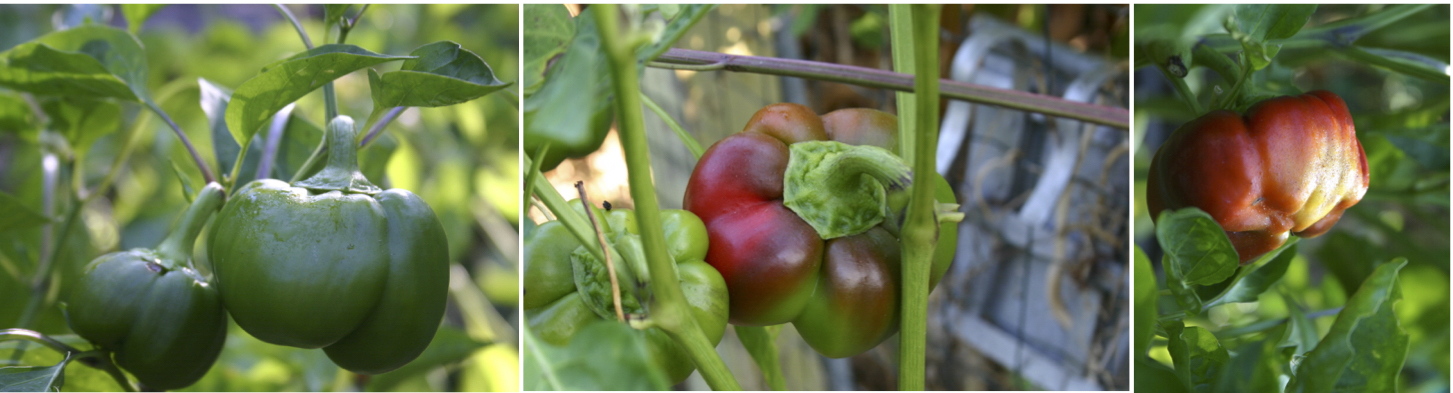
Three images of Pritavit bell peppers

Pritavit sweet bell peppers at three stages of ripening: immature green to ripe red

About the Author
California native Nan Sterman is host, co-producer, and co-writer of A Growing Passion, a television show that explores the ways plants power the planet, from farms and nurseries to backyards and schoolyards, rooftop gardens, community gardens, native habitats and more.
Social Share
  • google-share

Leave a Reply Cancel reply

*
*


Popular Posts

A big fried egg sized bloom
Grow a Fried Egg Plant - Matilija poppy
38 Comments
Tree babies
How to Water Your Trees
8 Comments
Stolons make Bermuda grass a challenge to remove
Whether Weed Cloth?
7 Comments

Categories

  • Agriculture
  • Animals
  • Art
  • Behind the Scenes
  • Botanical Garden
  • Community
  • Community Supported Agriculture
  • Cooking
  • Design
  • Explore More
  • Farm
  • Farm-to-Table
  • Food Justice
  • Fruit
  • Garden
  • Gardening
  • Gifts
  • History
  • How-to
  • Insects
  • Nan Sterman
  • Native Habitat
  • Nursery
  • Organic Farming
  • Plants
  • Projects
  • Public Gardens
  • Research
  • Tour
  • Travel
  • Vegetable Gardening
  • Waterwise
  • What's New
  • What's Trending

Archives

Contact Us

AGP Productions, LLC
PO Box 231034
Encinitas, CA 92023
info@agrowingpassion.com

Follow Us!

Follow Us on FacebookFollow Us on TwitterFollow Us on InstagramFollow Us on PinterestFollow Us on YouTubeFollow Us on RSS

Press

  • Media
  • Press
Ask-Nan
All Content and Images © 2018 AGP Productions, LLC | Privacy Policy
Designed by Belladia Marketing and Design