
facebook
rss
twitter
youtube
pinterest
  • Home
  • About
    • The Host, Nan Sterman
    • Awards and Reviews
    • Behind the Scenes
  • Videos
    • Clips/Segments
  • TV Schedule
    • Episode 701: The Beautiful Bromeliad
    • Episode 702: Beans, Beans – The Magical Legume
    • Episode 703: Grow Tiny
    • Episode 704: Food Is A Terrible Thing To Waste!
    • Episode 705: The Big Bloom
    • Episode 706: Gardening as a Community
    • Season 6
      • Episode 601: From Fruit to Nuts
      • Episode 602: Intoxicating Plumeria
      • Episode 603: The Art of a Garden
      • Episode 604: From Farm to Fork
      • Episode 605: Growing A Greener Golf Course
      • Episode 606: Plants: The Endangered Species
    • Season 5
      • Episode 501: Homegrown Hops – Local Flavor for Local Brews
      • Episode 502: Distant Roots And Tasty Shoots – Plants At The Zoo
      • Episode 503: The Story Of Seeds – From Breeding To Eating
      • Episode 504: Aquaponics – Fish Poop To Plant Roots
      • Episode 505: Urban Forests – Trees And Plants In The City
      • Episode 506: Wild And Wooly – Native Bee Pollinators
    • Season 4
      • Episode 401: Flowers and Floats – The Rose Parade
      • Episode 402: Citrus – California’s Second Gold Rush
      • Episode 403: Beneficial Insects
      • Episode 404: Bye, Bye Grass – How To Remove Your Lawn
      • Episode 405: After the Lawn is Gone – Waterwise Gardens
      • Episode 406: All About Algae
    • Season 3
      • Episode 301: Balboa Park: The Garden Faire
      • Episode 302: Big Trees: Giants Among Us
      • Episode 303: Garden Tours & Garden Shows: Finding Garden Inspiration
      • Episode 304: Preserve the Harvest
      • Episode 305: Coming to a Nursery Near You
      • Episode 306: How Water Flows
    • Season 2
      • Episode 201: From Vines and Wines
      • Episode 202: Chaparral, The Elfin Forest
      • Episode 203: Green Roofs
      • Episode 204: New Models of Farming
      • Episode 205: With Food and Justice for All
      • Episode 206: Growing Dreams and Memories
    • Season 1
      • Episode 101: The Business of Blooms
      • Episode 102: California Native Grown
      • Episode 103: Grow Your Own
      • Episode 104: Waterwise and Wonderful
      • Episode 105: Cycle and Recycle
      • Episode 106: Garden in a Pot
  • Explore More
  • Support The Show
  • Blog
  • Sponsors & Supporters
    • Founders
  • Shop
  • Contact

Tomato Tutorial

August 02, 2016
by Nan
beefsteak, cherry, color, days to maturity, determinate, edible, Garden, grape, heirloom, hybrid, indeterminate, organic, pear, plum, Roma, saladette, taste test, teardrop, tomato, tutorial, vegetable
0 Comment
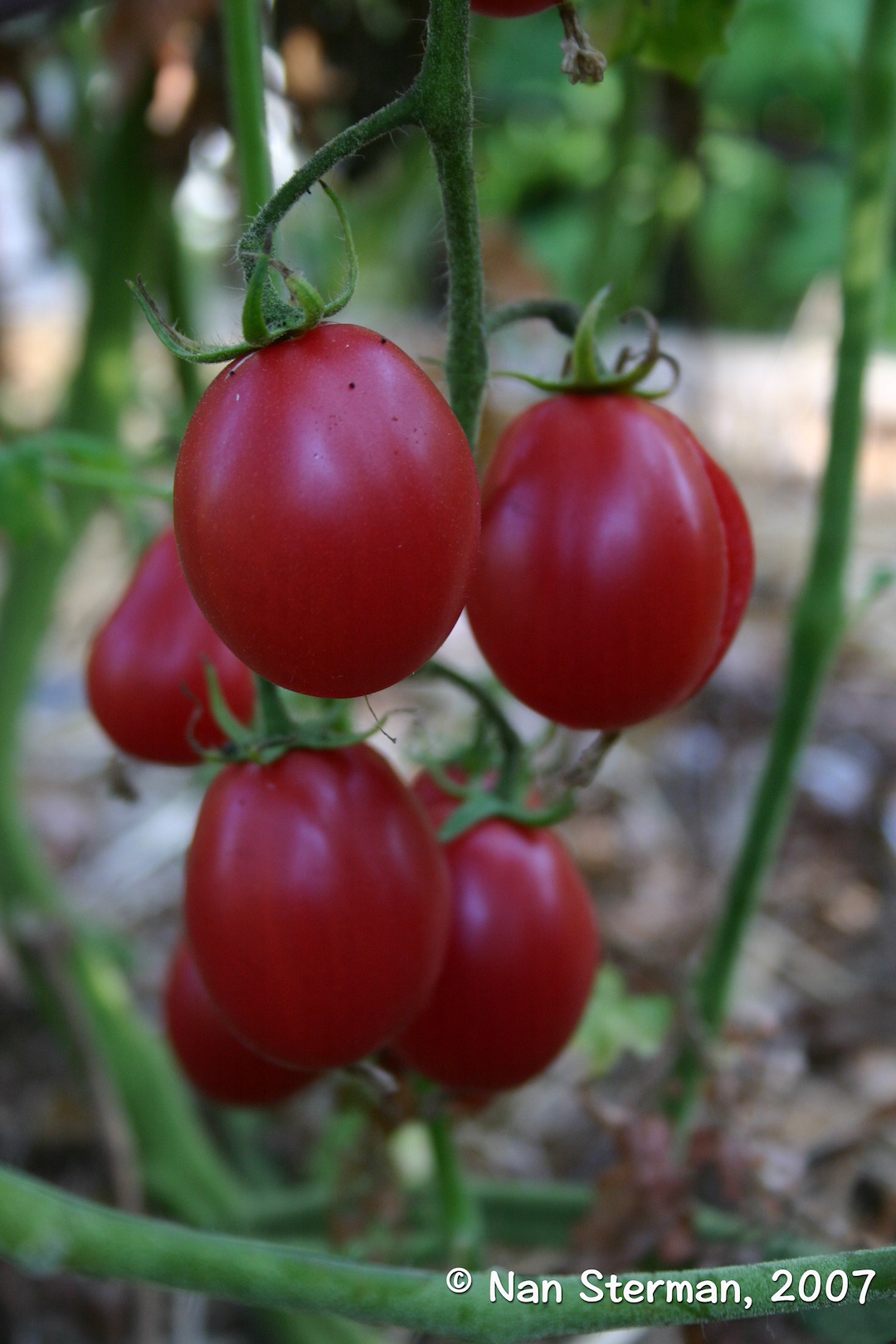
Una Hartsock is a larger grape tomato that grows on an indeterminate tomato plant and ripens mid season. It is great for salads and eating fresh.

Una Hartsock is a larger grape tomato that grows on an indeterminate tomato plant and ripens mid season. It is great for salads and eating fresh.

— Nan Sterman

With tomatoes ripening now, it’s a great time to taste test the many different types, learn their best uses, and  decide which to grow next summer. Here’s a tutorial.

Tomato types

Slicing (Beefsteak) tomatoes produce very large, often crenulated fruits, often large enough for a single slice to cover an entire hamburger.

Plum (aka paste, Roma, processing, saladette) tomatoes are oval or cylindrical with meaty walls and not many seeds. These tomatoes are bred to be less “juicy” than other types of tomatoes which makes them suited for cooking, canning, juicing, or preparing in salsas and gazpachos.

Grape tomatoes are on the size scale of cherry tomatoes but with firmer flesh, though not as firm and meaty as plum tomatoes. Grape tomatoes are slightly sweeter and a bit juicier than plums, too. These perfect “pop in your mouth” tomatoes are typically red but sometimes yellow.

Cherry tomatoes range from large marble size to as small as a pea. The smallest are sometimes called “currant” tomatoes. One of the most popular is a yellow cherry called ‘Sun Gold.’ There are also black cherry tomatoes. Cherry tomatoes grow on large, indeterminate plants that need support to keep from becoming huge, impenetrable mounds.

Pear (teardrop) tomatoes are small like grape tomatoes, but more pear shaped than plum tomatoes. These medium skinned, sweet tomatoes often don’t make it from the garden to the kitchen (i.e. I eat them all on the way). Yellow and red pear shaped tomatoes are most common. Plants tend to be indeterminate.
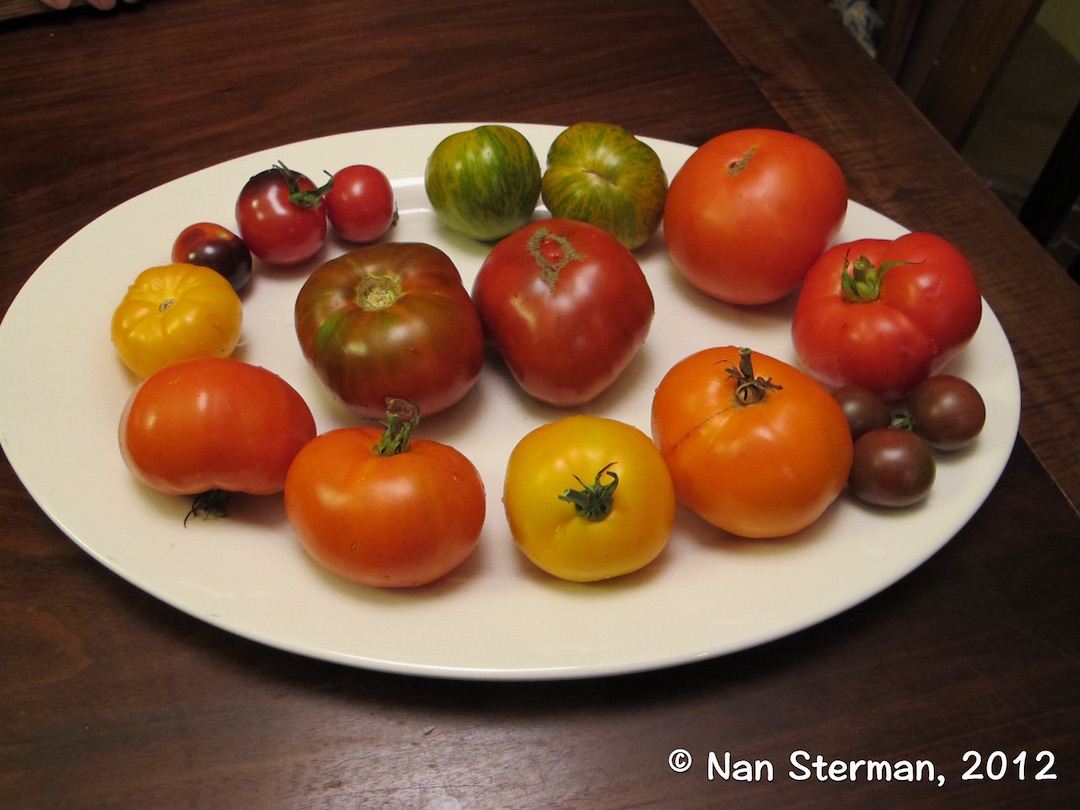
Here's a small sampling of the wide variety of tomatoes you can grow in your vegetable garden.

Here’s a small sampling of the wide variety of tomatoes you can grow in your vegetable garden.

Plant sizes and forms

Indeterminate (aka climbing) tomatoes grow huge. These plants need to be staked, trellised, or caged for support. Thin branches so plants don’t become too dense. Fruits ripen over a long season so you have an extended harvest from each plant.

Determinate (aka bush) varieties are shorter stature and not as vine-like as indeterminate tomatoes. There’s no need to thin branches (though you can). Fruits ripen over a short time (as short as a week to ten days), making determinate varieties a good choice for canning, freezing, drying, and other processing

Container (aka “dwarf”) varieties are determinate tomato plants bred to be very compact. Their fruit size and production can be as big as the larger plants.
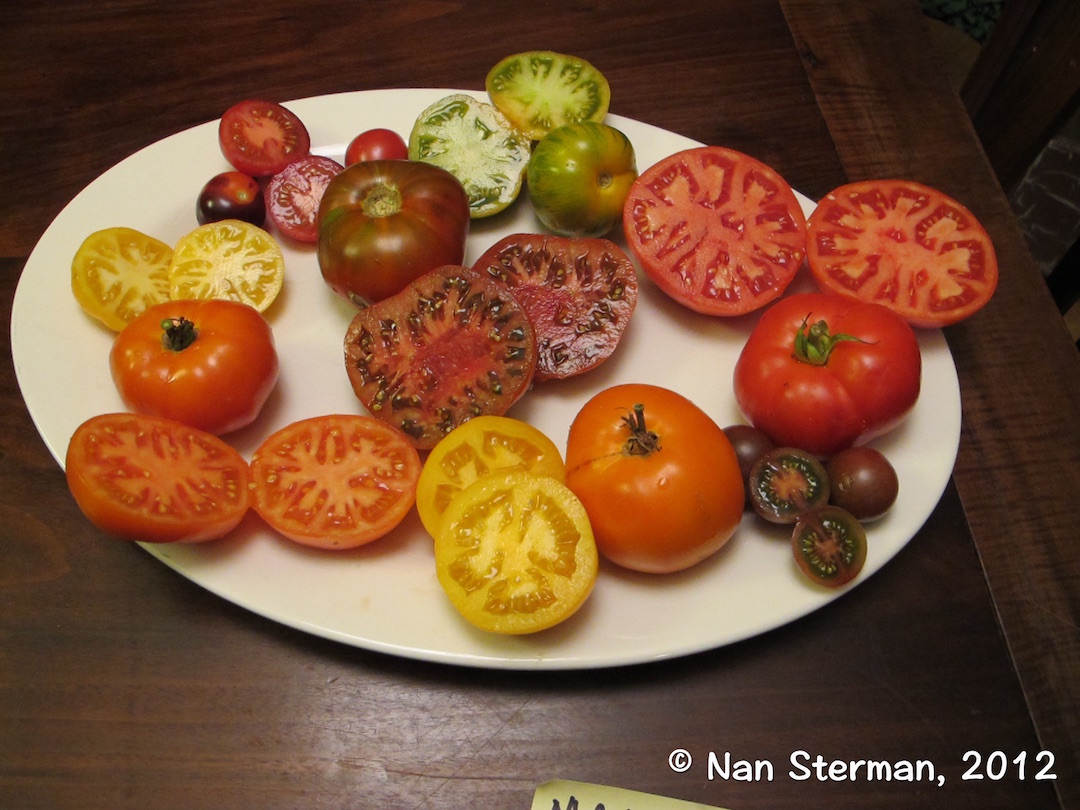
"Before" and "After" - each tomato whole and sliced in half, for comparison.

“Before” and “After” – each tomato whole and sliced in half, for comparison.

Other Tomato Terms

Heirloom varieties were introduced before 1940. Their fruits are identical (in terms of size, color, and flavor) from one year to the next.

Maturation or “days to maturity” supposedly describes the number of days between transplant and harvest. Those numbers are strictly rule of thumb indicators of when in the season the tomatoes will ripen The shortest “days to maturity” will ripen early in the season; the longest “days to maturity” will ripen last. Another scale you’ll see is “Very Early Season” (extra early)which ripen earliest, followed by Early Season, then Mid Season, then Late Season. To harvest tomatoes all through summer, chose varieties in each category.

Colors of tomatoes range from red, to orange, yellow, green, black, chocolate, pink, striped, even spotted.
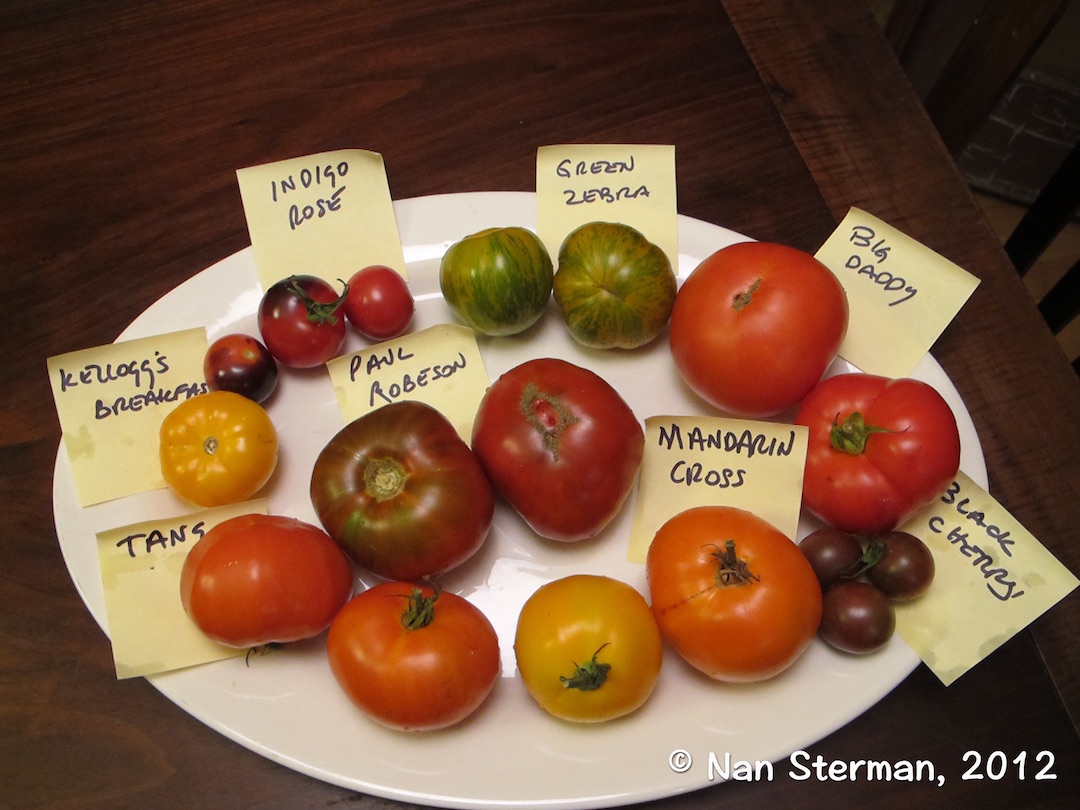
Their identities revealed!

Their identities revealed!

© Nan Sterman,2012

About the Author
California native Nan Sterman is host, co-producer, and co-writer of A Growing Passion, a television show that explores the ways plants power the planet, from farms and nurseries to backyards and schoolyards, rooftop gardens, community gardens, native habitats and more.
Social Share
  • google-share

Leave a Reply Cancel reply

*
*


Popular Posts

A big fried egg sized bloom
Grow a Fried Egg Plant - Matilija poppy
38 Comments
Tree babies
How to Water Your Trees
8 Comments
Stolons make Bermuda grass a challenge to remove
Whether Weed Cloth?
7 Comments

Categories

  • Agriculture
  • Animals
  • Art
  • Behind the Scenes
  • Botanical Garden
  • Community
  • Community Supported Agriculture
  • Cooking
  • Design
  • Explore More
  • Farm
  • Farm-to-Table
  • Food Justice
  • Fruit
  • Garden
  • Gardening
  • Gifts
  • History
  • How-to
  • Insects
  • Nan Sterman
  • Native Habitat
  • Nursery
  • Organic Farming
  • Plants
  • Projects
  • Public Gardens
  • Research
  • Tour
  • Travel
  • Vegetable Gardening
  • Waterwise
  • What's New
  • What's Trending

Archives

Contact Us

AGP Productions, LLC
PO Box 231034
Encinitas, CA 92023
info@agrowingpassion.com

Follow Us!

Follow Us on FacebookFollow Us on TwitterFollow Us on InstagramFollow Us on PinterestFollow Us on YouTubeFollow Us on RSS

Press

  • Media
  • Press
Ask-Nan
All Content and Images © 2018 AGP Productions, LLC | Privacy Policy
Designed by Belladia Marketing and Design