
facebook
rss
twitter
youtube
pinterest
  • Home
  • About
    • The Host, Nan Sterman
    • Awards and Reviews
    • Behind the Scenes
  • Videos
    • Clips/Segments
  • TV Schedule
    • Episode 701: The Beautiful Bromeliad
    • Episode 702: Beans, Beans – The Magical Legume
    • Episode 703: Grow Tiny
    • Episode 704: Food Is A Terrible Thing To Waste!
    • Episode 705: The Big Bloom
    • Episode 706: Gardening as a Community
    • Season 6
      • Episode 601: From Fruit to Nuts
      • Episode 602: Intoxicating Plumeria
      • Episode 603: The Art of a Garden
      • Episode 604: From Farm to Fork
      • Episode 605: Growing A Greener Golf Course
      • Episode 606: Plants: The Endangered Species
    • Season 5
      • Episode 501: Homegrown Hops – Local Flavor for Local Brews
      • Episode 502: Distant Roots And Tasty Shoots – Plants At The Zoo
      • Episode 503: The Story Of Seeds – From Breeding To Eating
      • Episode 504: Aquaponics – Fish Poop To Plant Roots
      • Episode 505: Urban Forests – Trees And Plants In The City
      • Episode 506: Wild And Wooly – Native Bee Pollinators
    • Season 4
      • Episode 401: Flowers and Floats – The Rose Parade
      • Episode 402: Citrus – California’s Second Gold Rush
      • Episode 403: Beneficial Insects
      • Episode 404: Bye, Bye Grass – How To Remove Your Lawn
      • Episode 405: After the Lawn is Gone – Waterwise Gardens
      • Episode 406: All About Algae
    • Season 3
      • Episode 301: Balboa Park: The Garden Faire
      • Episode 302: Big Trees: Giants Among Us
      • Episode 303: Garden Tours & Garden Shows: Finding Garden Inspiration
      • Episode 304: Preserve the Harvest
      • Episode 305: Coming to a Nursery Near You
      • Episode 306: How Water Flows
    • Season 2
      • Episode 201: From Vines and Wines
      • Episode 202: Chaparral, The Elfin Forest
      • Episode 203: Green Roofs
      • Episode 204: New Models of Farming
      • Episode 205: With Food and Justice for All
      • Episode 206: Growing Dreams and Memories
    • Season 1
      • Episode 101: The Business of Blooms
      • Episode 102: California Native Grown
      • Episode 103: Grow Your Own
      • Episode 104: Waterwise and Wonderful
      • Episode 105: Cycle and Recycle
      • Episode 106: Garden in a Pot
  • Explore More
  • Support The Show
  • Blog
  • Sponsors & Supporters
    • Founders
  • Shop
  • Contact

Respect the Insects

July 19, 2017
by Nan
bees, Christopher Lloyd, England, English gardens, grasses, Great Dixter, hedgerows, Hidcote, honeybees, Moor Wood, Nan Sterman, National Trust, pollinators, rambling roses, Sissinghurst, wasps, wildflowers
1 Comment

— Nan Sterman

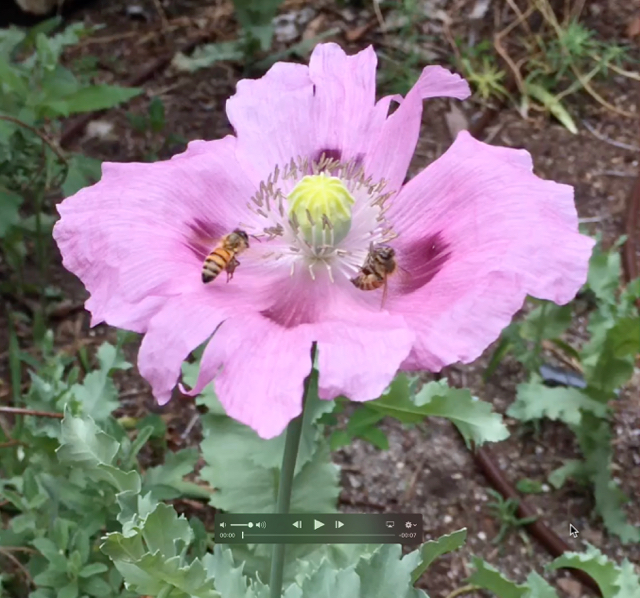
Bees hard at work collecting pollen from a poppy flower.

On the last garden tour I led to England, I was impressed to see how all the gardens, both formal and informal, included spaces for bees and other pollinator insects.

Every private garden we saw included wild grasses and blooming wildflowers – what US gardeners would regard as weeds – along the edges, in the centers, and growing beneath and between fruit trees.

Hedgerow Habitats

Moor Wood in Woodmancote, Gloucestershire, is home to the English national collection of rambling roses. As our group chatted with Susie and Henry Robinson, the husband and wife farmers whose family has worked the property for genertions, they explained that a government program pays them to leave portions of their farmland wild. The native vegetation in these hedgerows is critical habitat for pollinators that service the Robinson’s farm, along with all the neighboring farms.

Botanic Garden Swarm

As I walked from garden room to garden room at England’s famous Hidcote Garden, I heard a persistent buzzing. The closer to the heart of the garden, the louder the buzz. One pathway opened up to a huge, vortex-shaped bee swarm. In a US garden, the bees would have been removed as soon as they showed up, but in England, they were simply cordoned off from the public by a split rail fence.  A sign explained why the bees were important, and warned people to stay clear. The implied message was, “These bees are doing the important work that bees do – respect them and they’ll respect you.”

Space for Wasps
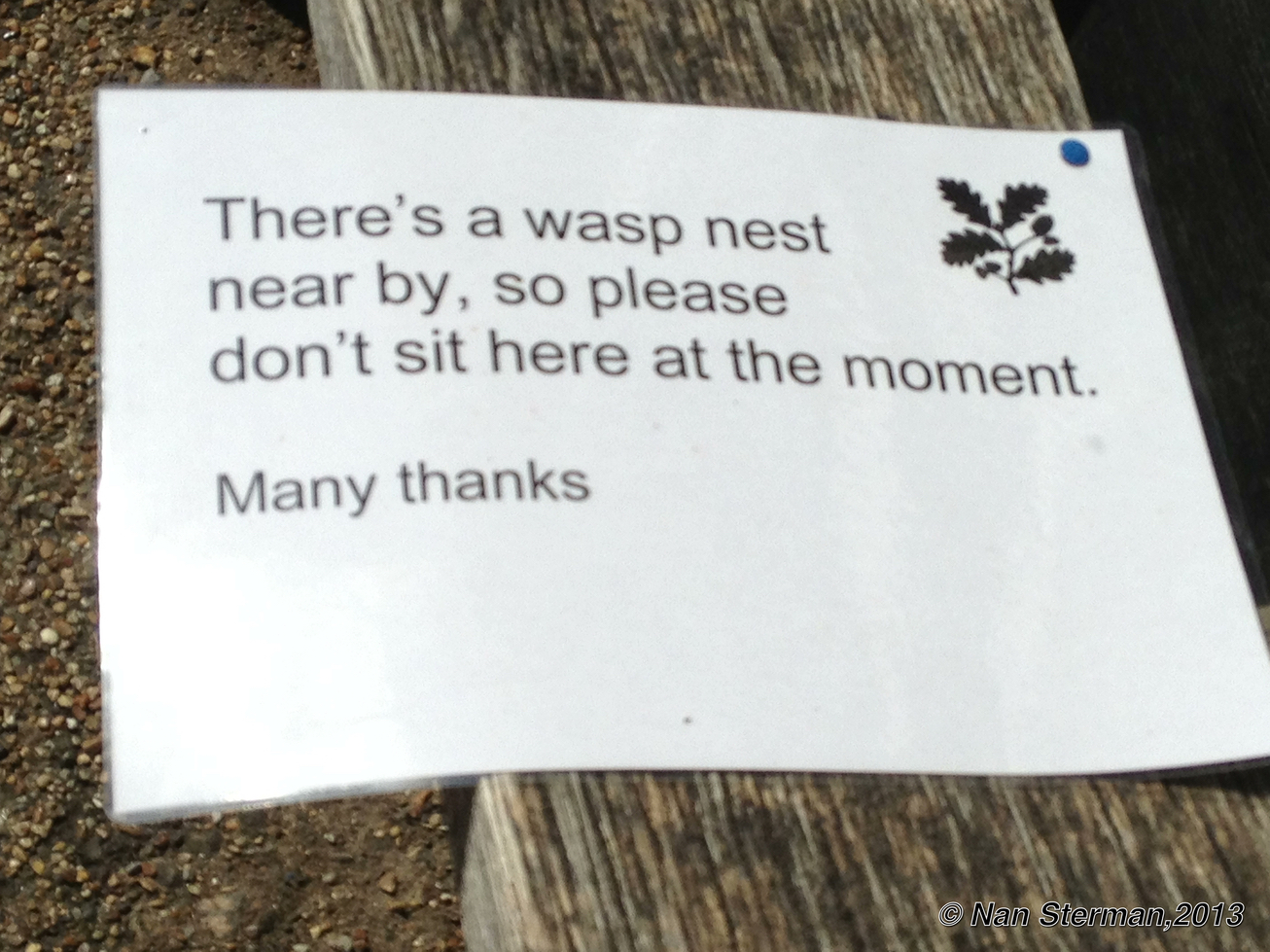
Wasp nest at Sissinghurst Castle in England

At England’s Sissinghurst Castle, wasps are respected rather than removed.

One afternoon, we visited the historic gardens at Sissinghurst Castle. We’d been touring for many hours by then so I was relieved to see an inviting bench. Just as I sat down, someone pointed to a note pinned above the bench. It said, “There’s a wasp nest nearby – please don’t sit here at the moment.” In the US, those wasps would have been eliminated, but in an English garden, even wasps deserve their space.

Topiary + Pollinators

At Great Dixter, the renowned garden of late garden designer and writer Christopher Lloyd, a blooming wildflower and grass meadow was the background to oversized, bird-inspired topiaries that Lloyd’s father planted in the early 1900s. Bees, butterflies, and other pollinators flitted about. It was beautiful.

It just makes sense to welcome bees and other insect pollinators into our gardens. The better we care for them, the more we benefit from all their hard work. It’s time we showed these insects some respect.
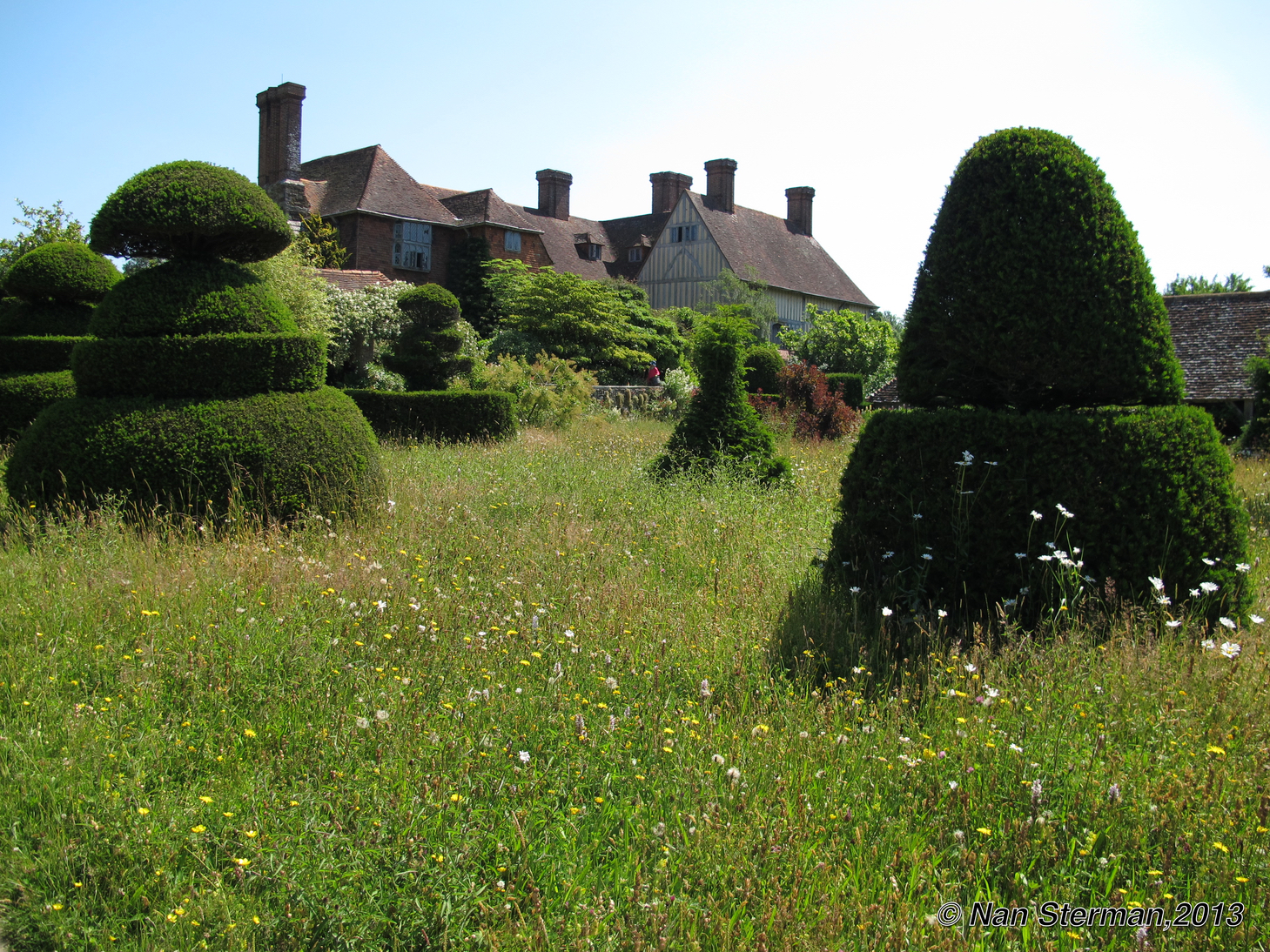
Topiary, wild grasses and wildflowers are home to insect pollinators at England's Great Dixter garden

At England’s legendary Great Dixter garden, topiaries are surrounded by wild grasses and wildflowers that are home to insect pollinators.

About the Author
California native Nan Sterman is host, co-producer, and co-writer of A Growing Passion, a television show that explores the ways plants power the planet, from farms and nurseries to backyards and schoolyards, rooftop gardens, community gardens, native habitats and more.
Social Share
  • google-share
One Comment
  1. Joanne Cantey June 18, 2018 at 9:02 pm Reply

    Hi – I have listened to and enjoyed to your talks at the SF garden show in the past.
    I wanted to share some Bee information that I have learned, that I thought might interest you.
    The Lost Garden of Helicon and the Eden Project are trying to re-establish the black honey-bee.
    From my observations it has occurred to me that the native bees (350 times more efficient) are the
    bees we should be concerned for – if we are merely concerned with pollination. It is my understanding Great Dixter has removed their hives because the honeybees compete with Native Bees.

    helpabee.org UC Berkeley information made me realize that non-native plants help native bees meet their needs. I an up to 20 native bees. My food sources started with ceanothus, California poppies, blue flowers of chicory, lavender….

    I am a self-taught gardener – my next work is on permaculture fruit tree guilds – I also have a passion for fruit tree grafting – I did 100 grafts in the past 3 seasons :>) most have taken!

Leave a Reply Cancel reply

*
*


Popular Posts

A big fried egg sized bloom
Grow a Fried Egg Plant - Matilija poppy
38 Comments
Tree babies
How to Water Your Trees
8 Comments
Stolons make Bermuda grass a challenge to remove
Whether Weed Cloth?
7 Comments

Categories

  • Agriculture
  • Animals
  • Art
  • Behind the Scenes
  • Botanical Garden
  • Community
  • Community Supported Agriculture
  • Cooking
  • Design
  • Explore More
  • Farm
  • Farm-to-Table
  • Food Justice
  • Fruit
  • Garden
  • Gardening
  • Gifts
  • History
  • How-to
  • Insects
  • Nan Sterman
  • Native Habitat
  • Nursery
  • Organic Farming
  • Plants
  • Projects
  • Public Gardens
  • Research
  • Tour
  • Travel
  • Vegetable Gardening
  • Waterwise
  • What's New
  • What's Trending

Archives

Contact Us

AGP Productions, LLC
PO Box 231034
Encinitas, CA 92023
info@agrowingpassion.com

Follow Us!

Follow Us on FacebookFollow Us on TwitterFollow Us on InstagramFollow Us on PinterestFollow Us on YouTubeFollow Us on RSS

Press

  • Media
  • Press
Ask-Nan
All Content and Images © 2018 AGP Productions, LLC | Privacy Policy
Designed by Belladia Marketing and Design