
facebook
rss
twitter
youtube
pinterest
  • Home
  • About
    • The Host, Nan Sterman
    • Awards and Reviews
    • Behind the Scenes
  • Videos
    • Clips/Segments
  • TV Schedule
    • Episode 701: The Beautiful Bromeliad
    • Episode 702: Beans, Beans – The Magical Legume
    • Episode 703: Grow Tiny
    • Episode 704: Food Is A Terrible Thing To Waste!
    • Episode 705: The Big Bloom
    • Episode 706: Gardening as a Community
    • Season 6
      • Episode 601: From Fruit to Nuts
      • Episode 602: Intoxicating Plumeria
      • Episode 603: The Art of a Garden
      • Episode 604: From Farm to Fork
      • Episode 605: Growing A Greener Golf Course
      • Episode 606: Plants: The Endangered Species
    • Season 5
      • Episode 501: Homegrown Hops – Local Flavor for Local Brews
      • Episode 502: Distant Roots And Tasty Shoots – Plants At The Zoo
      • Episode 503: The Story Of Seeds – From Breeding To Eating
      • Episode 504: Aquaponics – Fish Poop To Plant Roots
      • Episode 505: Urban Forests – Trees And Plants In The City
      • Episode 506: Wild And Wooly – Native Bee Pollinators
    • Season 4
      • Episode 401: Flowers and Floats – The Rose Parade
      • Episode 402: Citrus – California’s Second Gold Rush
      • Episode 403: Beneficial Insects
      • Episode 404: Bye, Bye Grass – How To Remove Your Lawn
      • Episode 405: After the Lawn is Gone – Waterwise Gardens
      • Episode 406: All About Algae
    • Season 3
      • Episode 301: Balboa Park: The Garden Faire
      • Episode 302: Big Trees: Giants Among Us
      • Episode 303: Garden Tours & Garden Shows: Finding Garden Inspiration
      • Episode 304: Preserve the Harvest
      • Episode 305: Coming to a Nursery Near You
      • Episode 306: How Water Flows
    • Season 2
      • Episode 201: From Vines and Wines
      • Episode 202: Chaparral, The Elfin Forest
      • Episode 203: Green Roofs
      • Episode 204: New Models of Farming
      • Episode 205: With Food and Justice for All
      • Episode 206: Growing Dreams and Memories
    • Season 1
      • Episode 101: The Business of Blooms
      • Episode 102: California Native Grown
      • Episode 103: Grow Your Own
      • Episode 104: Waterwise and Wonderful
      • Episode 105: Cycle and Recycle
      • Episode 106: Garden in a Pot
  • Explore More
  • Support The Show
  • Blog
  • Sponsors & Supporters
    • Founders
  • Shop
  • Contact

Garden-to-Fork: The only thing better than farm-to-fork is garden-to-fork

June 27, 2018
by Nan
bees, california, edible, farm-to-fork, Garden, garden to fork, Gardening, Greenhouse, hoop house, how-to, Nan Sterman, organic, vegetable garden, vegetables, wire mesh hoop house
4 Comments

The only thing better than farm-to-fork is garden-to-fork. Little compares to picking your own sweet ripe tomato and pinching off basil leaves for a homemade lunchtime caprese salad. Or, harvesting squash, eggplant, tomatoes, peppers, and onions to make a delicious caponata
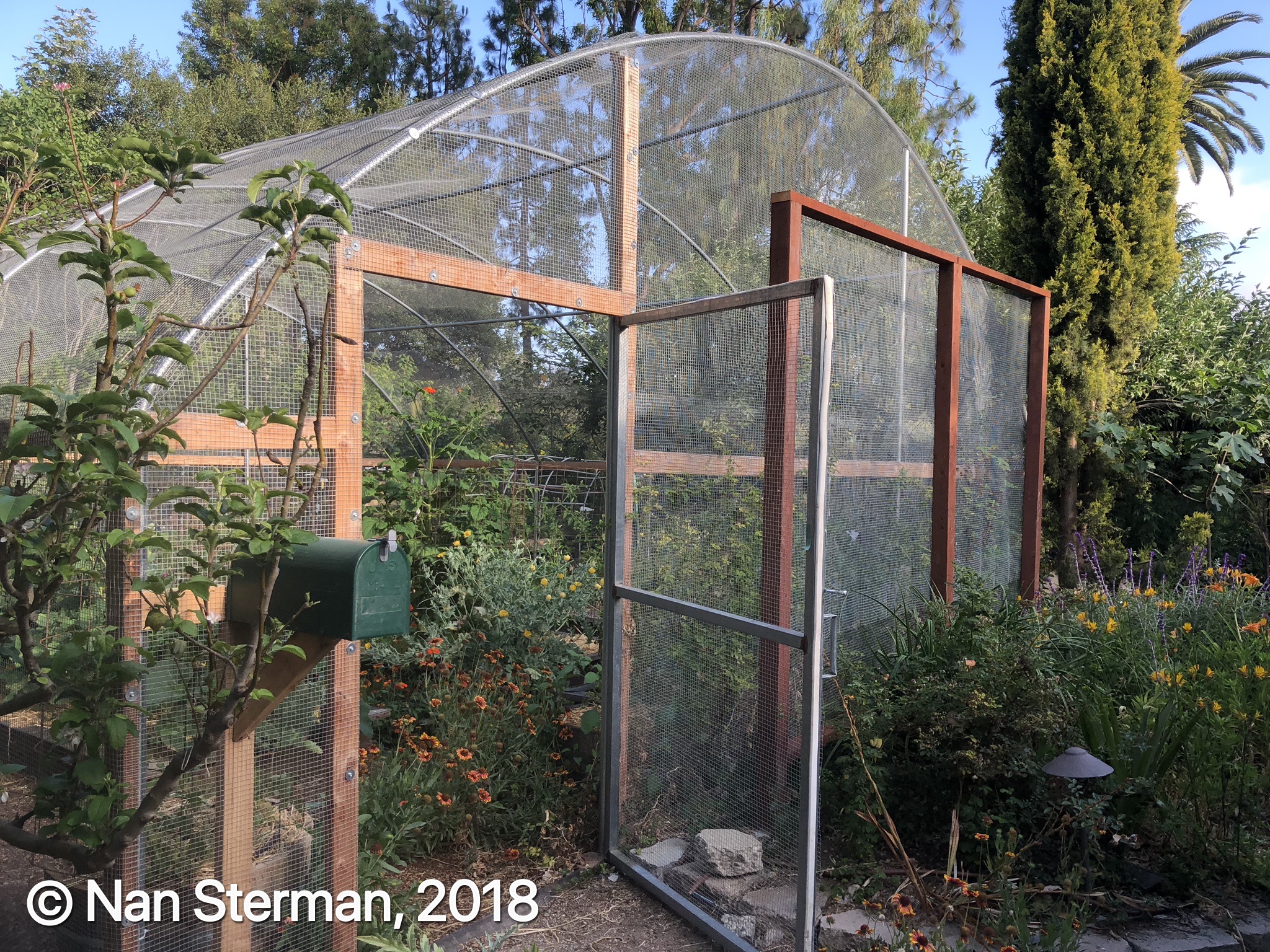
Mesh covered hoop house in Nan Sterman's garden

A wire mesh covered hoop house protects Nan Sterman’s vegetable garden from hungry critters

This year, I’m growing great vegetables in a really cool mesh covered hoop house I had built last summer.

I’ve been growing vegetables nearly all my life. I start seeds in March, nurture the seedlings till May, and plant them into the garden. That worked great until a few years ago when the rats got so bad that every seeding I put in the ground disappeared overnight.

Seemed that once our hunter cat passed on, the rat and rabbit populations exploded. We tried every type of trap and non-toxic bait available – with little success.

Still, I wouldn’t give up.

When killing and trapping didn’t work, I turned to Plan B – exclusion.

Plan B

I’d seen wire mesh covered frames built to fit over raised beds but they were too limiting and cumbersome. But…what if the wire mesh framed the
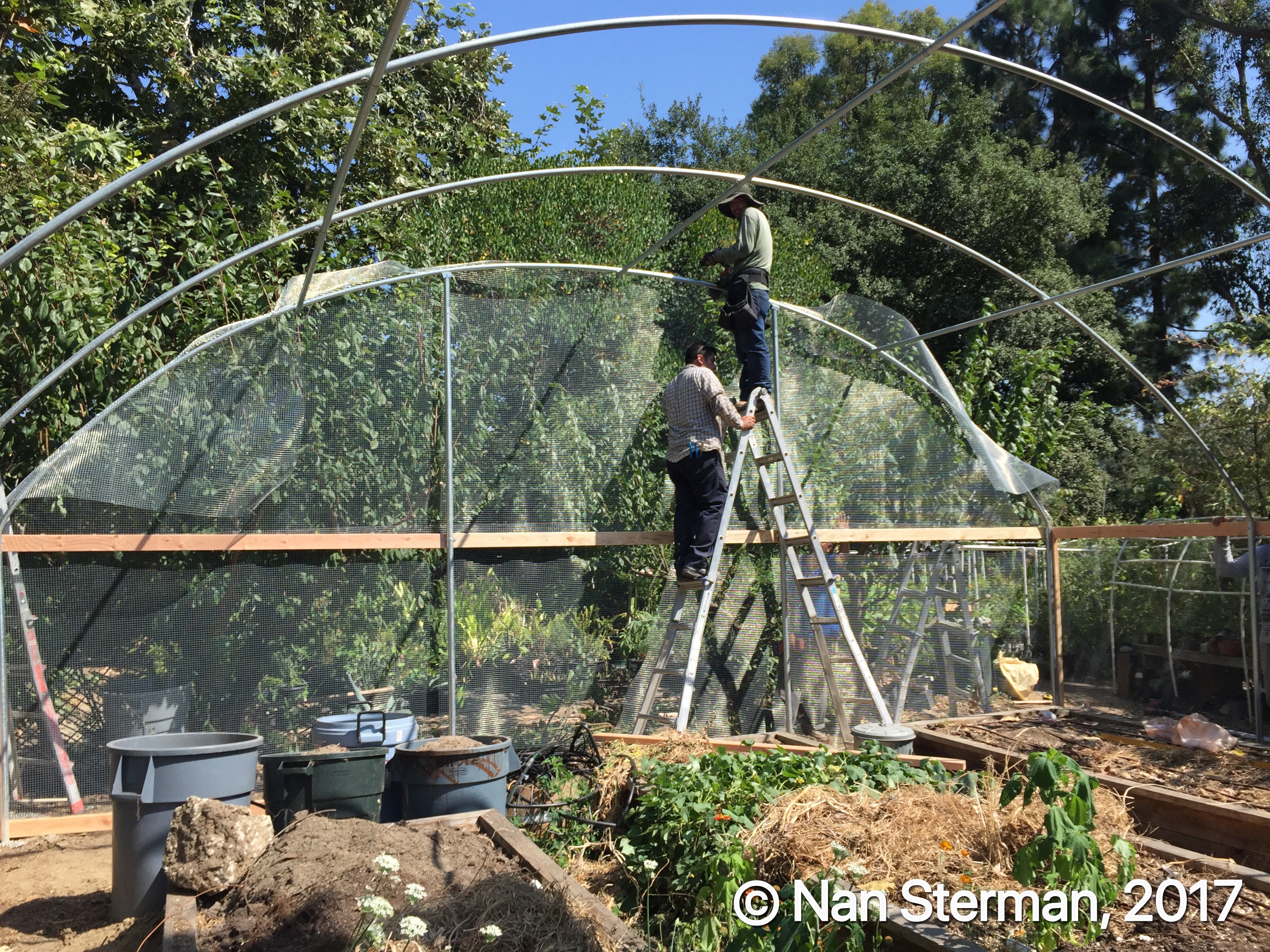
Wire mesh attaches to the metal ribs of the hoop house

Half-inch wire mesh keeps critters out but lets pollinators in to Nan Sterman’s vegetable garden

entire garden instead of a single bed? Like a room… four walls and a “roof.” That would work!

According to my contractor son, the weight of enough mesh to cover my 20’ x 20’ garden would require a support post in the center of the garden.

That would put it in the center of one of my raised beds. That wasn’t acceptable.

Then, one day, I was in one of my favorite wholesale nurseries and noticed the plants growing in plastic covered hoop houses. I’ve walked in those houses and shopped that nursery so many times in the past, but I hadn’t really noticed the structures before….

How wide are those hoops houses? I asked the general manager. About 20’ across, he said. And where do you get the hoops? There’s a local man who fabricates them, he said.

A month later, my own hoop house was under construction, but mine was to be covered in wire mesh instead of plastic. It was the crew’s first time creating a mesh-covered house but they were game to do what I asked. I special ordered welded wire mesh (aka “hardware cloth”) with half-inch openings. That was the size experts told me would exclude rats and rabbits, yet allow in bees to pollinate my vegetables.

And…. it’s working! I’ve already harvested zucchini and basil and patty pan squash. Tomatoes are still green but the sunflowers are blooming. Yeah!
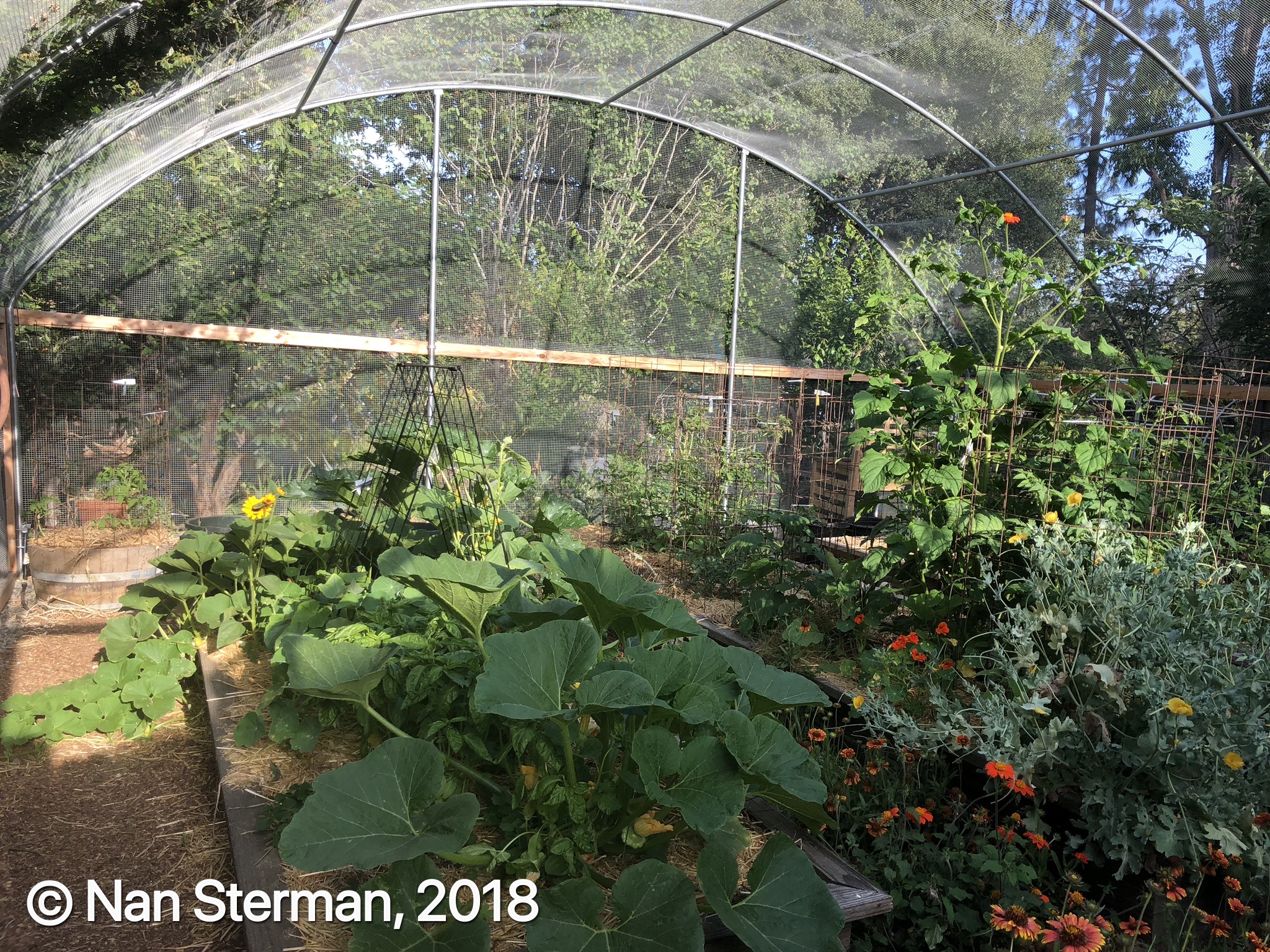
Raised beds in the hoop house garden

Raised beds are home to tomatoes, squash, eggplant and many other vegetables

The mesh covered hoop house has brought more to the garden than I expected. It’s added structure and interest and I am dreaming up ideas for adding art to the hoop house, too.

— Nan Sterman

farm-to-fork

About the Author
California native Nan Sterman is host, co-producer, and co-writer of A Growing Passion, a television show that explores the ways plants power the planet, from farms and nurseries to backyards and schoolyards, rooftop gardens, community gardens, native habitats and more.
Social Share
  • google-share
4 Comments
  1. Bridget June 28, 2018 at 3:39 pm Reply

    Love this helpful solution, thanks! Do you run wire under the garden too? Critters can be pretty creative!

    • Nan June 29, 2018 at 10:11 pm Reply

      The wire mesh extends about a foot down into the ground. I was worried that bunnies could still burrow under so I lined the base of the mesh – where it disappears into the soil – wit a gravel trench, both inside and outside the mesh house. So far, so good!

  2. Lenita Kellstrand June 28, 2018 at 6:00 pm Reply

    Very cool! Would you be willing to share details on the fabricator for those of us who live in the area?

    • Nan June 29, 2018 at 10:12 pm Reply

      Please find the “Ask Nan” button on our website and send her a private note.

Leave a Reply Cancel reply

*
*


Popular Posts

A big fried egg sized bloom
Grow a Fried Egg Plant - Matilija poppy
38 Comments
Tree babies
How to Water Your Trees
8 Comments
Stolons make Bermuda grass a challenge to remove
Whether Weed Cloth?
7 Comments

Categories

  • Agriculture
  • Animals
  • Art
  • Behind the Scenes
  • Botanical Garden
  • Community
  • Community Supported Agriculture
  • Cooking
  • Design
  • Explore More
  • Farm
  • Farm-to-Table
  • Food Justice
  • Fruit
  • Garden
  • Gardening
  • Gifts
  • History
  • How-to
  • Insects
  • Nan Sterman
  • Native Habitat
  • Nursery
  • Organic Farming
  • Plants
  • Projects
  • Public Gardens
  • Research
  • Tour
  • Travel
  • Vegetable Gardening
  • Waterwise
  • What's New
  • What's Trending

Archives

Contact Us

AGP Productions, LLC
PO Box 231034
Encinitas, CA 92023
info@agrowingpassion.com

Follow Us!

Follow Us on FacebookFollow Us on TwitterFollow Us on InstagramFollow Us on PinterestFollow Us on YouTubeFollow Us on RSS

Press

  • Media
  • Press
Ask-Nan
All Content and Images © 2018 AGP Productions, LLC | Privacy Policy
Designed by Belladia Marketing and Design